


Agricultural officials are forming a task force to crack down on the sale of pork from pigs that died before reaching slaughterhouses, the Council of Agriculture said yesterday.
Six local authorities governing major pig farms in the south will form a task force with assistance from the central government, according to the council.
The announcement came one day after the Consumer Protection Commission said that several cases of trading in questionable pork had been uncovered by police in Pintung County and other southern counties.
Between 2001 and the end of May, 161 tonnes of questionable pork were seized from private slaughterhouses but the amount of pork that had already reached the market was not known, commission officials said.
Council statistics indicate that from January to May this year, 11 instances of trade in questionable pork had been discovered and 30 persons apprehended.
Prosecutors had confiscated 8,300kg of questionable pork and 139 dead pigs.
Bureau of Animal and Plant Health Inspection and Quarantine officials said yesterday that stricter measures would be carried out to prevent similar activities from endangering public health.
"We will demand that all truckers transporting dead pigs should be equipped with a Global Positioning System device by the end of this year," bureau Director General Chiang Yi-nan (
According to Chiang, at the end of this year more than 100 trucks which transport pigs would be tracked by the government.
The bureau will also convene a meeting today of representatives from several governmental agencies, including the Department of Health, the Environmental Protection Administration and the National Police Administration as well as country governments in Changhua, Yunlin, Chiayi, Tainan, Kaohsiung and Pintung to discuss efforts to crack down on the trade in suspect pork.
In addition, council officials said a thorough review will be made of the number dead pigs picked up from farms and the number received by factories which treat the carcasses.
The council will also supervise the new task force, which will investigate illegal slaughter houses.
Meanwhile, pig farms that raise more than 2,000 pigs will have their numbers checked on a monthly basis, agriculture officials said.
The officials said that proper ways to dispose of carcasses are burning, burial or removal from farm premises.
Those who fail to comply could face fines of between NT$100,000 to NT$500,000 and prison terms of up to three years.
Officials say the penalties appear too light to have much of a deterrent effect on dishonest farmers and truckers.
Therefore, the council recommends that all pigs be slaughtered under conditions that meet the Chinese Agricultural Standards (CAS) system, a system designed to ensure the safety of agricultural products.
Officials encouraged people to call the 0800-039-131 hotline to report cases of questionable pork. Those who report clues leading to the discovery of a crime are eligible to receive a NT$500,000 reward.

A group of Taiwanese-American and Tibetan-American students at Harvard University on Saturday disrupted Chinese Ambassador to the US Xie Feng’s (謝鋒) speech at the school, accusing him of being responsible for numerous human rights violations. Four students — two Taiwanese Americans and two from Tibet — held up banners inside a conference hall where Xie was delivering a speech at the opening ceremony of the Harvard Kennedy School China Conference 2024. In a video clip provided by the Coalition of Students Resisting the CCP (Chinese Communist Party), Taiwanese-American Cosette Wu (吳亭樺) and Tibetan-American Tsering Yangchen are seen holding banners that together read:

UNAWARE: Many people sit for long hours every day and eat unhealthy foods, putting them at greater risk of developing one of the ‘three highs,’ an expert said More than 30 percent of adults aged 40 or older who underwent a government-funded health exam were unaware they had at least one of the “three highs” — high blood pressure, high blood lipids or high blood sugar, the Health Promotion Administration (HPA) said yesterday. Among adults aged 40 or older who said they did not have any of the “three highs” before taking the health exam, more than 30 percent were found to have at least one of them, Adult Preventive Health Examination Service data from 2022 showed. People with long-term medical conditions such as hypertension or diabetes usually do not
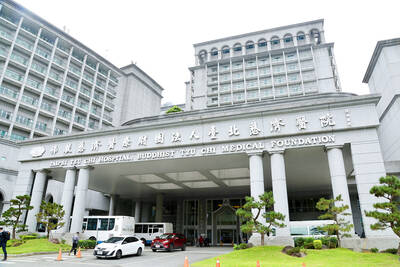
POLICE INVESTIGATING: A man said he quit his job as a nurse at Taipei Tzu Chi Hospital as he had been ‘disgusted’ by the behavior of his colleagues A man yesterday morning wrote online that he had witnessed nurses taking photographs and touching anesthetized patients inappropriately in Taipei Tzu Chi Hospital’s operating theaters. The man surnamed Huang (黃) wrote on the Professional Technology Temple bulletin board that during his six-month stint as a nurse at the hospital, he had seen nurses taking pictures of patients, including of their private parts, after they were anesthetized. Some nurses had also touched patients inappropriately and children were among those photographed, he said. Huang said this “disgusted” him “so much” that “he felt the need to reveal these unethical acts in the operating theater
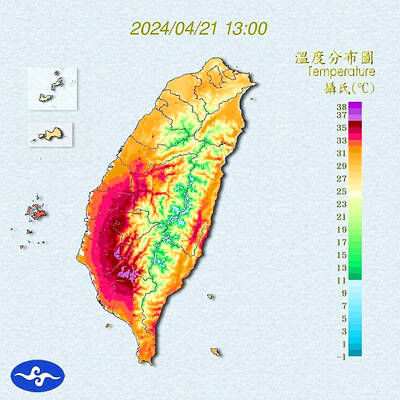
Heat advisories were in effect for nine administrative regions yesterday afternoon as warm southwesterly winds pushed temperatures above 38°C in parts of southern Taiwan, the Central Weather Administration (CWA) said. As of 3:30pm yesterday, Tainan’s Yujing District (玉井) had recorded the day’s highest temperature of 39.7°C, though the measurement will not be included in Taiwan’s official heat records since Yujing is an automatic rather than manually operated weather station, the CWA said. Highs recorded in other areas were 38.7°C in Kaohsiung’s Neimen District (內門), 38.2°C in Chiayi City and 38.1°C in Pingtung’s Sandimen Township (三地門), CWA data showed. The spell of scorching


 RSS
RSS