


Last Thursday the Central Election Commission (CEC) welcomed its new chairman, Chang Cheng-hsiung (張政雄), whose appointment was met with strong oppositions from the pan-blue camp as well as independent lawmakers, as Chang's actions in the past seemed to indicate that he leaned toward a pro-green point of view.
In his inauguration speech, Chang promised that he would remain impartial and strive to maintain fairness during his chairmanship.
According to the statute governing the organization of the CEC, the council should consist of 11 to 19 members, including the chairman, and the tenure of each member is three years. The premier makes the appointments pending the approval of the president.
However, according to the newly passed Organic Standard Law of the Central Government Agencies, which has yet to be promulgated by the president, the appointment of the CEC's chairman and its members requires the approval of the legislature.
Chang, born in 1941, has never been amember of any political party, has been an attorney-at-law for 37 years and is known for his work as defense attorney for the people arrested during the 1979 Kaohsiung Incident.
Although Chang claimed to be independent from any political party, his relationship with the Democratic Progressive Party (DPP) goes back a long way.
Last year, when the DPP hired five prestigious lawyers who were not members of the party to conduct investigations of election bribery among legislators at large, Chang was one of the five attorneys chosen to join the taskforce.
Although he is not a long-term CEC member, his active participation in discussions won him the opportunity to preside over the third televised referendum debate this year. Toward the end of the debate, Chang made a closing remark that the national referendum was in complete agreement with the law. His bold move resulted in an outcry from some viewers.
Furthermore, Chang's name later appeared on a full-page pro-referendum advertisement, along with the names of several former judges and prominent legal professionals.
"The Chinese Nationalist Party (KMT) is strongly opposed to Chang's appointment as the chairman of the CEC. As Chang was in favor of holding the referendum on the same day as the presidential and vice-presidential election, his biased political stance was obvious. His appointment as the chairman of the CEC, an organization which is supposed to be neutral, showed that he was assigned to be the executor of the will of DPP and the Cabinet," KMT Legislator Huang Teh-fu said in a telephone interview.
Independent Legislator Su Ying-kuei (
"Although a government is supposed to be neutral, we do not expect it to be totally so. However, certain government offices, such as the CEC, should particularly illustrate their professionalism and neutrality. The government was irresponsible to allow such a biased person to be picked as the chairman and I am terribly disappointed in our government for making such a decision," Su said.
Su claimed that through his close acquaintance with former CEC chairman Huang Shih-cheng (
Lisa Huang, a lawyer whose father is Huang Shih-cheng, pointed out the qualities needed for CEC leadership.
"Chang will need to be good at dealing with relational matters, as being in a job that deals with election affairs there will be many voices coming from different political parties. On top of that, he also needs to possess strong negotiation skills," said Lisa Huang.
Huang also expressed her best wishes for her father's successor.
"I believe that as long as Chang is able to stay absolutely neutral while executing his task as the CEC chairman, his efforts will be acknowledged by the people," Huang said.
Liao I-ming, assistant professor in the department of government and law at the National University of Kaohsiung, pointed out that the current legal structure of the government leads to controversies such as that surrounding the role of the CEC.
"For the time being, the CEC is under the Cabinet until revisions are made to the Organic Standard Law of the Central Government Agencies. Therefore, lawmakers from all political parties should have realized that the process of law revision is going to be painstakingly time-consuming. Meanwhile, they should be aware of the fact that direct appointment of the chairman of the CEC is necessary," said Liao.
However, Liao also stated that government leaders stumbled by choosing Chang for this job.
"Given the aforementioned situation, wise politicians, namely the president and the premier, may see this office appointment as an opportunity to convey their impartiality as a government. However, their failure to do so is a failure to exercise their political wisdom," said Liao.
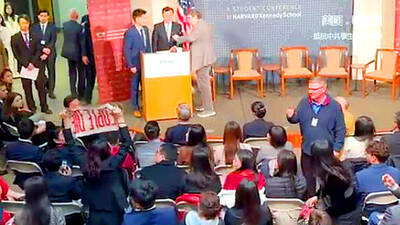
A group of Taiwanese-American and Tibetan-American students at Harvard University on Saturday disrupted Chinese Ambassador to the US Xie Feng’s (謝鋒) speech at the school, accusing him of being responsible for numerous human rights violations. Four students — two Taiwanese Americans and two from Tibet — held up banners inside a conference hall where Xie was delivering a speech at the opening ceremony of the Harvard Kennedy School China Conference 2024. In a video clip provided by the Coalition of Students Resisting the CCP (Chinese Communist Party), Taiwanese-American Cosette Wu (吳亭樺) and Tibetan-American Tsering Yangchen are seen holding banners that together read:

UNAWARE: Many people sit for long hours every day and eat unhealthy foods, putting them at greater risk of developing one of the ‘three highs,’ an expert said More than 30 percent of adults aged 40 or older who underwent a government-funded health exam were unaware they had at least one of the “three highs” — high blood pressure, high blood lipids or high blood sugar, the Health Promotion Administration (HPA) said yesterday. Among adults aged 40 or older who said they did not have any of the “three highs” before taking the health exam, more than 30 percent were found to have at least one of them, Adult Preventive Health Examination Service data from 2022 showed. People with long-term medical conditions such as hypertension or diabetes usually do not
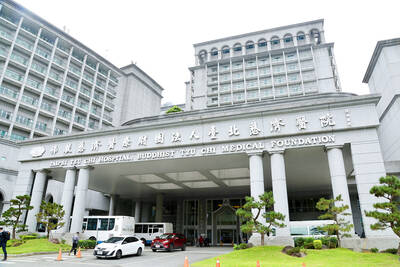
POLICE INVESTIGATING: A man said he quit his job as a nurse at Taipei Tzu Chi Hospital as he had been ‘disgusted’ by the behavior of his colleagues A man yesterday morning wrote online that he had witnessed nurses taking photographs and touching anesthetized patients inappropriately in Taipei Tzu Chi Hospital’s operating theaters. The man surnamed Huang (黃) wrote on the Professional Technology Temple bulletin board that during his six-month stint as a nurse at the hospital, he had seen nurses taking pictures of patients, including of their private parts, after they were anesthetized. Some nurses had also touched patients inappropriately and children were among those photographed, he said. Huang said this “disgusted” him “so much” that “he felt the need to reveal these unethical acts in the operating theater
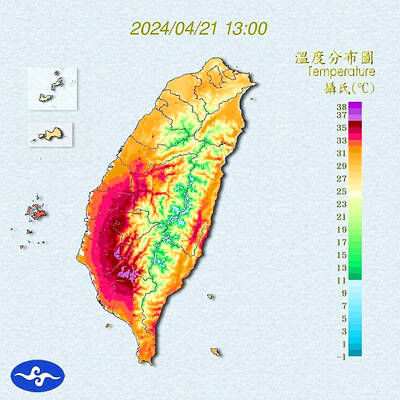
Heat advisories were in effect for nine administrative regions yesterday afternoon as warm southwesterly winds pushed temperatures above 38°C in parts of southern Taiwan, the Central Weather Administration (CWA) said. As of 3:30pm yesterday, Tainan’s Yujing District (玉井) had recorded the day’s highest temperature of 39.7°C, though the measurement will not be included in Taiwan’s official heat records since Yujing is an automatic rather than manually operated weather station, the CWA said. Highs recorded in other areas were 38.7°C in Kaohsiung’s Neimen District (內門), 38.2°C in Chiayi City and 38.1°C in Pingtung’s Sandimen Township (三地門), CWA data showed. The spell of scorching


 RSS
RSS