


A rare aquatic plant species, known as Hygrophila pogonocalyx Hayata (
The plant was first discovered in ditches in central Taiwan by Japanese wildlife conservationist Yaichi Shimada in 1917 and first written about as a new species by Japanese botanist Bunzo Hayata in 1920.
The rare plant was named after Hayata after he claimed in a research paper in 1920 that it was a new discovery and the only kind of its species.
It has now been saved from extinction thanks to the strenuous efforts over the past decade of Lin Chong-chien (
Lin said his nurture center in Ta-an township -- supported by the county government -- renamed the plant the Ta-an Hygrophila pogonocalyx Hayata.
Lin began to conserve and nurture the plant in 1984 when he found that the species was on the verge of extinction, with only about 1,000 in existence in coastal areas in Ta-an and adjacent Chingshui and Lungching townships.
Lin and his research team have cultivated 10,000 of the plants over the past eight years.
The Ta-an Hayata is unique from other Hygrophila salicifolia species because it has square column stems. The other species ordinarily have round, tubular stems, Lin said.
The indigenous plant has beautiful pink and pale purple blossoms every autumn, Lin said.
It has to be planted in loose sand with salt water in an area near the sea, Lin said. He said people who can provide the kind of environment needed by the plant to ask for seedlings from his center to help replenish the endangered species.
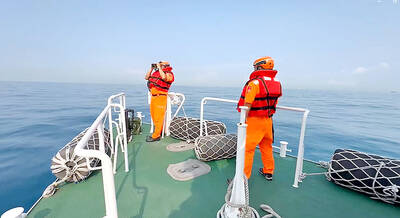
An increase in Taiwanese boats using China-made automatic identification systems (AIS) could confuse coast guards patrolling waters off Taiwan’s southwest coast and become a loophole in the national security system, sources familiar with the matter said yesterday. Taiwan ADIZ, a Facebook page created by enthusiasts who monitor Chinese military activities in airspace and waters off Taiwan’s southwest coast, on Saturday identified what seemed to be a Chinese cargo container ship near Penghu County. The Coast Guard Administration went to the location after receiving the tip and found that it was a Taiwanese yacht, which had a Chinese AIS installed. Similar instances had also

GOOD DIPLOMACY: The KMT has maintained close contact with representative offices in Taiwan and had extended an invitation to Russia as well, the KMT said The Chinese Nationalist Party (KMT) would “appropriately handle” the fallout from an invitation it had extended to Russia’s representative to Taipei to attend its international banquet last month, KMT Chairman Eric Chu (朱立倫) said yesterday. US and EU representatives in Taiwan boycotted the event, and only later agreed to attend after the KMT rescinded its invitation to the Russian representative. The KMT has maintained long-term close contact with all representative offices and embassies in Taiwan, and had extended the invitation as a practice of good diplomacy, Chu said. “Some EU countries have expressed their opinions of Russia, and the KMT respects that,” he

VIGILANCE: The military is paying close attention to actions that might damage peace and stability in the region, the deputy minister of national defense said The People’s Republic of China (PRC) might consider initiating a hack on Taiwanese networks on May 20, the day of the inauguration ceremony of president-elect William Lai (賴清德), sources familiar with cross-strait issues said. While US Secretary of State Anthony Blinken’s statement of the US expectation “that all sides will conduct themselves with restraint and prudence in the period ahead” would prevent military actions by China, Beijing could still try to sabotage Taiwan’s inauguration ceremony, the source said. China might gain access to the video screens outside of the Presidential Office Building and display embarrassing messages from Beijing, such as congratulating Lai
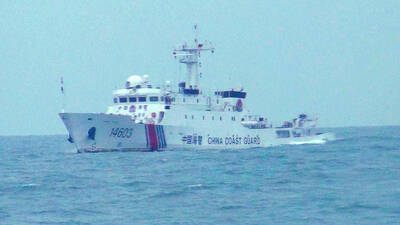
Four China Coast Guard ships briefly sailed through prohibited waters near Kinmen County, Taipei said, urging Beijing to stop actions that endanger navigation safety. The Chinese ships entered waters south of Kinmen, 5km from the Chinese city of Xiamen, at about 3:30pm on Monday, the Coast Guard Administration said in a statement later the same day. The ships “sailed out of our prohibited and restricted waters” about an hour later, the agency said, urging Beijing to immediately stop “behavior that endangers navigation safety.” Ministry of National Defense spokesman Sun Li-fang (孫立方) yesterday told reporters that Taiwan would boost support to the Coast Guard


 RSS
RSS