


The third annual Tung Blossom Hakka Festival opened yesterday in Miaoli County with singing, dancing and poetry-reading. Draped with garlands of white tung blossoms, attendees at the opening ceremony listened as elementary school children recited poetry and sang.
The ceremony, held at the Westlake Resortopia, marked the beginning of a month-long festival sponsored by the Council of Hakka Affairs to promote Hakka culture. The festival's symbol is the tung blossom, a flower that blooms from mid-April to late May in central and northern Taiwan. Tung trees are also known as paulownias in English.

PHOTO COURTESY OF THE TUNG LODGE
"The tung tree is representative of the Hakka people. Its pure white flowers and straight, sturdy trunks are symbolic of the Hakka people's patience for hard work and the ability and purity of their spirits," said council chairwoman Yeh Chu-lan (
The festival runs through May 16. In addition to attending the scheduled cultural activities, the public is invited to visit 21 "tung blossom sightseeing paths" in Hsinchu, Miaoli, Taipei, Taoyuan, Taichung and Nantou counties.
Along National Highway No. 3 in Miaoli, fields of white-crowned tung trees carpet the surrounding hills en route to the sightseeing routes. Although the flowers have been slow to bloom due to this year's cold weather, festival representatives assured the public that by May the flowers will be in full bloom.
Each recommended stop also offers Hakka foods and cultural exhibits. Tung Lodge, located along the Kung-kuan (
Council of Hakka Affairs representatives said that, besides promoting Hakka culture, the festival aims to stimulate local economies.
"The first two times, we worked on establishing the festival," said council vice chairwoman Chuang Chin-hua (
Chuang said the council hoped that eventually the souvenirs would gain such popularity that they would become distinguishing logos for each locale.
Toward this goal, much of the merchandise available this year is in ceramic form, highlighting the importance of pottery-making as an industry in central Taiwan.
"Many Hakka were involved in pottery-making because land for farming was difficult to get by the time the third wave of Hakka immigration arrived in Miaoli," said Chen Yu-ping (
The Council for Hakka Affairs estimates that last year's festival generated NT$500 million in revenues.
Even 7-Eleven, the convenience store chain through which the council has distributed free festival guides, has profited from the festival, reporting record drink sales during last year's tung-blossom season.
This year's guides will be available starting April 21 in 7-Elevens, which also will sell a line of pre-packaged Hakka foods to promote the festival.
The council has arranged a tung-flower photo competition to encourage the public to participate in the festivities.
Tung trees have been valued for use as lumber and for the water-resistant oil derived from their seeds. Although the trees are no longer as popular for industrial purposes as in previous decades, their wood is still used for carving and firewood.
Business owners involved in the festival expressed pride in being part of the event.
"I'm Hakka myself, and it's been hard all my life to tell people that except in recent years. I think that the Tung Blossom Festival is a wonderful way to help the Hakka people gain understanding in the greater community and to increase tourism," said a representative of Lima, an art studio in Miaoli County involved in the event.
More information about festival activities and sightseeing routes is available on the festival homepage at: www.hakka.gov.tw/hakkatung/.

A group of Taiwanese-American and Tibetan-American students at Harvard University on Saturday disrupted Chinese Ambassador to the US Xie Feng’s (謝鋒) speech at the school, accusing him of being responsible for numerous human rights violations. Four students — two Taiwanese Americans and two from Tibet — held up banners inside a conference hall where Xie was delivering a speech at the opening ceremony of the Harvard Kennedy School China Conference 2024. In a video clip provided by the Coalition of Students Resisting the CCP (Chinese Communist Party), Taiwanese-American Cosette Wu (吳亭樺) and Tibetan-American Tsering Yangchen are seen holding banners that together read:

UNAWARE: Many people sit for long hours every day and eat unhealthy foods, putting them at greater risk of developing one of the ‘three highs,’ an expert said More than 30 percent of adults aged 40 or older who underwent a government-funded health exam were unaware they had at least one of the “three highs” — high blood pressure, high blood lipids or high blood sugar, the Health Promotion Administration (HPA) said yesterday. Among adults aged 40 or older who said they did not have any of the “three highs” before taking the health exam, more than 30 percent were found to have at least one of them, Adult Preventive Health Examination Service data from 2022 showed. People with long-term medical conditions such as hypertension or diabetes usually do not
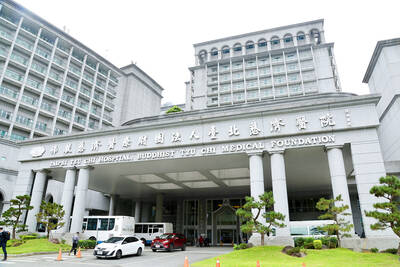
POLICE INVESTIGATING: A man said he quit his job as a nurse at Taipei Tzu Chi Hospital as he had been ‘disgusted’ by the behavior of his colleagues A man yesterday morning wrote online that he had witnessed nurses taking photographs and touching anesthetized patients inappropriately in Taipei Tzu Chi Hospital’s operating theaters. The man surnamed Huang (黃) wrote on the Professional Technology Temple bulletin board that during his six-month stint as a nurse at the hospital, he had seen nurses taking pictures of patients, including of their private parts, after they were anesthetized. Some nurses had also touched patients inappropriately and children were among those photographed, he said. Huang said this “disgusted” him “so much” that “he felt the need to reveal these unethical acts in the operating theater
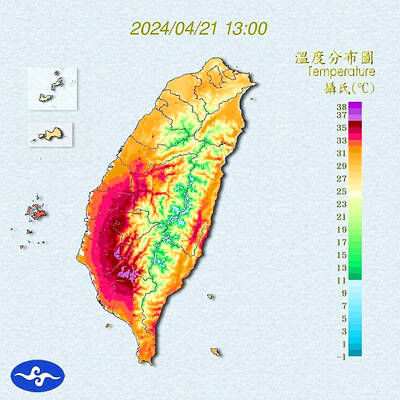
Heat advisories were in effect for nine administrative regions yesterday afternoon as warm southwesterly winds pushed temperatures above 38°C in parts of southern Taiwan, the Central Weather Administration (CWA) said. As of 3:30pm yesterday, Tainan’s Yujing District (玉井) had recorded the day’s highest temperature of 39.7°C, though the measurement will not be included in Taiwan’s official heat records since Yujing is an automatic rather than manually operated weather station, the CWA said. Highs recorded in other areas were 38.7°C in Kaohsiung’s Neimen District (內門), 38.2°C in Chiayi City and 38.1°C in Pingtung’s Sandimen Township (三地門), CWA data showed. The spell of scorching


 RSS
RSS