


Law professors and researchers yesterday said sentences for theft were inconsistent or unfair.
The Judicial Reform Foundation also urged the Judicial Yuan to establish a new office to identify inequalities in sentencing for cases of theft and to provide this information to judges as points of reference when processing theft cases in future.
The foundation was discussing a study conducted by National Taiwan University Professor Wang Chao-peng (王兆鵬), National Taipei University Assistant Professor Lin Ding-hsiang (林定香) and Academia Sinica Institute of Sociology Director Yang Wen-shan (楊文山) at a press conference yesterday.
The researchers analyzed 1,164 cases of theft processed at 18 district courts between January 2000 and March 2002.
The foundation's executive general, Shirley Lin (
However, Lin said, this also resulted in a significant human rights problem because it was impossible for the public to know, in the absence of sentencing guidelines, whether judges were abusing their authority in deciding verdicts and sentences for the accused.
Under these circumstances, Lin said, it was important for judges to have access to some form of standard when it came to sentencing to ensure parity in the system.
"Since the law does not provide any standard regarding the severity of sentences for those convicted of theft, the conviction of suspects in theft cases can be affected by the age, gender and location of the judge," Lin said.
"It's all up to the judge how long the convicted person should be put away. However, it may not be a fair sentence," she said.
The researchers found that judges usually do not give lengthy stretches in jail to thieves, especially "first timers," since theft cases were not regarded to be serious criminal cases.
It was also found that males usually received heavier sentences than females, and that judges in larger urban areas usually gave longer sentences to thieves than judges in rural areas.
"These are significant findings worthy of further investigation," Lin said.
"However, the research should be conducted by an independent government agency, with the results possibly acting as a point of reference for judges," she said.
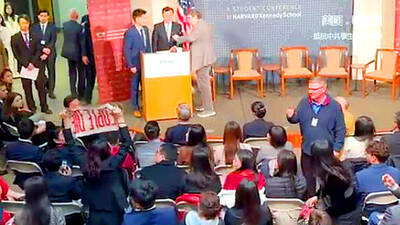
A group of Taiwanese-American and Tibetan-American students at Harvard University on Saturday disrupted Chinese Ambassador to the US Xie Feng’s (謝鋒) speech at the school, accusing him of being responsible for numerous human rights violations. Four students — two Taiwanese Americans and two from Tibet — held up banners inside a conference hall where Xie was delivering a speech at the opening ceremony of the Harvard Kennedy School China Conference 2024. In a video clip provided by the Coalition of Students Resisting the CCP (Chinese Communist Party), Taiwanese-American Cosette Wu (吳亭樺) and Tibetan-American Tsering Yangchen are seen holding banners that together read:

UNAWARE: Many people sit for long hours every day and eat unhealthy foods, putting them at greater risk of developing one of the ‘three highs,’ an expert said More than 30 percent of adults aged 40 or older who underwent a government-funded health exam were unaware they had at least one of the “three highs” — high blood pressure, high blood lipids or high blood sugar, the Health Promotion Administration (HPA) said yesterday. Among adults aged 40 or older who said they did not have any of the “three highs” before taking the health exam, more than 30 percent were found to have at least one of them, Adult Preventive Health Examination Service data from 2022 showed. People with long-term medical conditions such as hypertension or diabetes usually do not
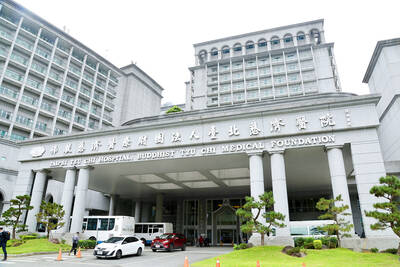
POLICE INVESTIGATING: A man said he quit his job as a nurse at Taipei Tzu Chi Hospital as he had been ‘disgusted’ by the behavior of his colleagues A man yesterday morning wrote online that he had witnessed nurses taking photographs and touching anesthetized patients inappropriately in Taipei Tzu Chi Hospital’s operating theaters. The man surnamed Huang (黃) wrote on the Professional Technology Temple bulletin board that during his six-month stint as a nurse at the hospital, he had seen nurses taking pictures of patients, including of their private parts, after they were anesthetized. Some nurses had also touched patients inappropriately and children were among those photographed, he said. Huang said this “disgusted” him “so much” that “he felt the need to reveal these unethical acts in the operating theater
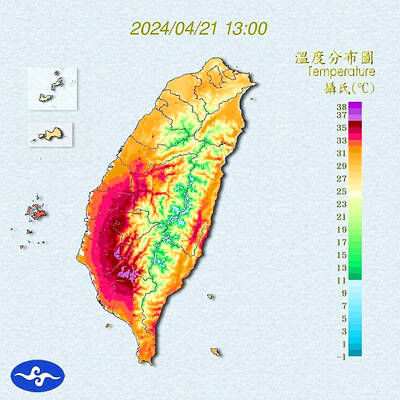
Heat advisories were in effect for nine administrative regions yesterday afternoon as warm southwesterly winds pushed temperatures above 38°C in parts of southern Taiwan, the Central Weather Administration (CWA) said. As of 3:30pm yesterday, Tainan’s Yujing District (玉井) had recorded the day’s highest temperature of 39.7°C, though the measurement will not be included in Taiwan’s official heat records since Yujing is an automatic rather than manually operated weather station, the CWA said. Highs recorded in other areas were 38.7°C in Kaohsiung’s Neimen District (內門), 38.2°C in Chiayi City and 38.1°C in Pingtung’s Sandimen Township (三地門), CWA data showed. The spell of scorching


 RSS
RSS