


Health warnings on cigarette packages could be enlarged to occupy as much as 50 percent of both the front and back of the package in the future, according to the Department of Health.
"In Taiwan, approximately 27 percent of adults are smokers, with 48 percent of the male population and 6 percent of the female population smoking. Each year about 17,000 people die of tobacco-related illnesses," said health department Director General Chen Chien-jen (陳建仁) at a conference held by the Asian Pacific Association for the Control of Tobacco (APACT).
Pressed by Chen to report on the progress of anti-smoking campaigns in Taiwan, the Bureau of Health Promotion yesterday vowed to work toward making health warning labels more prominent by increasing the size of warning labels to at least 30 percent of both sides of cigarette packages and ideally 50 percent.
In addition, bureau Director General Lin Shio-jean (林秀娟) called for increases to the health and welfare surcharges imposed on tobacco products.
"Although the overall tax revenue collected from the health and welfare surcharge imposed on tobacco products is NT$10 billion each year, only 10 percent is specifically earmarked for anti-smoking campaigns," Lin said.
According to Lin, 70 percent of the tax revenue went to maintaining a safety reserve for the National Health Insurance, 10 percent to social welfare, 10 percent to tobacco hazard prevention programs, and another 10 percent to other public health measures.
Lin also explained that in Taiwan the health and welfare surcharge was only 45 percent of the overall tax imposed on tobacco products, while in other countries, the health surcharge was as much as 75 percent of the tax.
"Right now in Taiwan, NT$18 is collected in tax on tobacco products. NT$5 goes to public health initiatives. We're pushing to make it NT$8 right now. However, the real problem is that Taiwan's cigarette prices are too low, not that the tax percentage is too low," Lin said.
"The tobacco tax needs to be at least NT$54 before it is effective in curbing smoking," he said.
Right now, it's cheaper for youths to buy a pack of cigarettes than a McDonald's meal," Lin said.
International brands have also had a role in the increased number of smokers in Taiwan, according to the DOH.
Figures from the Taiwan Tobacco and Wine Board indicate that while the annual per capita consumption of cigarettes was 80.2 packs in 1986, it escalated to 90 packs in 1999. Taiwan opened its cigarette market to foreign producers in 1987.
"Although there has been a decline in the number of smokers in the US, international tobacco shares are up due to market openings. Studies show that young girls prefer foreign brands. Acculturation influences are in operation here," said Ted Chen, president-elect of the APACT.
He added that in China especially, there was a significant increase in the number of female smokers.
Wick Warren of the US National Center for Chronic Disease Prevention and Health Promotion Office on Smoking and Health agreed, stating that the Global Youth Tobacco Survey indicated that worldwide there was no difference between the level of tobacco usage in male and female populations.
Meanwhile, health officials said that new educational tactics were necessary to promote awareness of tobacco health hazards among youths.
Maribel Cantada, vice president of the Tobacco-Free Philippines Foundation, said that tobacco product manufacturer Philip Morris funded the Philippines' in-school tobacco prevention programs.
She said that the manufacturer's subversive tactic of putting cigarettes in a negative light actually had the effect of turning students to smoking.
Lin said that in Taiwan, smoke-free campus programs had been implemented in just seven schools in each county or city. These schools served as an experimental group that would be useful for future evaluation of the effects of the government's in-school prevention programs.
In addition, instead of taking a position of direct authority in the smoke-free campus campaigns, Lin said that the bureau used subtler tactics, including sponsoring animation competitions and giving away VCDs that promoted the bureau's cause.

A group of Taiwanese-American and Tibetan-American students at Harvard University on Saturday disrupted Chinese Ambassador to the US Xie Feng’s (謝鋒) speech at the school, accusing him of being responsible for numerous human rights violations. Four students — two Taiwanese Americans and two from Tibet — held up banners inside a conference hall where Xie was delivering a speech at the opening ceremony of the Harvard Kennedy School China Conference 2024. In a video clip provided by the Coalition of Students Resisting the CCP (Chinese Communist Party), Taiwanese-American Cosette Wu (吳亭樺) and Tibetan-American Tsering Yangchen are seen holding banners that together read:

UNAWARE: Many people sit for long hours every day and eat unhealthy foods, putting them at greater risk of developing one of the ‘three highs,’ an expert said More than 30 percent of adults aged 40 or older who underwent a government-funded health exam were unaware they had at least one of the “three highs” — high blood pressure, high blood lipids or high blood sugar, the Health Promotion Administration (HPA) said yesterday. Among adults aged 40 or older who said they did not have any of the “three highs” before taking the health exam, more than 30 percent were found to have at least one of them, Adult Preventive Health Examination Service data from 2022 showed. People with long-term medical conditions such as hypertension or diabetes usually do not
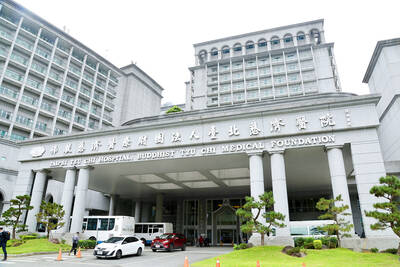
POLICE INVESTIGATING: A man said he quit his job as a nurse at Taipei Tzu Chi Hospital as he had been ‘disgusted’ by the behavior of his colleagues A man yesterday morning wrote online that he had witnessed nurses taking photographs and touching anesthetized patients inappropriately in Taipei Tzu Chi Hospital’s operating theaters. The man surnamed Huang (黃) wrote on the Professional Technology Temple bulletin board that during his six-month stint as a nurse at the hospital, he had seen nurses taking pictures of patients, including of their private parts, after they were anesthetized. Some nurses had also touched patients inappropriately and children were among those photographed, he said. Huang said this “disgusted” him “so much” that “he felt the need to reveal these unethical acts in the operating theater
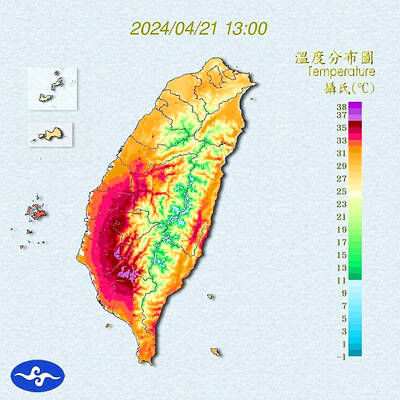
Heat advisories were in effect for nine administrative regions yesterday afternoon as warm southwesterly winds pushed temperatures above 38°C in parts of southern Taiwan, the Central Weather Administration (CWA) said. As of 3:30pm yesterday, Tainan’s Yujing District (玉井) had recorded the day’s highest temperature of 39.7°C, though the measurement will not be included in Taiwan’s official heat records since Yujing is an automatic rather than manually operated weather station, the CWA said. Highs recorded in other areas were 38.7°C in Kaohsiung’s Neimen District (內門), 38.2°C in Chiayi City and 38.1°C in Pingtung’s Sandimen Township (三地門), CWA data showed. The spell of scorching


 RSS
RSS