


Legislators from the Democratic Progressive Party (DPP) yesterday called for heightened vigilance against Chinese spies infiltrating Taiwan in the run-up to the presidential election on March 20 next year.
The recent discovery of a number of alleged spying incidents involving professionals from Taiwan's Military Intelligence Bureau (MIB) and the military's Chungshan Institute of Science and Technology (CIST) shows that Chinese intelligence authorities have accelerated their efforts to infiltrate Taiwan by recruiting or "buying" Taiwan cells to work for them, according to DPP Legislator Trong Chai (蔡同榮).
Chai and four other DPP legislators released a joint statement calling for the government to keep a closer watch against the growing tendency of Chinese infiltration. It said that since Taiwan's power transition in 2000, Chinese intelligence-gathering individuals have infiltrated the country's political, military, administrative and legislative systems in attempts to collect vital information that could undermine Taiwan's national security and overall development.
The statement said that Chinese intelligence authorities contact their Taiwan agents overseas and have established cells in Taiwan. These cells have been working inside important organizations such as the MIB and the CIST and have gathered intelligence using threats or bribes.
Huang Cheng-an (
It is alleged that Huang was also involved in negotiations for the sale of "smart bombs" and other weapons.
According to Ministry of National Defense (MND) sources, the 55-year-old Huang visited Egypt twice over the past year to meet Taiwan and Middle East munitions merchants to jointly produce smart bombs and other weapons to be sold to Egypt and other Middle East countries. However, ministry officials speculate that the plan to produce weapons fell through due to the failure of the principals to acquire key technology.
Huang, nevertheless, was found to have been negotiating, via go-betweens, with Chinese authorities to supply important information on the production of smart bombs and other missiles that he said he could obtain from the CIST at a cost of US$1 million, the ministry officials said.
Smart bombs first made their appearance in the 1991 Gulf War and since then they have been improved and are smaller and more accurate and are greatly sought after by the world's weapons dealers.
Military investigators suspect that Huang's ex-wife, to whom he was divorced only this August, is a Chinese intelligence agent who came to Taiwan some 10 years ago. Investigators believe that she navigated her way through key military establishments by having married at least three CIST researchers, including Huang.
Military investigators said that they are also suspicious that Huang's girlfriend, known to be an Internet-savvy individual whom Huang met online, could also be a Chinese spy.
Earlier this month, former MIB officer Tseng Chao-wen (
According to MND officials, the damage that Tseng and Chen's spying activities might have done to the country has been contained at the lowest possible levels, since most of Taiwan's personnel data and warfare plans that they passed to China were either out of date or no longer pertinent.

A group of Taiwanese-American and Tibetan-American students at Harvard University on Saturday disrupted Chinese Ambassador to the US Xie Feng’s (謝鋒) speech at the school, accusing him of being responsible for numerous human rights violations. Four students — two Taiwanese Americans and two from Tibet — held up banners inside a conference hall where Xie was delivering a speech at the opening ceremony of the Harvard Kennedy School China Conference 2024. In a video clip provided by the Coalition of Students Resisting the CCP (Chinese Communist Party), Taiwanese-American Cosette Wu (吳亭樺) and Tibetan-American Tsering Yangchen are seen holding banners that together read:

UNAWARE: Many people sit for long hours every day and eat unhealthy foods, putting them at greater risk of developing one of the ‘three highs,’ an expert said More than 30 percent of adults aged 40 or older who underwent a government-funded health exam were unaware they had at least one of the “three highs” — high blood pressure, high blood lipids or high blood sugar, the Health Promotion Administration (HPA) said yesterday. Among adults aged 40 or older who said they did not have any of the “three highs” before taking the health exam, more than 30 percent were found to have at least one of them, Adult Preventive Health Examination Service data from 2022 showed. People with long-term medical conditions such as hypertension or diabetes usually do not
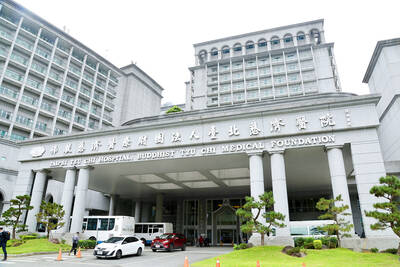
POLICE INVESTIGATING: A man said he quit his job as a nurse at Taipei Tzu Chi Hospital as he had been ‘disgusted’ by the behavior of his colleagues A man yesterday morning wrote online that he had witnessed nurses taking photographs and touching anesthetized patients inappropriately in Taipei Tzu Chi Hospital’s operating theaters. The man surnamed Huang (黃) wrote on the Professional Technology Temple bulletin board that during his six-month stint as a nurse at the hospital, he had seen nurses taking pictures of patients, including of their private parts, after they were anesthetized. Some nurses had also touched patients inappropriately and children were among those photographed, he said. Huang said this “disgusted” him “so much” that “he felt the need to reveal these unethical acts in the operating theater
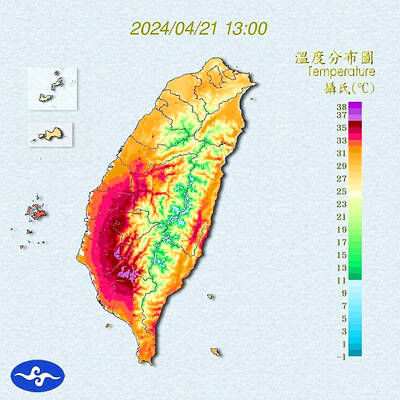
Heat advisories were in effect for nine administrative regions yesterday afternoon as warm southwesterly winds pushed temperatures above 38°C in parts of southern Taiwan, the Central Weather Administration (CWA) said. As of 3:30pm yesterday, Tainan’s Yujing District (玉井) had recorded the day’s highest temperature of 39.7°C, though the measurement will not be included in Taiwan’s official heat records since Yujing is an automatic rather than manually operated weather station, the CWA said. Highs recorded in other areas were 38.7°C in Kaohsiung’s Neimen District (內門), 38.2°C in Chiayi City and 38.1°C in Pingtung’s Sandimen Township (三地門), CWA data showed. The spell of scorching


 RSS
RSS