


Last week, Wang Hsiao-fen (
However, although the term "depression" is widely used these days, polls show that few people actually know where to draw the line between just feeling down and being clinically depressed. This is understandable, given the lack of consensus even amongst experts in the field.
While 52.5 percent of those polled by the John Tung Foundation's mental health department stated that they were able to differentiate between despondency and clinical depression, other studies indicate that many people suffering from depression never seek professional help.
According to Liao Shih-chen (
The survey found that only 4.1 percent of those who feel depressed ever seek professional help and that 7.6 percent visit a general physician.
The figures show that, although depression is an accepted medical condition, society is not very eager to write off depression as just a clinical condition.
Wu Yin-chang (
"The social role of the patient in our society is to rest. However, a depressed individual cannot just hand the problem to doctors, becoming a victim. We shouldn't quickly categorize depression as a disease or illness," Wu stated.
Wu stressed understanding one's own evaluation of environmental factors as the crux of treatment.
"It is important to ask yourself what your emotions mean to you. What does your environment mean to you? For example, if a friend's death causes you grief, ask yourself why. Was it a case of dependence? What did your friend mean to you?" Wu said.
However, other experts point out the limitations of self-reflection and the need for professional help in certain cases.
Vivian Y.H. Yeh (葉雅馨), mental health section chief at the John Tung Foundation, said her research indicated that 42.2 percent of the survey participants tried to deal with feelings of depression by sleeping or resting, while 34.2 percent engage in exercise or leisure activities and 33.8 percent talk to friends.
However, Yeh said that medical treatment was necessary in certain circumstances.
"If you don't manage the symptoms of depression, the depressed individual could be driven to suicide. When symptoms are uncontrollable, medication is an option. Just talking is not always enough," Yeh said.
"At the same time, medication should be supported by psychological counseling," she said.
Liao agreed with her, saying drugs often only suppress the symptoms.
"Medicine can control one's symptoms, but if a person's thoughts do not change, the likelihood of suicide actually increases after medication is taken," Liao said.
Liao described depression as the result of psychological, biological and societal forces. "All three can trigger depression. In most cases, treatment changes a person's thoughts last, after all three have changed," Liao said.
Liao's description of depression as the result of psychological, biological and societal influences redefines the traditional understanding of illness as a strictly biological condition to be treated with drugs and medical procedures. Experts point out that illnesses do not occur in a vacuum but rather in the context of society.
"In actuality, all illnesses, not just depression, can be understood in light of these three influences. It's just a question of which dimension needs more attention or support in each case," said Tom Yang (
Yeh said that disorders such as diabetes and high blood pressure probably also had societal triggers.
At the same time, a person's psychological health will have physical manifestations. According to Liao, about 50 percent of those who commit suicide visit a general physician about one month before the suicide attempt, while 30 percent visit a physician one week before.
Yang said spiritual convictions also play an important role in a patient's recovery.
"Spiritual convictions will have an influence on one's health by shaping one's understanding of illness. Perhaps it is something that is out of your hands," Yang said.
"According to World Health Organization research, those who have religious beliefs are less likely to attempt suicide. In particular, those of the Islamic faith were found to have the lowest suicide rate," Liao said.
"Ultimately, the goal of treatment is to restore the patient to his or her social role," said Yeh, concluding that the different dimensions of treatment played complimentary roles in recovery.

A group of Taiwanese-American and Tibetan-American students at Harvard University on Saturday disrupted Chinese Ambassador to the US Xie Feng’s (謝鋒) speech at the school, accusing him of being responsible for numerous human rights violations. Four students — two Taiwanese Americans and two from Tibet — held up banners inside a conference hall where Xie was delivering a speech at the opening ceremony of the Harvard Kennedy School China Conference 2024. In a video clip provided by the Coalition of Students Resisting the CCP (Chinese Communist Party), Taiwanese-American Cosette Wu (吳亭樺) and Tibetan-American Tsering Yangchen are seen holding banners that together read:

UNAWARE: Many people sit for long hours every day and eat unhealthy foods, putting them at greater risk of developing one of the ‘three highs,’ an expert said More than 30 percent of adults aged 40 or older who underwent a government-funded health exam were unaware they had at least one of the “three highs” — high blood pressure, high blood lipids or high blood sugar, the Health Promotion Administration (HPA) said yesterday. Among adults aged 40 or older who said they did not have any of the “three highs” before taking the health exam, more than 30 percent were found to have at least one of them, Adult Preventive Health Examination Service data from 2022 showed. People with long-term medical conditions such as hypertension or diabetes usually do not
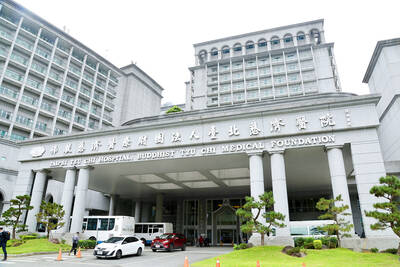
POLICE INVESTIGATING: A man said he quit his job as a nurse at Taipei Tzu Chi Hospital as he had been ‘disgusted’ by the behavior of his colleagues A man yesterday morning wrote online that he had witnessed nurses taking photographs and touching anesthetized patients inappropriately in Taipei Tzu Chi Hospital’s operating theaters. The man surnamed Huang (黃) wrote on the Professional Technology Temple bulletin board that during his six-month stint as a nurse at the hospital, he had seen nurses taking pictures of patients, including of their private parts, after they were anesthetized. Some nurses had also touched patients inappropriately and children were among those photographed, he said. Huang said this “disgusted” him “so much” that “he felt the need to reveal these unethical acts in the operating theater
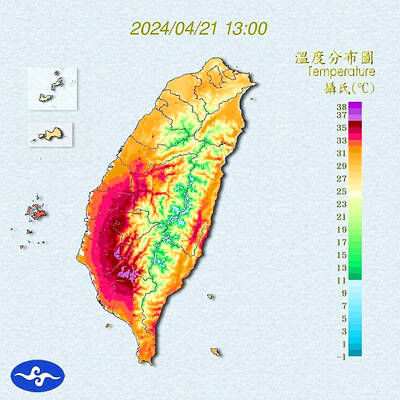
Heat advisories were in effect for nine administrative regions yesterday afternoon as warm southwesterly winds pushed temperatures above 38°C in parts of southern Taiwan, the Central Weather Administration (CWA) said. As of 3:30pm yesterday, Tainan’s Yujing District (玉井) had recorded the day’s highest temperature of 39.7°C, though the measurement will not be included in Taiwan’s official heat records since Yujing is an automatic rather than manually operated weather station, the CWA said. Highs recorded in other areas were 38.7°C in Kaohsiung’s Neimen District (內門), 38.2°C in Chiayi City and 38.1°C in Pingtung’s Sandimen Township (三地門), CWA data showed. The spell of scorching


 RSS
RSS