


Airborne pollutants from neighboring countries such as China, Japan and Korea account for more than half of those creating acid rain in Taiwan, the Environmental Protection Administration (EPA) said yesterday.
A study by the EPA on acid rain suggests that several areas in northern Taiwan have been significantly affected by air pollution, recording on average a pH value lower than 5, which is the minimum safe value according to scientists. On the pH scale, the lower the number, the higher the acidity.
At two newly established air-quality monitoring stations on the top of Yangmingshan (
Between January and July, the average acidity of rain at the two stations was 4.5pH, which is only slightly less acidic than that of vinegar.
According to scientists from National Central University and National Yunlin University of Science and Technology participating in the research, the situation could be attributed to airborne pollutants from other countries.
"Domestic pollutants don't affect the two remote air quality monitoring stations," Lin Neng-huei (林能暉), an atmospheric sciences professor at National Central University, said at a press conference held yesterday.
Lin said that about 85 percent of foreign airborne pollutants come from seven regions -- Japan, Korea, northeastern China, northwestern China, central China, southern China, the Indo-China Peninsula and the Philippines.
Acid rain is produced by the burning of fossil fuels. It is formed when emissions of sulfur dioxide and nitrogen oxides react in the atmosphere with water, oxygen and oxidants to form various acidic compounds, such as sulfuric acid and nitric acid.
"In China, about 70 percent of its energy comes from fossil fuels. Pollutants can be carried long distances by air currents to Taiwan," Lin said.
Statistics collected at 12 stations distributed around the nation show that the probabilities of the appearance of acid rain was 78 in the north, 50 percent in the east and less than 40 percent in the south.
Wu Sheng-jong (吳盛忠), deputy director general of the EPA's Bureau of Air Quality Protection and Noise Control, said that the EPA has been tackling air pollution caused by emissions from factories and automobiles for decades.
The total emissions of sulfur dioxide in Taiwan fell to 226,000 tonnes last year from 458,000 tonnes in 1991, Wu said.
In order to tackle acid rain, Wu said, Taiwan's data is shared with other countries through three international networks, including the US National Acidic Deposition Program, the Composition of Asian Deposition, and the Acid Deposition Monitoring in East Asia.
Lin said that acid rain accelerates the decay of paints and buildings and damages ecological systems.
According to Lin and EPA statistics, algae cannot survive in lakes with a pH level of less than 4.5 pH and fish will die if the pH level is less than 5.
"Acid rain is like a chronic disease that damages our environment gradually," Lin said.

A group of Taiwanese-American and Tibetan-American students at Harvard University on Saturday disrupted Chinese Ambassador to the US Xie Feng’s (謝鋒) speech at the school, accusing him of being responsible for numerous human rights violations. Four students — two Taiwanese Americans and two from Tibet — held up banners inside a conference hall where Xie was delivering a speech at the opening ceremony of the Harvard Kennedy School China Conference 2024. In a video clip provided by the Coalition of Students Resisting the CCP (Chinese Communist Party), Taiwanese-American Cosette Wu (吳亭樺) and Tibetan-American Tsering Yangchen are seen holding banners that together read:

UNAWARE: Many people sit for long hours every day and eat unhealthy foods, putting them at greater risk of developing one of the ‘three highs,’ an expert said More than 30 percent of adults aged 40 or older who underwent a government-funded health exam were unaware they had at least one of the “three highs” — high blood pressure, high blood lipids or high blood sugar, the Health Promotion Administration (HPA) said yesterday. Among adults aged 40 or older who said they did not have any of the “three highs” before taking the health exam, more than 30 percent were found to have at least one of them, Adult Preventive Health Examination Service data from 2022 showed. People with long-term medical conditions such as hypertension or diabetes usually do not
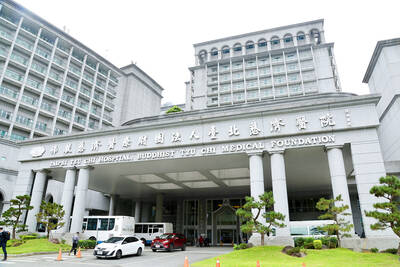
POLICE INVESTIGATING: A man said he quit his job as a nurse at Taipei Tzu Chi Hospital as he had been ‘disgusted’ by the behavior of his colleagues A man yesterday morning wrote online that he had witnessed nurses taking photographs and touching anesthetized patients inappropriately in Taipei Tzu Chi Hospital’s operating theaters. The man surnamed Huang (黃) wrote on the Professional Technology Temple bulletin board that during his six-month stint as a nurse at the hospital, he had seen nurses taking pictures of patients, including of their private parts, after they were anesthetized. Some nurses had also touched patients inappropriately and children were among those photographed, he said. Huang said this “disgusted” him “so much” that “he felt the need to reveal these unethical acts in the operating theater
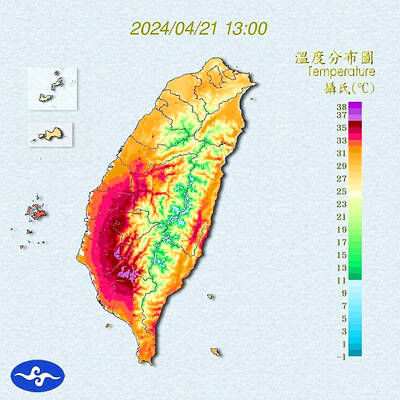
Heat advisories were in effect for nine administrative regions yesterday afternoon as warm southwesterly winds pushed temperatures above 38°C in parts of southern Taiwan, the Central Weather Administration (CWA) said. As of 3:30pm yesterday, Tainan’s Yujing District (玉井) had recorded the day’s highest temperature of 39.7°C, though the measurement will not be included in Taiwan’s official heat records since Yujing is an automatic rather than manually operated weather station, the CWA said. Highs recorded in other areas were 38.7°C in Kaohsiung’s Neimen District (內門), 38.2°C in Chiayi City and 38.1°C in Pingtung’s Sandimen Township (三地門), CWA data showed. The spell of scorching


 RSS
RSS