


The promotion of ecolabeling in Taiwan in the past decade has failed to provide consumers with enough goods in the market, according to the Consumers' Foundation (消基會) yesterday.
Taiwan launched its Green Mark Program in 1992 to promote recycling, pollution reduction and resource conservation. The objectives of ecolabeling were to both guide consumers and encourage manufacturers to design and manufacture environmentally friendly products.
Recent statistics from the Environmental Protection Administration (EPA) suggest that more than 1,800 products in Taiwan have received the Green Mark label.
However, at a press conference yesterday, consumer activists from the foundation said that products bearing the Green Mark label were rarely seen on the market.
"Apart from washing machines, air conditioner, refrigerators and a few others, we rarely see green-labeled products on the market," said Cheng Jen-hung (
Even when products receive the ecolabels Cheng said, consumers often have difficulty in finding the sticker because they are usually placed on the products arbitrarily and randomly.
The foundation also released a recent survey on the public's awareness of ecolabeling, showing that the public was unfamiliar with the system.
The survey was compiled from 1,213 questionnaires, which were filled out by consumers at 18 department stores and large supermarkets in Taipei.
According to the survey, only 48.6 percent of interviewees purchased products with the Green Mark labels. About 40 percent of interviewees said they had no idea at all about ecolabeling.
However, 82.7 percent of interviewees said they would pay extra to purchase products receiving green labels. In fact, about 61 percent of those surveyed thought that paying an additional 10 percent to protect the environment would be acceptable.
EPA officials said that "green" purchasing was heavily promoted by the UN World Summit on Sustainable Development -- held last year in Johannesburg, South Africa -- by encouraging governments to develop public-purchasing policies and action plans that promote environmentally friendly products and services.
"According to our recent survey, about 90 percent of the public has heard of ecolabeling," said Ke Chih-hung (柯志弘), deputy director-general of the EPA's Bureau of Performance Evaluation and Dispute Settlement.
Ko said the purchase of environmentally friendly products had been promoted among Cabinet-agencies and local governments.
The Cabinet marked out 27 products commonly used in government offices, including computers, stationery and air-conditioners,and set agencies the goal of spending at least 50 percent of the budgets allocated for these resources on environmentally friendly goods.
According to EPA statistics released in April, the government last year spent NT$2.65 billion on environmentally friendly products listed by the Cabinet, accounting for 65.6 percent of the total.

A group of Taiwanese-American and Tibetan-American students at Harvard University on Saturday disrupted Chinese Ambassador to the US Xie Feng’s (謝鋒) speech at the school, accusing him of being responsible for numerous human rights violations. Four students — two Taiwanese Americans and two from Tibet — held up banners inside a conference hall where Xie was delivering a speech at the opening ceremony of the Harvard Kennedy School China Conference 2024. In a video clip provided by the Coalition of Students Resisting the CCP (Chinese Communist Party), Taiwanese-American Cosette Wu (吳亭樺) and Tibetan-American Tsering Yangchen are seen holding banners that together read:

UNAWARE: Many people sit for long hours every day and eat unhealthy foods, putting them at greater risk of developing one of the ‘three highs,’ an expert said More than 30 percent of adults aged 40 or older who underwent a government-funded health exam were unaware they had at least one of the “three highs” — high blood pressure, high blood lipids or high blood sugar, the Health Promotion Administration (HPA) said yesterday. Among adults aged 40 or older who said they did not have any of the “three highs” before taking the health exam, more than 30 percent were found to have at least one of them, Adult Preventive Health Examination Service data from 2022 showed. People with long-term medical conditions such as hypertension or diabetes usually do not
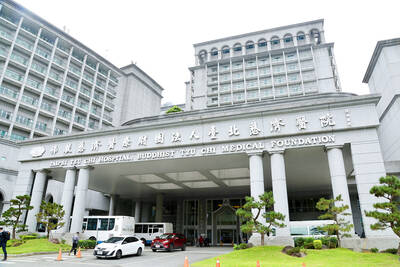
POLICE INVESTIGATING: A man said he quit his job as a nurse at Taipei Tzu Chi Hospital as he had been ‘disgusted’ by the behavior of his colleagues A man yesterday morning wrote online that he had witnessed nurses taking photographs and touching anesthetized patients inappropriately in Taipei Tzu Chi Hospital’s operating theaters. The man surnamed Huang (黃) wrote on the Professional Technology Temple bulletin board that during his six-month stint as a nurse at the hospital, he had seen nurses taking pictures of patients, including of their private parts, after they were anesthetized. Some nurses had also touched patients inappropriately and children were among those photographed, he said. Huang said this “disgusted” him “so much” that “he felt the need to reveal these unethical acts in the operating theater
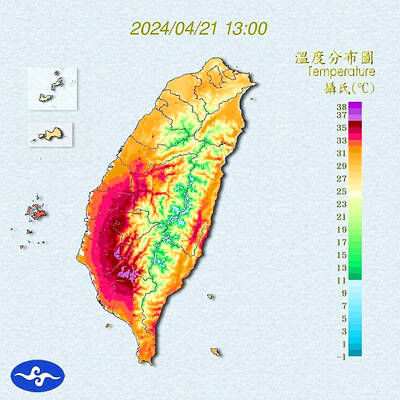
Heat advisories were in effect for nine administrative regions yesterday afternoon as warm southwesterly winds pushed temperatures above 38°C in parts of southern Taiwan, the Central Weather Administration (CWA) said. As of 3:30pm yesterday, Tainan’s Yujing District (玉井) had recorded the day’s highest temperature of 39.7°C, though the measurement will not be included in Taiwan’s official heat records since Yujing is an automatic rather than manually operated weather station, the CWA said. Highs recorded in other areas were 38.7°C in Kaohsiung’s Neimen District (內門), 38.2°C in Chiayi City and 38.1°C in Pingtung’s Sandimen Township (三地門), CWA data showed. The spell of scorching


 RSS
RSS