


■Travel
Malaysia drops health rule
Malaysia has rescinded an order demanding that visitors from Taiwan present a health report along with their applications for visas, effective as of yesterday, according to diplomatic sources. The health certificate requirement was adopted following the outbreak of SARS in Taiwan in mid-March. The Malaysian government decided to rescind the requirement in order to help rekindle tourism in the post-SARS era, officials from Malaysia's Tourism Bureau, Taipei Office said. To further reinvigorate its tourist industry, the Malaysian tourism sector is cooperating with airline carriers in offering incentives to attract Taiwanese, including five-day golf and spa tours at lower costs.
■ Diplomacy
Israel eases visa rules
Israeli Deputy Prime Minister Ehud Olmert said Wednesday that Israel will offer multiple-entry visas to Taiwanese and that his country's representative office in Taipei will directly issue such visas. Olmert made the announcement during a lunch meeting with a visiting Taiwanese trade delegation, headed by Minister of Economic Affairs Lin Yi-fu (林義夫). Olmert's announcement came after Lin and Taiwan's representative to Israel, R. T. Yang (楊榮藻), asked him to help resolve difficulties faced by Taiwanese businesspeople in obtaining visas. Lin is the first ministerial-level official ever to be invited to visit Israel in his official capacity. He discussed possible trade, economic and technological cooperative projects with Olmert, who is also the minister for trade and industry. Olmert said he hopes the two countries will expand cooperation in trade, investment and technological research, particularly in the telecommunication, biotechnology, automobile and aerospace industries.
■ Health
Chen leads blood drive
President Chen Shui-bian (陳水扁) donated blood yesterday as part of an effort to inspire more people to do the same in order to help relieve shortages in some parts of the nation. Chen led Presidential Office staff in donating blood and encouraged journalists covering the event to make donations as well. A Presidential Office spokesman said Chen has frequently donated blood in the past but he could not do so for the past year because of his visit to several epidemic-stricken African countries in June last year. Health regulations bar those who have been to an area affected by a statutory communicable disease from donating blood within one year of their return to Taiwan.
■ Diplomacy
Taiwan helps Panama City
Ambassador to Panama David Hu (胡正堯) donated a batch of construction materials worth US$30,000 to Panama City Mayor Juan Carlos Navarro on behalf of the government on Wednesday. Navarro is planning up to 70 community construction projects in 21 remote areas in the city, including the refurbishing of pavement, plumbing and lighting facilities, as well as sports centers and other public facilities. He has asked Taiwan to help by providing construction materials and equipment. This is the third time that Navarro has solicited and received assistance from Taiwan for construction. Hu said that although the donation this time is not as big as before, he hopes it will help in the improvement of the lives of the community residents.
Agencies
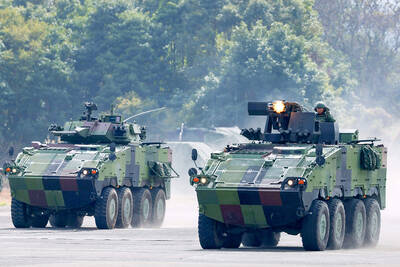
Taiwan must first strengthen its own national defense to deter a potential invasion by China as cross-strait tensions continue to rise, multiple European lawmakers said on Friday. In a media interview in Taipei marking the conclusion of an eight-member European parliamentary delegation’s six-day visit to Taiwan, the lawmakers urged Taipei to remain vigilant and increase defense spending. “All those who claim they want to protect you actually want to conquer you,” Ukrainian lawmaker Serhii Soboliev said when asked what lessons Taiwan could draw from Russia’s invasion of Ukraine. Soboliev described the Kremlin as a “new fascist Nazi regime” that justified
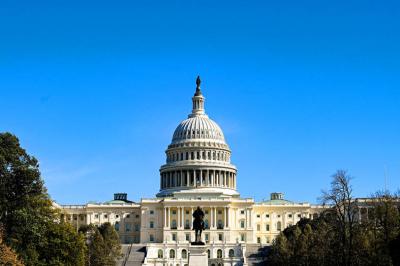
The US House of Representatives yesterday passed the PROTECT Taiwan Act, which stipulates that Washington would exclude China from participating in major global financial organizations if its actions directly threaten Taiwan’s security. The bill, proposed by Republican US Representative Frank Lucas, passed with 395 votes in favor and two against. It stipulates that if China’s actions pose any threat to Taiwan’s security, economic or social systems, the US would, “to the maximum extent practicable,” exclude China from international financial institutions, including the G20, the Bank for International Settlements and the Financial Stability Board. The bill makes it clear that China

‘T-DOME’: IBCS would increase Taiwan’s defense capabilities, enabling air defense units to use data from any sensor system and cut reaction time, a defense official said A defense official yesterday said that a purported new arms sale the US is assembling for Taiwan likely includes Integrated Battle Command Systems (IBCS). The anonymous official’s comments came hours after the Financial Times (FT) reported that Washington is preparing a US$20 billion arms sale encompassing “Patriot missiles and other weapons,” citing eight sources. The Taiwanese official said the IBCS is an advanced command and control system that would play a key role in President William Lai’s (賴清德) flagship defense program, the “T-Dome,” an integrated air defense network to counter ballistic missiles and other threats. The IBCS would increase Taiwan’s
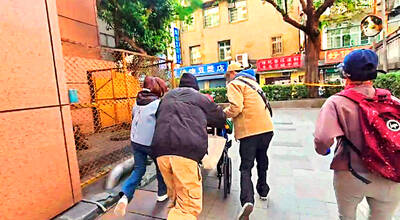
NOMINAL NEWLYWEDS: A man’s family and his wife — his long-term caregiver — are engaged in a legal dogfight over the propriety and validity of the recent union A centenarian’s marriage to his caregiver unbeknownst to his children has prompted legal action, as the caregiver accuses the man’s children of violating her personal liberty and damaging her reputation, while the children have sought a legal option to have the marriage annulled. According to sources, the 102-year-old man surnamed Wang (王) lives in Taipei’s Zhongshan District (中山) and previously worked as a land registration agent. Wang reportedly owns multiple properties and parcels of land worth several hundred million New Taiwan dollars and has ten children. His caregiver, a 69-year-old surnamed Lai (賴), has been caring for him since about 1999,


 RSS
RSS