

Department of Health Deputy Director-General Twu Shiing-jer (
Addressing a medal presentation ceremony at the Executive Yuan yesterday afternoon, Yu announced that Twu will become the acting director-general on Sunday and that he was not looking for anyone else to take the position permanently.
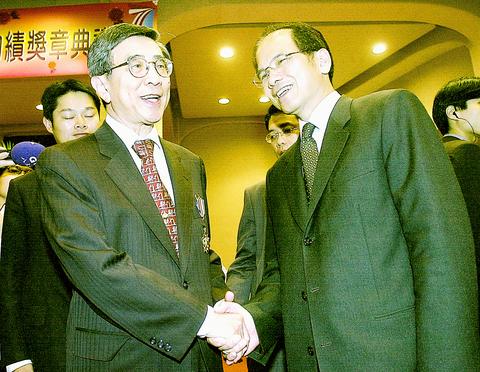
PHOTO: CHU YU-PIN, TAIPEI TIMES
"He'll be performing the task of the director but without the title," Yu said.
"As Twu will be acting director for a period of time, I'm not looking for any potential candidates for the time being," Yu said.
Twu, who served as the director of the Bureau of Health when Chen Shu-bian (
Yu would not explain why Twu was not being given the title director-general, but said he had looked at other candidates for the position.
"Although I've asked several candidates about the job, some hesitated to leave their current jobs, some lacked political experience and others feel uncomfortable answering to the Legislative Yuan," Yu said.
Lee, who has been suffering from asthma and high blood pressure, received a medal for his outstanding performance as the department's director-general over the seven months since Yu took office in February. Lee has held the position since Chen won the presidential election in 2000.
Yu praised Lee for his guts in pushing for reform, especially in raising the insurance premiums for the national health insurance scheme, which has drawn criticism from the opposition parties and labor groups.
"When it comes to reforms, he doesn't hesitate and totally forgets about his physical problems," Yu said. "The new insurance scheme -- the largest-scale reform of its kind since the launch of the program eight years ago -- wouldn't have been completed without his guts and determination."
In addition to thanking Yu and his co-workers for their support and cooperation, Lee said that he would continue to contribute to society if the government called upon him again.
"Although I'll soon leave my post, I'll continue to make personal contributions as a civilian for the betterment of the country," Lee said.
Lee, who is on leave from the Buddhist Tzu-Chi University in Hualien City, where he served as its president for nearly eight years, will return to the school and resume teaching.
Twu, who also attended yesterday's ceremony, said that he would do his best to continue where his predecessor left off.
"The first thing I'll have to tackle is the outbreak of dengue fever in Kaohsiung County. I'll go down south again as soon as I get the chance," he said.
Also high on the agenda, Twu said, is the new national health insurance scheme, which will go into effect on his first day as acting director-general.
"We'll do our job in accordance with the timetable set down by my predecessor," Twu said.
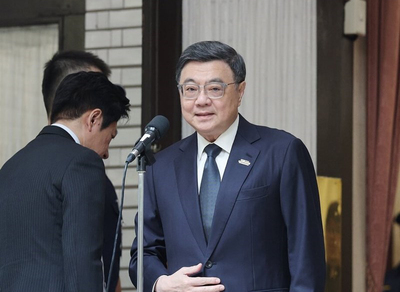
The government would continue monitoring online rumors that a pneumonic plague outbreak has spread from Russia into China and could enhance existing quarantine measures, Premier Cho Jung-tai (卓榮泰) said today. During a legislative meeting, Democratic Progressive Party Legislator Wang Ting-yu (王定宇) said rumors were circulating that the disease had spread across several Chinese provinces. He asked Cho whether the government was prepared to prevent the disease from spreading to Taiwan, given the frequent exchanges between Taiwan and China, and how concerned the government was about the alleged outbreak. The Ministry of Health and Welfare implemented border quarantine measures after briefing the Executive Yuan
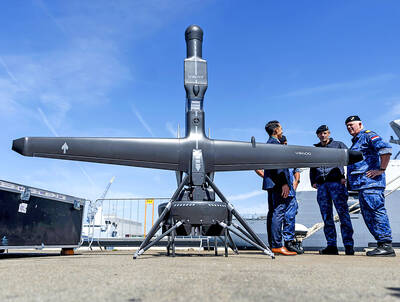
DEFENSE PROCUREMENT: Taiwan could become the largest operator of V-BAT drones outside the US once they are delivered, the Ministry of National Defense said The navy and the coast guard are acquiring 292 units of MQ-35A V-BAT vertical takeoff and landing (VTOL) surveillance drones manufactured by US-based defense technology company Shield AI, making Taiwan one of the largest buyers of the drone. The Coast Guard Administration budgeted NT$1.2 billion (US$37.1 million) to buy 12 drones, which have been delivered, Shield AI said in a report on Oct 13. The navy is planning to spend NT$36 billion under a four-year program code-named Project Yuan Xiao (遠鴞) to acquire 280 V-BAT drones, the Ministry of National Defense’s fiscal 2027 report showed. The combined procurement is expected
A Chinese People's Liberation Army (PLA) Navy aircraft carrier group was being monitored after entering the western Pacific, the Ministry of National Defense said today, after Beijing yesterday criticized Taiwan for using a water cannon against a Chinese fishing boat near the Pratas Islands (Dongsha Islands, 東沙群島). A Chinese naval task group led by the aircraft carrier Liaoning (遼寧) yesterday sailed to the western Pacific for training, Chinese state-run Xinhua news agency quoted the PLA Navy as saying. “The drill is part of the annual routine training plan aimed at testing and improving the troops’ combat readiness and enhancing their ability to

MAYORAL RACE: Su Chiao-hui made gains by persuading undecided voters and winning over voters in KMT-leaning districts, a pollster said Legislator Su Chiao-hui (蘇巧慧), the Democratic Progressive Party’s (DPP) candidate for New Taipei City mayor, has a 13.1 percentage point lead over her Chinese Nationalist Party (KMT) rival Lee Shu-chuan (李四川), a poll released yesterday showed. The poll, commissioned by the Taipei Trust in Democracy Association, showed that 43.1 percent of respondents said they would vote for Su, up 7.9 percentage points from a poll conducted in late August, while support for Lee was at 30 percent, down 4.7 percentage points. It showed that 48.6 percent of respondents thought Su would make a suitable mayor, compared with 35.9 percent for Lee. Independent candidate


 RSS
RSS