


Tourism Malaysia is a statutory body established under the Malaysian Tourism Board Act 1992 with the objective to promote Malaysia as a preferred tourist destination. It is entrusted with the task to increase the number of tourist arrivals through the many colourful events and activities, simultaneously inspiring and developing the domestic and convention market.
Recognizing the importance of tourism as one of the principal foreign exchange earners as well as a major source of employment opportunities, the Government has placed great emphasis on tourism product development by continuously upgrading the quality of existing products as well as developing new products to capture a bigger share of the world tourism market. In this regard, a vast array of tourism products has and will continue to be offered to cater for the diverse interests and demands of tourists.
Meetings, incentives conventions and Exhibitions
During 2003, Malaysia played host to several international conventions and exhibitions, namely the Non-Aligned Movement (NAM) Summit conference (20-25 Feb); the Organisation of Islamic Conferences (OIC) (11-18 Oct); Langkawi International Maritime Exhibition (LIMA) (30th Sep-5th Oct); and the ASEAN Ministers for Culture and Arts (AMCA) Meet (13-14 Oct). The year 2004 will see Malaysia playing host to more international conventions and seminars. These include the Inaugural Commonwealth Tourism Ministers' Meet (18-21 March) and the Global Meet & Experience 2004 to be held from 5 to 11 September.
Education Tourism
The increase in the number of institutions of higher learning and twinning programmes with foreign universities provided the foundation for the growth in education tourism. Currently, over 40,000 foreign students have registered with institutions of higher learning in the country (50,000 foreign students targeted for 2005). Education tourism has become popular as reflected by the demand for tours to visit schools to enable students from other countries to gain knowledge of the school education system as well as experience the Malaysian schools atmosphere, which is unique with the social interaction of the various ethnic groups.
Events & Festivals
Malaysia has embarked on a number of friendly and highly specialised campaigns through the hosting of selected major world-class events such as Formula One - Malaysian Grand Prix and the Golf Travel Mart 2003 and World Cup Golf 1999. In addition, our annual calendar of events showcases more than 600 interesting year-round attractions.
A two-year extensive domestic campaign called Cuti-Cuti Malaysia, first introduced in 1999, was re-launched on 17 February 2004. This two-year campaign from 2004 to 2005 is aimed at stimulating domestic tourism.
Malaysians of all walks of life celebrate a variety of festivals throughout the year because Malaysians of different faiths and beliefs place a great deal of importance on their respective religious festivals. The best known are Chinese New Year, Hari Raya Aidilfitri (Eid Mubarak), Deepavali, Christmas and the Iban harvest festival of Gawai and the Kadazandusun Kaamatan.
Towards 2005
The tourism sector will assume an even greater role in stimulating the growth of the Malaysian economy during the Eighth Malaysia Plan (2001-2005). Tourist arrivals are expected to grow at an average rate of 6.9 per cent per annum to reach 14.3 million by 2005. Tourism receipts are targeted to grow at an average annual rate of 9.5 per cent to reach RM29.5 billion (USD 8 billion) in 2005. To achieve the target, the Government will continue to undertake more effective tourism promotion efforts together with the national carrier, Malaysia Airlines and AirAsia as well as tour agencies.
Unity in Diversity
As a multi racial and multi cultural country, Malaysia showcases a kalaidoscope of colourful customs and religions. The Malays, the Chinese, Indian, Eurasians and other indigenous groups retain and nurture their individual customs, traditions and lifestyles.
Nevertheless, they exist in perfect harmony as the mutual tolerance, acceptance and celebration of the multi-ethnic communities and cultures in Malaysia are traits that have been successfully inculcated throughout Malaysia's history. These multiple facets of Malaysia are what make Malaysia so colourful and fascinating to others. Hence, the country is marketed under the "Malaysia Truly Asia" branding to the world.
The religious celebrations throughout the nation are more than just songs and dances. It is definitely not about showing off but a testament of our common sense and love for peace.
Despite diverse cultural and traditional backgrounds, the people of Malaysia have been able to coexist peacefully in unity and harmony. The Malaysian leaders' realistic and pragmatic formulation of government policies have enabled the country to overcome problems of imbalance that usually exist in a plural society.
Nowhere in the world is there a country like Malaysia with its beautiful landscapes matching the diversity of Malaysia's cultural heritage. The great mountains and idyllic tropical islands, the palm-fringed beaches and the million-year old rainforests add to the country's boundless charms. It is one of the few countries in the world that has brought about socio-economic transformation of the society within a span of two decades after independence.
Malaysia has not only registered rapid development, but is also seen as a model worthy of emulation by other developing countries.
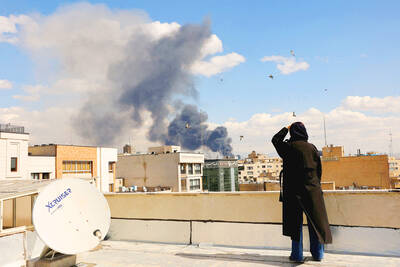
CHAOS: Iranians took to the streets playing celebratory music after reports of Khamenei’s death on Saturday, while mourners also gathered in Tehran yesterday Iranian Supreme Leader Ayatollah Ali Khamenei was killed in a major attack on Iran launched by Israel and the US, throwing the future of the Islamic republic into doubt and raising the risk of regional instability. Iranian state television and the state-run IRNA news agency announced the 86-year-old’s death early yesterday. US President Donald Trump said it gave Iranians their “greatest chance” to “take back” their country. The announcements came after a joint US and Israeli aerial bombardment that targeted Iranian military and governmental sites. Trump said the “heavy and pinpoint bombing” would continue through the week or as long

An Emirates flight from Dubai arrived at Taiwan Taoyuan International Airport yesterday afternoon, the first service of the airline since the US and Israel launched strikes against Iran on Saturday. Flight EK366 took off from the United Arab Emirates (UAE) at 3:51am yesterday and landed at 4:02pm before taxiing to the airport’s D6 gate at Terminal 2 at 4:08pm, data from the airport and FlightAware, a global flight tracking site, showed. Of the 501 passengers on the flight, 275 were Taiwanese, including 96 group tour travelers, the data showed. Tourism Administration Deputy Director-General Huang He-ting (黃荷婷) greeted Taiwanese passengers at the airport and
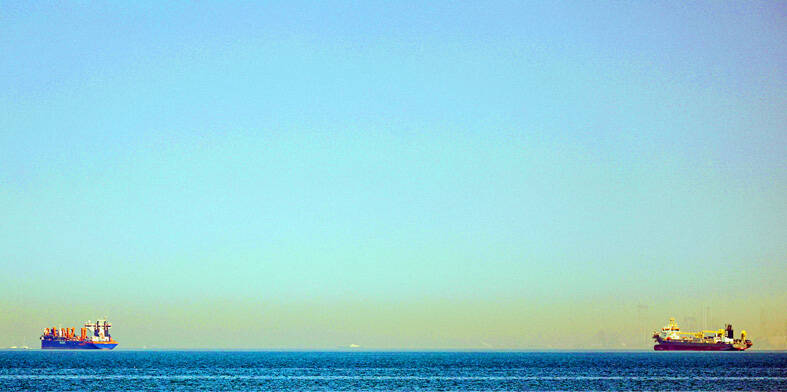
State-run CPC Corp, Taiwan (CPC, 台灣中油) yesterday said that it had confirmed on Saturday night with its liquefied natural gas (LNG) and crude oil suppliers that shipments are proceeding as scheduled and that domestic supplies remain unaffected. The CPC yesterday announced the gasoline and diesel prices will rise by NT$0.2 and NT$0.4 per liter, respectively, starting Monday, citing Middle East tensions and blizzards in the eastern United States. CPC also iterated it has been reducing the proportion of crude oil imports from the Middle East and diversifying its supply sources in the past few years in response to geopolitical risks, expanding
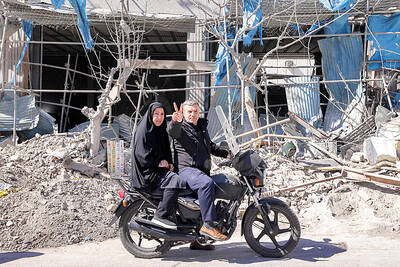
STRAIT OF HORMUZ: In the case of a prolonged blockade by Iran, Taiwan would look to sources of LNG outside the Middle East, including Australia and the US Taiwan would not have to ration power due to a shortage of natural gas, Minister of Economic Affairs Kung Ming-hsin (龔明鑫) said yesterday, after reports that the Strait of Hormuz was closed amid the conflict in the Middle East. The government has secured liquefied natural gas (LNG) supplies for this month and contingency measures are in place if the conflict extends into next month, Kung told lawmakers. Saying that 25 percent of Taiwan’s natural gas supplies are from Qatar, Chinese Nationalist Party (KMT) caucus secretary-general Lin Pei-hsiang (林沛祥) asked about the situation in light of the conflict. There would be “no problems” with


 RSS
RSS