


Saudi Arabia has successfully preserved and strengthened its cultural heritage while achieving the spectacular development and modernization of the past three decades is testimony to the resilience of Saudi culture and the nation's determination to cherish and protect it. Today amid the bustle of life in the 21st century in modern Saudi society contemporary Saudi writers look to the past for inspiration. Popular musicians incorporate ancient rhythms and instruments into their modern music and painters capture traditional scenes.
Folk Music & Dance
A living part of the country's ancient heritage, Saudi Arabia's music and traditional dance echo the timeless melodies of chanting Bedouin poets and singing swordsmen. Folklore music varies from region to region. The national dance of Saudi Arabia, the men's sword dance known as ardha, has its roots in the Najd. It is an ancient tradition that combines singers, dancers and a poet or narrator. Men carrying swords stand shoulder to shoulder and, from their midst, a poet begins to sing verses or a short melodic line while drummers beat out the rhythm. In the Hijaz, the al-sihba folk music combines poetry and songs of Arab Andalusia in medieval Spain. A traditional dance and song known as the al-mizmar is also performed in Makkah, Madinah and Jeddah. This features the music of the al-mizmar, a woodwind instrument similar to the oboe. Since the early 1980s the Saudi Arabian Society for Culture and the Arts has been studying and recording folk music and dance traditions in the Kingdom. The producers of a popular television show "Folk Arts" have also traveled around the country interviewing local musicians and recording the music and dance of every tribe and village. Today, there are over 50 folklore dance and music groups in the Kingdom. Popular contemporary Saudi singers value the classical music traditions that have influenced their work and are skilled at incorporating ancient rhythms and instruments, such as the tar and the oud, into their modern music.
Traditional Dress & Jewelry
Saudi Arabia's dress is one of its strongest ties to the past and reflects the challenging environment, faith and values of its people. The practicality of loose, flowing garments in a hot wind-swept climate was reinforced by the Islamic ideals of propriety in dress and conduct.
Today, as in antiquity, men wear a thawb, a simple, ankle-length shirt of wool or cotton. Traditional headwear includes a ghutra, a large diagonally-folded cotton square worn over a kufiyyah (skull cap) and held in place by an igaal, a double-coiled cord circlet. A flowing floor-length outer cloak, known as a bisht, is generally made of wool or camel hair in black, beige, brown or cream tones.
The woman's traditional dress displays regional and tribal motifs and is embellished with coins, sequins, metallic thread or brilliantly colored fabric appliques. The classic headdress is a shayla - a scarf of black gauzy fabric wrapped around the head and secured by a variety of head circlets, hats or jewelry. An abaya, a black outer cloak, is customarily worn over the dress in public.
Fine embroidery of clothes and the weaving of elaborately-designed textiles have also been long practiced in the peninsula. Designs used in tent coverings, saddlebags and carpets vary from region to region. Jewelry has been an essential element of Arabian dress for thousands of years. Typically made of silver or silver alloy, traditional bracelets, rings, necklaces and head ornaments are characterized by their impressive size, bold designs and hand-crafted appearance. The jewelry is often embellished with semi-precious stones, corals, beads and coins.
Calligraphy
Arabic calligraphy dates back approximately 1,400 years to the first century of Islam. Historically, the primary subject matter for calligraphy has been the Holy Qur'an. Characterized as the quintessential Islamic art form, calligraphy is a revered art in Saudi Arabia. Saudi museums collect and display rare manuscripts and other organizations commission works of calligraphy, provide training in the art form, and hold competitions to foster a new generation of young artists.
Today, calligraphy is a dominant theme in metal work, ceramics, glass, textiles, painting and sculpture throughout Saudi Arabia. Inscriptions can be found adorning the interior walls of mosques, as well as public and private office buildings and homes.
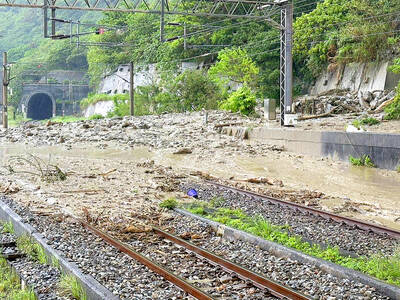
ROLLER-COASTER RIDE: More than five earthquakes ranging from magnitude 4.4 to 5.5 on the Richter scale shook eastern Taiwan in rapid succession yesterday afternoon Back-to-back weather fronts are forecast to hit Taiwan this week, resulting in rain across the nation in the coming days, the Central Weather Administration said yesterday, as it also warned residents in mountainous regions to be wary of landslides and rockfalls. As the first front approached, sporadic rainfall began in central and northern parts of Taiwan yesterday, the agency said, adding that rain is forecast to intensify in those regions today, while brief showers would also affect other parts of the nation. A second weather system is forecast to arrive on Thursday, bringing additional rain to the whole nation until Sunday, it
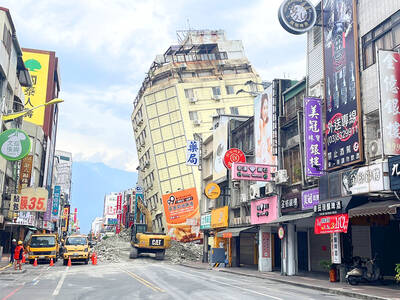
LANDSLIDES POSSIBLE: The agency advised the public to avoid visiting mountainous regions due to more expected aftershocks and rainfall from a series of weather fronts A series of earthquakes over the past few days were likely aftershocks of the April 3 earthquake in Hualien County, with further aftershocks to be expected for up to a year, the Central Weather Administration (CWA) said yesterday. Based on the nation’s experience after the quake on Sept. 21, 1999, more aftershocks are possible over the next six months to a year, the agency said. A total of 103 earthquakes of magnitude 4 on the local magnitude scale or higher hit Hualien County from 5:08pm on Monday to 10:27am yesterday, with 27 of them exceeding magnitude 5. They included two, of magnitude

CONDITIONAL: The PRC imposes secret requirements that the funding it provides cannot be spent in states with diplomatic relations with Taiwan, Emma Reilly said China has been bribing UN officials to obtain “special benefits” and to block funding from countries that have diplomatic ties with Taiwan, a former UN employee told the British House of Commons on Tuesday. At a House of Commons Foreign Affairs Committee hearing into “international relations within the multilateral system,” former Office of the UN High Commissioner for Human Rights (OHCHR) employee Emma Reilly said in a written statement that “Beijing paid bribes to the two successive Presidents of the [UN] General Assembly” during the two-year negotiation of the Sustainable Development Goals. Another way China exercises influence within the UN Secretariat is
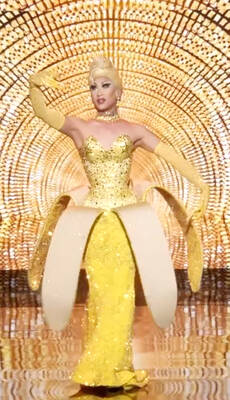
Taiwan’s first drag queen to compete on the internationally acclaimed RuPaul’s Drag Race, Nymphia Wind (妮妃雅), was on Friday crowned the “Next Drag Superstar.” Dressed in a sparkling banana dress, Nymphia Wind swept onto the stage for the final, and stole the show. “Taiwan this is for you,” she said right after show host RuPaul announced her as the winner. “To those who feel like they don’t belong, just remember to live fearlessly and to live their truth,” she said on stage. One of the frontrunners for the past 15 episodes, the 28-year-old breezed through to the final after weeks of showcasing her unique


 RSS
RSS