


Angola is betting on the Roller Hockey World Cup to bolster employment and tourism in a country where more than half the population lives in poverty.
The Southern African nation has spent US$89 million building three pavilions in the capital, Luanda, and in the towns of Malange and Namibe and a further US$17 million for the 41st staging of the tournament that began yesterday. Officials say the 16-nation event will boost employment and attract interest from the country’s youth.
“The country will become more known and we’ll have less people taking part in risky behavior such as crime because they’ll be entertained and busy with hockey,” said Pedro Azevedo Chipita, deputy coordinator of the organizing committee. “And we’ll create jobs.”
Currently tourists are rare because of a visa system that can take months before entry is granted, while 54 percent of the population lives on less than US$1.25 a day, according to the UN. The Angolan economy ministry puts the unemployment rate at more than 20 percent.
Tickets cost the equivalent of US$2 to US$20 and are good for an entire day’s matches at one location, which could be as many as three games early in the tournament. Paulo Branco, an administrator at the ticket sales company, could not say how many foreigners would visit the country during the competition.
The game, sometimes called quad-hockey in the US for the four-wheel skates used, is played in about 60 countries and was a demonstration sport at the 1992 Summer Olympics in Barcelona. Portugal, which brought the game to Angola during colonial rule, and Spain are the strongest nations with 15 world titles apiece. Italy has four.
Roller hockey’s old-style skates allow greater agility than ball hockey, which is usually played on asphalt using in-line skates.
“This event will help diversify sports in Angola given the recently constructed sports infrastructure,” Chipita said. “You can see there’s roller hockey fever, the city is full of skaters.”
Luanda’s 11,740-seat pavilion was almost sold out earlier this week for yesterday’s opening match between the hosts and South Africa.
Basketball and soccer are the most popular sports in Angola and the country won the African Basketball Championship this year. It hosted soccer’s African Cup of Nations in 2010, building new stadiums in four cities at a cost of US$600 million, according to the government. That event was marred by the killing of two members of the Togo squad by separatists in the northern region of Cabinda. About 4,000 police will be on hand for these games, organizers said.
“We hope to achieve fourth place since there are stronger teams,” said Helio Aragao, a spokesman for the organizing committee. “If we can place higher, all the better.”
Angola are in group C with Portugal, Chile and South Africa. France, Germany and Argentina play in group B along with Uruguay, who replaced England. They dropped out of the tournament for financial reasons,
The US competes in group D with Mozambique, Italy, and Colombia, while group A comprises Brazil, Switzerland, Austria and Spain.
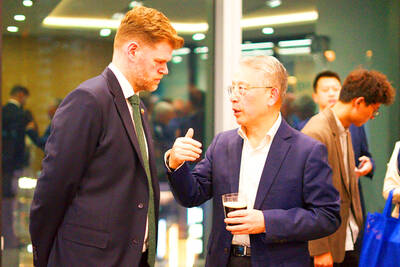
When Paddy Dwyer arrived in China in 1976, crowds jostled to catch a glimpse of him and his companions — the first Western soccer team to play in the country. China was emerging from the chaos of the Cultural Revolution, and on the brink of market reforms that would take the country from economic stagnation to explosive growth. “All we could see was lines of people running beside our bus, trying to look in the windows, to see their first visual of a white person,” he said. “It was all bicycles,” he said. “There were very few cars to be seen.” Dwyer,
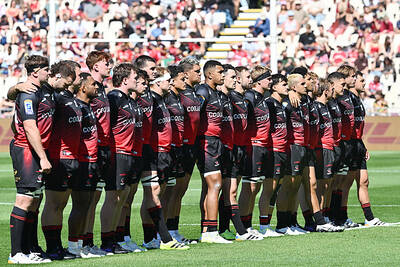
A new NZ$683 million (US$404 million) stadium that was a symbol of Christchurch’s struggle to rebuild after a deadly earthquake struck the New Zealand city is to host its first match tomorrow in front of a sellout crowd. A magnitude 6.2 earthquake killed 185 people in February 2011 and toppled or damaged buildings, including the city’s old Lancaster Park. The stadium, which hosted international rugby and cricket, and was home to the Canterbury Crusaders, was badly damaged and never reopened. It was bulldozed in 2019 and turned into sports fields, leaving the Crusaders without a permanent home. Government funding for a new stadium was

Some of Clearlake Capital Group’s largest investors are growing increasingly concerned about how much time the company’s co-founders are spending on sports investments as they have struggled to complete the fundraising for the private equity firm’s latest flagship fund. One of Clearlake’s co-founders, Behdad Eghbali, has been spending what some investors described as a disproportionate amount of time on the firm’s investment in Chelsea Football Club in recent months. Now, co-founder Jose E. Feliciano and his wife, Kwanza Jones, are nearing a record US$3.9 billion deal to acquire the San Diego Padres. That personal investment by Feliciano has set off the latest
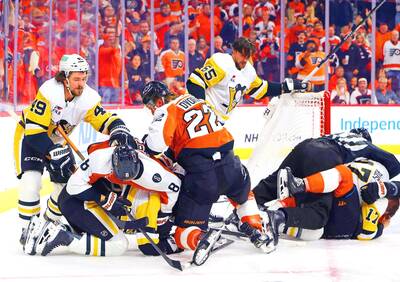
The Philadelphia Flyers and the Pittsburg Penguins on Wednesday put a squeeze on the penalty box in Game 3 of their NHL playoff series — with 11 players cramped inside their designated punishment areas. Each could have snapped a team photo after a melee broke out in the second period of the Flyers’ 5-2 win over the Penguins in their Eastern Conference first-round series. “It was a party in there,” penalized Flyers defenseman Nick Seeler said. The celebration extended into the joyous locker room after the Flyers took a 3-0 series lead. Penguins forward Bryan Rust slammed Travis Konecny to the ice behind the


 RSS
RSS