


Japan is banking on sci-fi technology and the country’s “wow factor” to win the race to host the 2022 World Cup.
After all, only in Japan can you hire a cat for an hour and stroke it while you have a coffee — or better still, while a robot boils your noodles for you.
Japan, successful co-hosts of the 2002 World Cup with Asian neighbors South Korea, are an outside bet to win the vote on Thursday when FIFA’s executive committee meets in Zurich.
South Korea are also bidding again, along with the US, Qatar and Australia.
Japan’s credentials are second to none, with all but the main stadiums already in place and still in pristine condition, while the country’s infrastructure ranks among the world’s best.
Since the Japanese government unveiled the Bullet Train to mark the country’s emergence as an economic power before the 1964 Tokyo Olympics, Japan has been at the forefront of technology.
The world’s third-largest economy, Japan still retains a great deal of its traditional charm, with shrines and quaint old shops tucked beside gleaming, new skyscrapers.
Modern Japan, with its crackling neon lights and crowded trains and shops, has turned convenience into an art with its automated wizardry.
Vending machines dispense everything from umbrellas to underwear. Japan boasts the highest number of machines per capita in the world and even has them at the top of Mount Fuji.
World Cup bidders plan to beam matches on to giant 3D hologram-style screens in one of many hi-tech projects designed to amaze fans around the world during the 2022 tournament.
Translation earpieces will allow fans from different countries to interact, aided by devices to allow viewers to gather information by pointing to players on the pitch.
“Japan has always been at the center of technological excellence,” said bid director Yuichiro Nakajima. “Can we do it? Yes we can!”
Bold, presidential-style statements of intent come with the territory of bidding for major sporting events, but Japanese bid leaders have also struck a note of caution.
Japan Football Association (JFA) president Junji Ogura said: “It will be very difficult to predict who will win. It will be a real fight to the end.”
Former JFA chief Saburo Kawabuchi warned that Japan risked being relegated to the status of rank outsiders.
“Unless we really go all out, we won’t stand a chance,” he said. “Japan’s chances are not zero, but it will be very tough for us.”
“The US are the favorites and Qatar will also pick up a lot of votes,” he added, aware that Asian Football Confederation (AFC) president Mohamed Bin Hammam has backed his native country.
With plans underway to build an 80,000-seater main stadium on the outskirts of Osaka, however, Japan remains a good choice for FIFA in terms of marketing and safety.
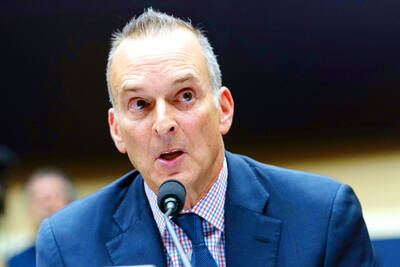
Revelations of positive doping tests for nearly two dozen Chinese swimmers that went unpunished sparked an intense flurry of accusations and legal threats between the World Anti-Doping Agency (WADA) and the head of the US drug-fighting organization, who has long been one of WADA’s fiercest critics. WADA on Saturday said it was turning to legal counsel to address a statement released by US Anti-Doping Agency (USADA) CEO Travis Tygart, who said WADA and anti-doping authorities in China swept positive tests “under the carpet by failing to fairly and evenly follow the global rules that apply to everyone else in the world.” The
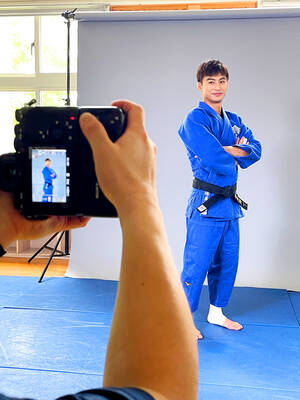
Taiwanese judoka Yang Yung-wei on Saturday won silver in the men’s under-60kg category at the Asian Judo Championships in Hong Kong. Nicknamed the “judo heartthrob” in Taiwan, the Olympic silver-medalist missed out on his first Asian Championships gold when he lost to Japanese judoka Taiki Nakamura in the finals. Yang defeated three opponents on Saturday to reach the final after receiving a bye through the round of 32. He first topped Laotian Soukphaxay Sithisane in the round of 16 with two seoi nage (over-the-shoulder throws), then ousted Indian Vijay Kumar Yadav in the quarter-finals with his signature ude hishigi sankaku gatame (triangular armlock). He

RALLY: It was only the second time the Taiwanese has partnered with Kudermetova, and the match seemed tight until they won seven points in a row to take the last set 10-2 Taiwan’s Chan Hao-ching and Russia’s Veronika Kudermetova on Sunday won the Porsche Tennis Grand Prix women’s doubles final in Stuttgart, Germany. The pair defeated Norway’s Ulrikke Eikeri and Estonia’s Ingrid Neel 4-6, 6-3, 10-2 in a tightly contested match at the WTA 500 tournament. Chan and Kudermetova fell 4-6 in the first set after having their serve broken three times, although they played increasingly well. They fought back in the second set and managed to break their opponents’ serve in the eighth game to triumph 6-3. In the tiebreaker, Chan and Kudermetova took a 3-0 lead before their opponents clawed back two points, but
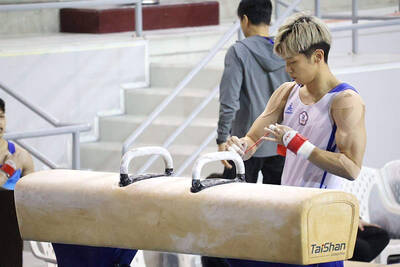
Taiwanese gymnast Lee Chih-kai failed to secure an Olympic berth in the pommel horse following a second-place finish at the last qualifier in Doha on Friday, a performance that Lee and his coach called “unconvincing.” The Tokyo Olympics silver medalist finished runner-up in the final after scoring 6.6 for degree of difficulty and 8.800 for execution for a combined score of 15.400. That was just 0.100 short of Jordan’s Ahmad Abu Al Soud, who had qualified for the event in Paris before the Apparatus World Cup series in Qatar’s capital. After missing the final rounds in the first two of four qualifier


 RSS
RSS