


Tennis has moved out of the country club and turned into one of the fastest-growing sports in the US as Americans looking for a cheap pastime in a bad economy have hit the courts.
On the professional circuit, the US Open starts next week but, if recent viewership trends are any indication, not as many Americans will tune in as did in years past.
These days, they are more likely to grab a racket than a remote control. The number of Americans playing tennis increased 43 percent to 18.5 million from 2000 to last year, according to the Sporting Goods Manufacturers Association (SGMA).
That is the steepest growth for any traditional sport, leaving aside games such as lacrosse and table tennis.
Golf, which has always been closely associated with tennis because of its country-club roots, has seen some decline.
The SGMA said golf dropped 5 percent last year to 27.1 million players, even before the Tiger Woods scandal.
Experts say this latest tennis craze is less of a celebrity-driven phenomenon than the last US tennis boom in the 1970s, when US professionals such as Jimmy Connors, Billie Jean King and Arthur Ashe dominated the game and drew amateurs to the courts in emulation of their idols.
PLANNED GROWTH
“This current boom that’s happened in tennis has been orchestrated, we’ve been working on it a long time,” said Kurt Kamperman, chief executive of community tennis at the United States Tennis Association (USTA).
Tennis insiders point to a 1994 cover story in Sports Illustrated magazine with the headline “Is Tennis Dead?”, written at a time when participation was at a low point, as the catalyst for industry leaders’ decision to try to draw in new players.
In 1998, the USTA, the organizer of the US Open, made a US$36 million, multiyear commitment to boost tennis at the local level. That has increased, with the USTA saying it now spends more than US$40 million a year on such initiatives.
Tennis manufacturers such as Wilson, Head and Prince also poured in millions of dollars, as instructors offered free lessons and public parks were turned into “welcome centers” to introduce new players to the game.
More recently, the Tennis Industry Association has showcased “cardio tennis” as a new fitness activity.
VIEWERSHIP
At the same time, US tennis viewership has fallen as European players such as Spaniard Rafael Nadal, who won the French Open and Wimbledon this year, have dominated. Last year, 2.6 million Americans tuned into the US Open, compared with 5.5 million in 1991, said the Nielsen Co.
Experts say the economy has also helped to popularize tennis as a participation sport.
Rick Horrow, visiting expert on sports at the Harvard Law School and author of Beyond the Box Score, said along with soccer, which is seeing new interest in the US since the World Cup, tennis is the “next rising thing.”
ECONOMICAL SPORT
“Golf is a fairly expensive sport to take up and a somewhat exclusive sport to join,” Horrow said. “In many ways, tennis is one of the sports that can be relatively easy to play, especially given this economy.”
Entry-level rackets sell for as low as US$15. For US$200, a novice can buy the same state-of-the-art racket that former world No. 1 Roger Federer of Switzerland wields.
Wholesale trade in rackets, balls, accessories and equipment totaled $242 million in the US last year, said the SGMA.
Tennis is also growing in Asia, but industry insiders said the largest number of new players had been in the U.S.
“The U.S., if you had to pick a specific country, is where we have seen the most growth the last nine years,” Muir said.
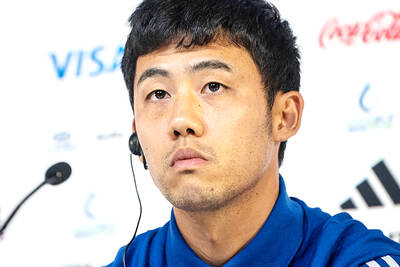
Japan captain Wataru Endo on Thursday was ruled out of the FIFA World Cup with injury and announced his international retirement, three days before his team’s opener against the Netherlands. The Liverpool midfielder pulled out of the tournament after failing to recover from a foot injury and was replaced in Japan’s squad by Shuto Machino. The 33-year-old Endo said on social media that he was “frustrated” at not being able to play, but backed his team to impress in Group F, where they face the Netherlands, Tunisia and Sweden. “There will definitely come a time in the future when Japan win the World
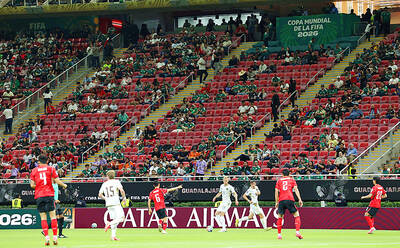
FIFA on Friday blamed the empty seats during the FIFA World Cup match between South Korea and the Czech Republic in Guadalajara, Mexico, on fans who watched from the concourses. There were many visible empty spots at the 45,664-capacity Guadalajara Stadium, with sections in the middle of the stands showing many unoccupied spaces and with other empty seats scattered around the venue. The announced attendance was 44,985 — including FIFA president Gianni Infantino. “Official attendance figures reflect the number of tickets scanned and spectators present within the stadium footprint, rather than visual assessments of seating occupancy at any given moment
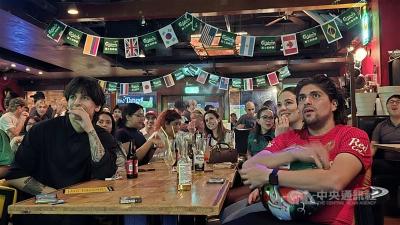
About 100 people gathered at a bar in Taipei to watch the FIFA World Cup kick off in Mexico, despite the early hour of 3am last night. All seats had been reserved before the game started, said a clerk at Brass Monkey, a bar in Taipei where customers can watch live sports broadcasts. The Group A clash between Mexico and South Africa drew supporters from multiple continents to the venue. For Misael Alanis, a Mexican student who has lived in Taiwan for two-and-a-half years, the atmosphere was just as important as the game itself. "There are a lot of Mexicans here and you can
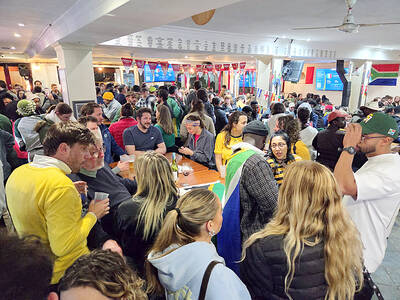
About 100 people gathered at a bar in Taipei to watch the FIFA World Cup start in Mexico, despite the early hour of 3am yesterday. All seats had been reserved before the game started, said a clerk at the Brass Monkey, a bar in Taipei where customers can watch live sports broadcasts. The Group A clash between Mexico and South Africa drew supporters from multiple continents to the venue. For Misael Alanis, a Mexican student who has lived in Taiwan for two-and-a-half years, the atmosphere was just as important as the game itself. “There are a lot of Mexicans here and you can tell


 RSS
RSS