


Pakistan yesterday reversed its decision to send its powerful military intelligence chief to help probe the Mumbai terror attacks, as the army said it had not been consulted on the plan.
“A spokesman of the Prime Minister’s House has said that a representative of ISI will visit India instead of the director-general of the ISI to help in investigating the Mumbai terrorism incident,” a statement said overnight.
Indian Prime Minister Manmohan Singh asked his Pakistani counterpart Yousuf Raza Gilani to send the Inter-Services Intelligence (ISI) chief during a phone conversation on Friday, after New Delhi blamed the attacks on its neighbor.
Pakistan strongly condemned the assaults on the Indian commercial capital, which have left 195 people dead and 295 injured, and denied any involvement.
Both Gilani and Pakistani President Asif Zardari talked to Singh and offered to cooperate in the investigation amid concerns the row could unhinge a slow-moving process between the two nuclear-armed rivals.
Gilani cut short a stay in the eastern city of Lahore and flew back to Islamabad late pn Friday for urgent consultations after unease in military circles over the unprecedented move to send the ISI chief to India, senior government officials said.
Before the government reversal, chief army spokesman Major-General Athar Abbas had said that the decision to send the ISI chief had not been conveyed officially to the army.
The statement indicating the government’s change of heart was issued a few hours later.
Gilani was to chair a special Cabinet meeting later in the day to discuss the ramifications of Indian allegations that elements from Pakistan were involved in the attacks.
An official in Prime Minister House said a special plane was being sent to India to bring back Pakistani Foreign Minister Shah Mahmood Qureshi to participate in the emergency Cabinet meeting.
The Mumbai attack came while Qureshi was in India for bilateral talks with Indian officials.
The Indian allegation surprised Pakistan’s new democratic government, which has repeatedly vowed to work with India to combat terrorism in the region.
Security sources said it was unthinkable for Pakistan to disturb a peaceful eastern border with India as the country was embroiled in a long and drawn-out fight against al-Qaeda and Taliban militants on the western border with Afghanistan.
India has in the past accused the ISI of helping attacks on Indian targets by militants, including July’s bombing of the Indian embassy in the Afghan capital Kabul.
Gilani said Singh had told him that a preliminary investigation showed the attack originated from the Pakistani city of Karachi.
Qureshi said India had spoken too swiftly in blaming “elements in Pakistan” for the attacks and should avoid a “knee-jerk” response.
“My honest view is the government should have reflected more in coming to its conclusions,” Qureshi told a gathering of female journalists in the Indian capital on Friday.
“Let us build a new relationship or we could get sucked back into a situation that we have been living in for 60 years and that will be a tragedy as large as this one,” he said.
“We should avoid a replay of that beaten track of the blame game,” Qureshi said.
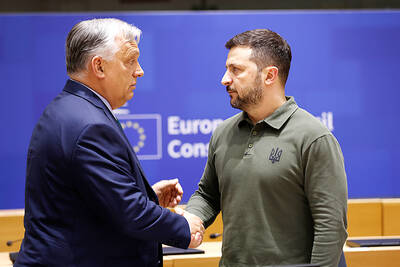
Hungarian authorities temporarily detained seven Ukrainian citizens and seized two armored cars carrying tens of millions of euros in cash across Hungary on suspicion of money laundering, officials said on Friday. The Ukrainians were released on Friday, following their detention on Thursday, but Hungarian officials held onto the cash, prompting Ukraine to accuse Hungary’s Russia-friendly government of illegally seizing the money. “We will not tolerate this state banditism,” Ukrainian Minister of Foreign Affairs Andrii Sybiha said. The seven detained Ukrainians were employees of the Ukrainian state-owned Oschadbank, who were traveling in the two armored cars that were carrying the money between Austria and
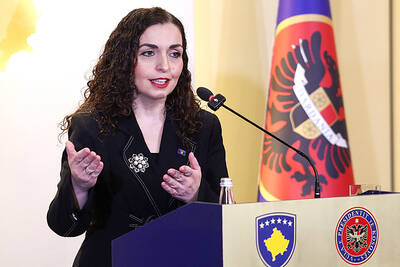
Kosovar President Vjosa Osmani on Friday after dissolving the Kosovar parliament said a snap election should be held as soon as possible to avoid another prolonged political crisis in the Balkan country at a time of global turmoil. Osmani said it is important for Kosovo to wrap up the upcoming election process and form functional institutions for political stability as the war rages in the Middle East. “Precisely because the geopolitical situation is that complex, it is important to finish this electoral process which is coming up,” she said. “It is very hard now to imagine what will happen next.” Kosovo, which declared

MORE BANS: Australia last year required sites to remove accounts held by under-16s, with a few countries pushing for similar action at an EU level and India considering its own ban Indonesia on Friday said it would ban social media access for children under 16, citing threats from online pornography, cyberbullying, online fraud and Internet addiction. “Accounts belonging to children under 16 on high-risk platforms will start to be deactivated, beginning with YouTube, TikTok, Facebook, Instagram, Threads, X, Bigo Live and Roblox,” Indonesian Minister of Communications and Digital Meutya Hafid said. “The government is stepping in so that parents no longer have to fight alone against the giants of the algorithm. Implementation will begin on March 28, 2026,” she said. The social media ban would be introduced in stages “until all platforms fulfill their
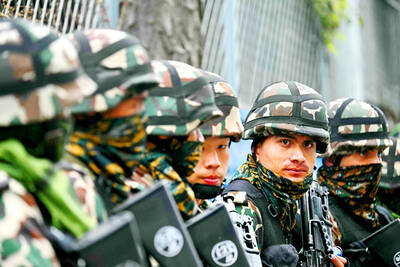
Counting was under way in Nepal yesterday, after a high-stakes parliamentary election to reshape the country’s leadership following protests last year that toppled the government. Key figures vying for power include former Nepalese prime minister K. P. Sharma Oli, rapper-turned-mayor Balendra Shah, who is bidding for the youth vote, and newly elected Nepali Congress party leader Gagan Thapa. In Kathmandu’s tea shops and city squares, people were glued to their phones, checking results as early trends flashed up — suggesting Shah’s centrist Rastriya Swatantra Party (RSP) was ahead. Nepalese Election Commission spokesman Prakash Nyupane said the counting was ongoing “in a peaceful manner”


 RSS
RSS