


The members of the Spanish national team are the potential top earners in a tense competition for the World Cup's biggest bonus pay out, with each player promised a glittering 570,000 euros (US$712,000) pay check if Spain is victorious in the championship final.
Even simple participation in the final, and then failing to win it, would still guarantee each Spanish player [substitutes and bench warmers included] a solid 360,000 euros per-man reward, officials from the Spanish Football Federation said.
England's Football Association, though financed by the world's richest club system the Premier League, is distinctly tighter on the purse strings than the Spaniards, willing only to fork out a mere 430,000 euros per player lump sum, if the English manage a repeat of their 1966 World Cup success.
Germany this championship has managed to avoid a repeat of the weeks of wrangling about bonuses during the 2002 campaign in Japan and South Korea, with the German Football Federation firmly committed on paper to give Michael Ballack and company 300,000 euros per player, if the Germans happen to come out on top.
Switzerland was in the same ball park, promising 350,000 euros per player in case of a Swiss win.
The traditionally football-mad nations of Portugal and Italy were a bit more moderate, dangling the relatively modest financial carrots of 275,000 and 250,000 euros respectively, before their national team players.
Some countries have gone for more creative payment plans, with for instance the Czech Republic and Croatia intending to redistribute prize money promised by FIFA to the countries' football associations, in an 80:20 split between players and coaches.
The Kranjcar family -- with father Zlatko coaching the Croatian national side and son Niko wearing a player uniform -- would pile up a smooth 750,000 euros, if Croatia were to win the title.
Poland's players, on the other hand, enjoy a possibly unique insurance: If the side falls out of competition due to a poor referee call, the leadership of the Polish Football Association has promised to take "events out of control of the team" under consideration when deciding the size of World Cup bonuses.
Middle Eastern sides are, perhaps characteristically, using original combinations of cash and barter goods in an attempt to inspire their national teams to World Cup success.
Every Iranian player participating in a World Cup win, for instance, would receive 50,000 euros and a Peugeot 206 automobile from a grateful Iran Football Association.
Saudia Arabia's footballers aren't even being offered money at all, with the Saudi Arabia Football Association (SAFF) trying to tempt players with new houses or land. Prince Sultan Fahad Bin Abdulaziz, the SAFF chief, "would be extremely generous," a spokesman said.
Some countries, for reasons best known to them, are keeping the precise details of World Cup bonuses a secret.
"We have little problems and we have bigger problems, but that issue [World Cup bonus payments and size] we will handle internally," said Otto Pfister, the Togo coach.

Greek swimmer Kristian Gkolomeev was the only athlete to “beat” a world record on Sunday at the Enhanced Games, winning the men’s 50m freestyle at the divisive competition where athletes were free to take performance-enhancing substances. His time of 20.81 seconds — which is not considered official — came in the final event of the night in Las Vegas, sparing the blushes of organizers who made claims that multiple world records would be surpassed due to a sophisticated doping regime. Gkolomeev, who was wearing a synthetic “supersuit” long banned at events such as the Olympics, outpaced Australia’s Cameron McEvoy’s 20.88 set in
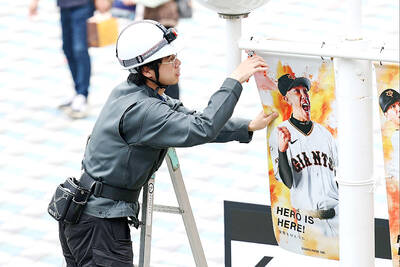
The manager of the Yomiuri Giants, one of Japan’s most popular baseball teams, resigned yesterday after he was arrested for allegedly physically attacking his teenage daughter. Shinnosuke Abe allegedly grabbed the 18-year-old and forced her to the floor at their home in central Tokyo on Monday evening, reported national broadcaster NHK and Kyodo News, citing unnamed police sources. “Leaving like this really means I’m causing you a lot of trouble, and I feel truly sorry about that,” Abe told a hastily arranged news conference, his eyes red with tears. The former star catcher, who is among baseball-obsessed Japan’s most recognized sports figures,
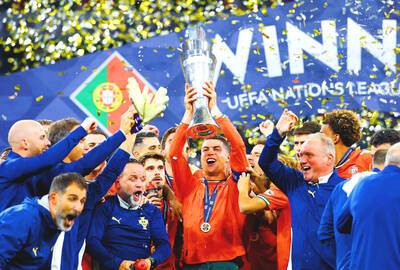
For some, Cristiano Ronaldo remains the essential spearhead for Portugal’s FIFA World Cup bid, while others believe his presence would prevent Roberto Martinez’s strong side from flourishing. The debate around the five-time Ballon d’Or winner rages on, as it did at UEFA Euro 2024 and four years ago in Qatar — yet Ronaldo endures, ready to play in a record sixth World Cup. The 41-year-old remains a global superstar despite swapping the European elite for Saudi Arabia’s Al-Nassr, and is the leading men’s international goalscorer with 143 strikes. With 25 of those coming in 30 games under Martinez, the coach
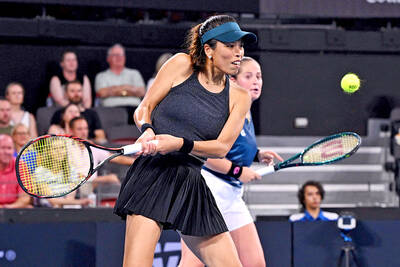
Taiwanese tennis star Hsieh Su-wei on Wednesday advanced to the second round of the mixed doubles at the French Open, after she and German partner Mark Wallner defeated Slovenian Andreja Klepac and Briton Lloyd Glasspool in straight sets, despite temperatures exceeding 32°C in Paris, while Taiwan’s top men’s doubles player Ray Ho also reached the second round. Hsieh, who made it to the semi-finals in the mixed doubles at Roland Garros in 2024, and Wallner defeated Klepac and Glasspool 6-3, 7-5 in just more than an hour, converting three of five break points, while holding their opponents to just one conversion


 RSS
RSS