


It appears so easy for the Yankees now. Maybe too easy.
Alex Rodriguez is about to be the new name on the Yankees' marquee, the third hitter in the batting order and the third baseman. His arrival has created a hole at second base with Alfonso Soriano en route to Texas, but the owner George Steinbrenner surely will find somebody special to fill that hole. If only Rogers Hornsby or Jackie Robinson was available.
But the Yankees should not design their 2004 World Series rings just yet.
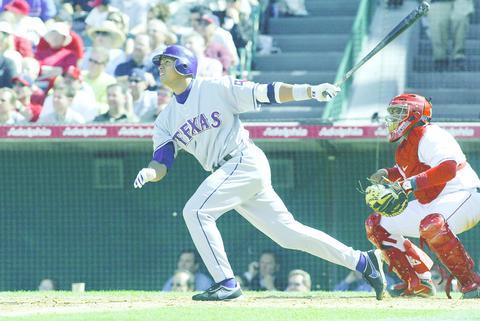
PHOTO: AFP
For all of A-Rod's anticipated 80 home runs and 200 runs batted in, how far the Yankees go into October will ultimately depend on their new pitching rotation of Mike Mussina, Javier Vazquez, Kevin Brown, Jose Contreras and Jon Lieber, especially in the postseason pressure cooker.
Hitting can win a division. Over 162 games, the Yankees' hitting should overpower enough bad teams with bad pitchers to win enough games to finish first in the American League East ahead of the improved Red Sox, who have added an ace right-hander, Curt Schilling, and a proven closer, Keith Foulke.
But in the postseason, particularly in the World Series, as the Yankees know only too well, the team with the best big-game pitcher usually wins.
Maybe Mussina, Vazquez or Brown will be that big-game pitcher for the Yankees next October. But maybe not. Only time will tell.
Brown has been on a winning World Series team, the 1997 Florida Marlins, but his vulnerability to arm trouble could limit his effectiveness, if not his season. Mussina has been spotty for the Yankees in two losing Series. Vazquez, for all his potential, might need time to adjust to the New York goldfish bowl. Contreras is still a question mark. So is Lieber, coming off arm surgery.
Maybe some or all of those pitchers will come up big in the big games, but it's not as if Andy Pettitte or Roger Clemens will be walking out to the mound.
Before each of his six World Series as the Yankees' manager, in fact before each of his eight postseasons, Joe Torre has always summed up the situation with the words, "If we pitch."
When the Yankees did pitch, they won the Series -- in 1996 against the Braves, in 1998 against the Padres, in 1999 against the Braves, in 2000 against the Mets.
When they didn't pitch, they lost -- to the Indians in a 1997 division series, to the Diamondbacks in the 2001 Series, to the Angels in a 2002 division series, and to the wild-card Marlins in last year's Series.
As good a big-game pitcher as Pettitte was against the Twins and the Red Sox, the best big-game pitcher in the World Series turned out to be Marlins right-hander Josh Beckett. On three days' rest, his 3-0 six-hitter closed out the Yankees in Game 6 at the Stadium.
In the loss to the Diamondbacks, Randy Johnson was the best big-game pitcher, winning twice as a starter and again as a late-inning reliever in Game 7.
And for all of the Yankees' 26 Series triumphs built on bats swung by Babe Ruth, Lou Gehrig, Joe DiMaggio, Yogi Berra, Mickey Mantle, Reggie Jackson, Derek Jeter and Bernie Williams, each of the Yankees' 13 Series losses turned on the opposing team having better big-game pitching.
Even with the young Babe Ruth, the Yankees lost the 1921 and 1922 Series to the Giants. Even with the young Gehrig added to the Babe in 1926, they lost to the Cardinals when 39-year-old Grover Cleveland Alexander won Game 6 and shut down Game 7 in relief.
Even with DiMaggio, Joe Gordon, Charlie Keller and Phil Rizzuto in 1942, they lost to the Cardinals when right-hander Johnny Beazley won twice.
Even with Mantle, Berra, Hank Bauer, Elston Howard, Gil McDougald and Billy Martin in 1955, they lost to the Brooklyn Dodgers when Johnny Podres pitched a 2-0 eight-hitter in Game 7 at the Stadium.
Even with Mantle, Berra, Howard, Bauer, McDougald and Tony Kubek in 1957, they lost to the Milwaukee Braves when Lew Burdette was 3-0 with an 0.67 earned run average and 13 strikeouts in three starts.
Even with Mantle, Berra, Roger Maris, Howard, Kubek, Bobby Richardson and Bill Skowron in 1960, they lost to the Pirates on Bill Mazeroski's home run off right-hander Ralph Terry in Game 7.
Even with Mantle, Maris, Howard, Kubek, Richardson and Joe Pepitone in 1963, they were swept by the the Los Angeles Dodgers as Sandy Koufax won twice, and Don Drysdale and Podres each once.
Even with Mantle, Maris, Howard, Pepitone, Clete Boyer and Tom Tresh in 1964, they lost to the Cardinals because Bob Gibson won twice, notably Game 7, with a total of 31 strikeouts in 27 innings.
Even with Thurman Munson, Chris Chambliss, Graig Nettles and Lou Piniella in 1976, they were swept by the Reds.
Even with Reggie Jackson, Dave Winfield, Bob Watson, Willie Randolph and Piniella in 1981, they lost to the Dodgers.
Even with Jeter, Williams, Paul O'Neill, Tino Martinez and Scott Brosius in 2001, they lost to the Diamondbacks, and even with Jeter, Williams, Soriano, Jason Giambi and Hideki Matsui last year, they lost to the Marlins.
So hitting isn't everything, especially in the World Series, but pitching usually is.
In winning those 26 Series, the Yankees had the pitching: Waite Hoyt and Herb Pennock, Lefty Gomez and Red Ruffing; then Vic Raschi, Allie Reynolds, Eddie Lopat and Whitey Ford; then Catfish Hunter, Ron Guidry and Tommy John; and in the recent reign, Pettitte, Clemens, David Wells, Orlando Hernandez and, most importantly, Mariano Rivera.
But if the Yankees are to win the World Series this October, they must have a lead in the ninth inning, if not the eighth, for Rivera to protect. That's why the effectiveness of the new starting rotation will be more important than A-Rod.
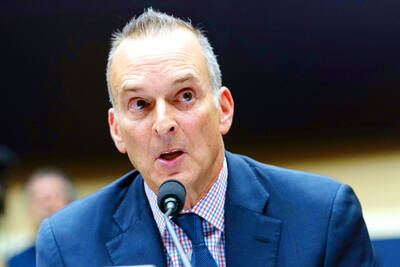
Revelations of positive doping tests for nearly two dozen Chinese swimmers that went unpunished sparked an intense flurry of accusations and legal threats between the World Anti-Doping Agency (WADA) and the head of the US drug-fighting organization, who has long been one of WADA’s fiercest critics. WADA on Saturday said it was turning to legal counsel to address a statement released by US Anti-Doping Agency (USADA) CEO Travis Tygart, who said WADA and anti-doping authorities in China swept positive tests “under the carpet by failing to fairly and evenly follow the global rules that apply to everyone else in the world.” The

Taiwanese judoka Yang Yung-wei on Saturday won silver in the men’s under-60kg category at the Asian Judo Championships in Hong Kong. Nicknamed the “judo heartthrob” in Taiwan, the Olympic silver-medalist missed out on his first Asian Championships gold when he lost to Japanese judoka Taiki Nakamura in the finals. Yang defeated three opponents on Saturday to reach the final after receiving a bye through the round of 32. He first topped Laotian Soukphaxay Sithisane in the round of 16 with two seoi nage (over-the-shoulder throws), then ousted Indian Vijay Kumar Yadav in the quarter-finals with his signature ude hishigi sankaku gatame (triangular armlock). He

RALLY: It was only the second time the Taiwanese has partnered with Kudermetova, and the match seemed tight until they won seven points in a row to take the last set 10-2 Taiwan’s Chan Hao-ching and Russia’s Veronika Kudermetova on Sunday won the Porsche Tennis Grand Prix women’s doubles final in Stuttgart, Germany. The pair defeated Norway’s Ulrikke Eikeri and Estonia’s Ingrid Neel 4-6, 6-3, 10-2 in a tightly contested match at the WTA 500 tournament. Chan and Kudermetova fell 4-6 in the first set after having their serve broken three times, although they played increasingly well. They fought back in the second set and managed to break their opponents’ serve in the eighth game to triumph 6-3. In the tiebreaker, Chan and Kudermetova took a 3-0 lead before their opponents clawed back two points, but
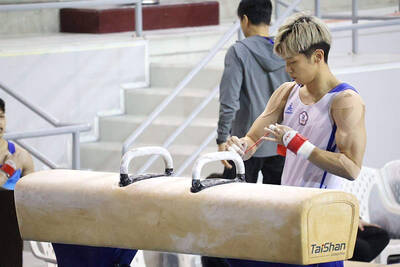
Taiwanese gymnast Lee Chih-kai failed to secure an Olympic berth in the pommel horse following a second-place finish at the last qualifier in Doha on Friday, a performance that Lee and his coach called “unconvincing.” The Tokyo Olympics silver medalist finished runner-up in the final after scoring 6.6 for degree of difficulty and 8.800 for execution for a combined score of 15.400. That was just 0.100 short of Jordan’s Ahmad Abu Al Soud, who had qualified for the event in Paris before the Apparatus World Cup series in Qatar’s capital. After missing the final rounds in the first two of four qualifier


 RSS
RSS