


Twenty-four American athletes who won Olympic medals had previously tested positive for banned drugs, but the cases were handled properly without any cover-ups, the USOC said Wednesday.
The USOC will report the cases to the IOC today as part of a review of its drug-testing program from 1985 to 2000, spokesman Darryl Seibel said.
"The report will clearly indicate that there was no cover-up and these cases were adjudicated with the applicable rules at the time," Seibel said.
Seibel said the "vast majority" of the 24 cases involved stimulants in the ephedrine class or similar substances. He declined to identify the athletes or sports involved.
Some of the positive tests occurred years before the athletes won Olympic medals, according to US officials. The punishment at the time for positive ephedrine tests was a warning or three-month suspension.
Confirmation of the 24 cases, first reported by the Los Angeles Times, came on the same day the IOC said it couldn't take action in the alleged doping case involving US sprinter Jerome Young.
The International Olympic Committee and the World Anti-Doping Agency have been investigating accusations Young tested positive for nandrolone in 1999 but was cleared on appeal by US officials. He went on to win a gold medal in Sydney as part of the 1,600-meter relay team.
WADA chairman Dick Pound has pushed for the gold medals to be stripped from Young and the rest of the relay team.
"No legal action can be taken at this point by the IOC," said IOC director general Francois Carrard, part of the four-member investigative panel. "The IOC can only contemplate legal action if the matter is reconsidered by the IAAF."
The IAAF said it, too, was powerless to act unless Young comes forward and admits to the positive test.
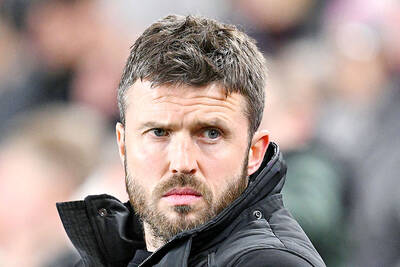
Manchester United on Tuesday confirmed Michael Carrick as interim manager until the end of the season, tasking him with leading the Red Devils back into the UEFA Champions League. “Having the responsibility to lead Manchester United is an honor,” said Carrick, 44, who won 12 major trophies in his 12-year playing career at United. The former midfielder previously had an unbeaten three-game stint as caretaker boss at Old Trafford in 2021. Carrick then took on his first permanent managerial role at second-tier Middlesbrough in October 2022 and was sacked in June last year after the club finished 10th in the
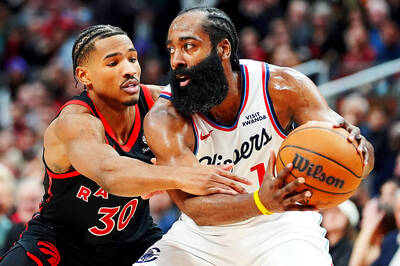
James Harden on Friday scored 31 points and came up big in overtime to help the Los Angeles Clippers erase a double-digit deficit on the way to a 121-117 NBA victory over the Toronto Raptors. Harden scored 16 points in the fourth quarter and overtime as the Clippers pushed their wining steak to five games despite the absence of star Kawhi Leonard with a sprained right ankle. The Clippers trailed by 11 entering the fourth quarter, but Harden drilled a pair of free-throws with 1:24 left in regulation to tie it and after misses from both teams, they went to

Dallas Mavericks rookie Cooper Flagg on Wednesday was ruled out for the second half of their 118-109 loss to the Denver Nuggets after the No. 1 pick sprained his left ankle in the first half. Flagg was called for a foul while defending against Peyton Watson and turned the ankle as he fell to the floor with 6 minutes, 1 second left in the second quarter. Flagg limped to the bench and continued to the locker room, but returned for the final 2 minutes, 35 seconds before the break. The 19-year-old did not come out for the second half before the announcement that
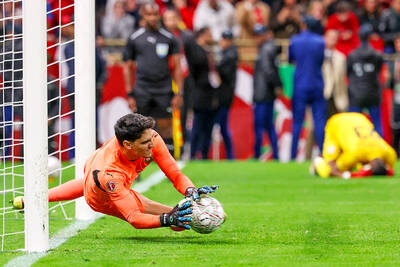
Yassine Bounou on Wednesday saved two penalties, while Youssef en-Nesyri netted the decisive spot-kick as hosts Morocco secured a 4-2 shoot-out victory over Nigeria following a 0-0 draw in a tense Africa Cup of Nations semi-final in Rabat. Morocco, seeking their first continental title in 50 years, are to face 2021 winners Senegal in Sunday’s decider in Rabat, while Nigeria take on Egypt in the third-place playoff tomorrow. The 120 minutes before the shoot-out had few clear-cut chances for either side, but it was Morocco who created more opportunities, although they were denied by some fine saves from Nigeria goalkeeper Stanley Nwabali. Nigeria


 RSS
RSS