

The president of the Taipei-based Chinese Federation of Labor (
Federation president Lin Hui-kuan (林惠官) also called on labor union leaders from the Philippines, Thailand, Indonesia and Vietnam to make joint efforts to protect the rights and interest of their workers so that they are not exploited by their employers in Taiwan.
Lin made the appeal at the 13th Asian Regional Meeting of the International Labor Organizations (ILO) presently under way in Bangkok. "Taiwan is the only place in Asia that allows foreign workers to enjoy the same salary levels as their local counterparts, something that greatly elevates [Taiwan's] international image," Lin said.
It was the first time that a Taiwanese labor group had been invited to participate in a meeting of the organization, which is affiliated with the UN. The Chinese delegate lodged a protest over Lin's speech, as Lin mentioned the official name of the Republic of China on several occasions.
Lin and two other labor union leaders from Taiwan are taking part in the current meeting as representatives of the International Confederation of Free Trade Unions.
Lin also briefed the more-than 500 participants on the current labor situation in Taiwan and on the local labor unions' efforts at the just-concluded Economic Development Advisory Conference to ensure equal working opportunities and preserve the rights and interests of foreign workers as well as local workers.
Delegates from more than 30 countries and regions in Asia are taking part in the five-day conference at which Taiwan is being represented for the first time.
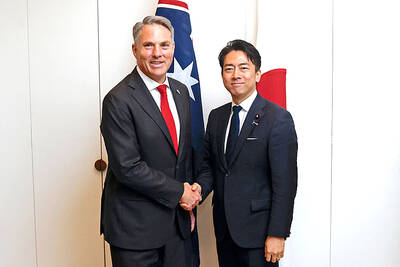
Japan will conduct tests of hypersonic missiles and other projectiles on Australian soil, the two countries’ defense ministers said yesterday as they deepened military cooperation, including with a codeveloped laser system. Australian Minister for Defence Richard Marles said alongside his Japanese counterpart, Shinjiro Koizumi, in Canberra that the deal would see a “better and enhanced arrangement between Australia and Japan for Japan’s use of our missile ranges over the course of the next decade.” “We have spoken previously about Australia being able to provide strategic depth to Japan across a range of areas, but one of them is the use
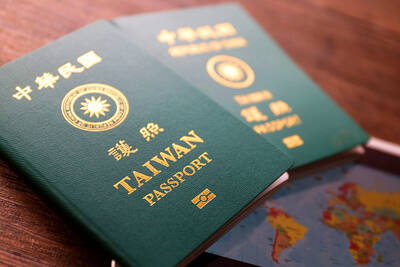
Ugandan immigration authorities have returned the passports of four Taiwanese after withholding the travel documents at Entebbe International Airport, Ministry of Foreign Affairs spokesman Hsiao Kuang-wei (蕭光偉) said yesterday. After hearing about the incident, the ministry immediately instructed its representative office in Somaliland, which is responsible for affairs involving Uganda, to closely monitor the situation and work with the Uganda Taiwanese Chamber of Commerce to communicate with the authorities there, Hsiao said. The passports were returned to their holders on Wednesday local time, he said. The incident followed an earlier incident in which Ugandan immigration officials withheld the passports of two Taiwanese at
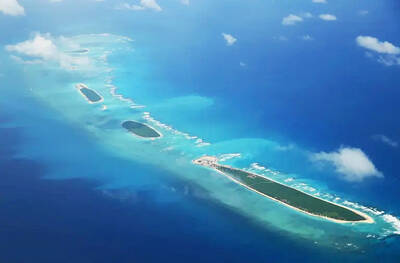
China has completed the first phase of construction on Antelope Reef (Lingyang Reef, 羚羊礁) in the Paracel Islands (Xisha Islands, 西沙群島), building an artificial island in the disputed South China Sea that analysts say will form part of its largest military base. Satellite images showed the reclaimed feature — which Taiwan also claims — in outline for the first time, with barges and dredgers having left after at least six months of work in the busy waterway. The completion shows the South China Sea as an increasingly militarized arena of competition between China and the US and its allies. “The northern part of
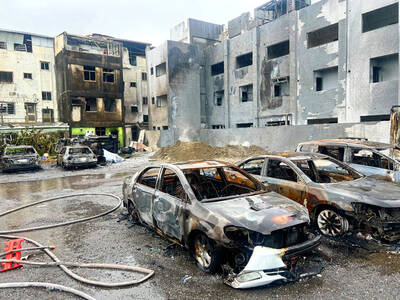
A fire and subsequent explosion in a residential area in Tainan early yesterday injured 15 people and damaged 68 homes, the Tainan City Fire Bureau said. The bureau said it received a report at 1:12am yesterday that a pile of waste in a vacant lot in Annan District’s (安南) Haidian Road had caught fire and exploded, adding that it dispatched 144 firefighters and 53 firetrucks to battle the blaze and evacuate nearby residents. It took more than four hours to extinguish the fire, it said. The incident damaged 11 privately owned vehicles, as well as eight fire engines, one ambulance and two disaster


 RSS
RSS