


Taiwan's Department of Health (DOH,
DOH director-general Lee Ming-liang (李明亮) yesterday said that the pill was approved to prevent women from taking the drug on their own, risking excessive bleeding and other dangers.

PHOTO: LIN CHENG-KUNG, TAIPEI TIMES
According to Lee, thousands of Taiwanese women, most of them teenagers, have illegally obtained the pill from drug stores or the Internet. "Legalizing the drug offered women an alternative form of abortion," Lee said, "and urged doctors to abide by the regulations."
According to DOH regulations, the French-imported RU-486 pill, called Mifepristone (
Meanwhile, patients would be required to have a medical checkup 36 to 48 hours after taking the pill, during which they would have to take a second drug which causes the uterus to expel the embryo.
"Medical supervision is necessary to ensure safe use of the drug," Lee said. Two Taiwan women died and about 1,000 were treated for side-effects from using the drug last year.
In Asia, only Taiwan and China have approved use of RU-486.
According to the DOH, companies involved in the import and distribution of RU-486 must register with authorities. The pill, which was first introduced in France 12 years ago, has been available on Taiwan's black market for several years, and recently on the Internet where the three initial pills cost between NT$4,800 to NT$6,000, local media said.
The pill only costs about NT$500 in a public hospital.
The government has yet to say what steps it will take to prevent illegal sales of the drug. Meanwhile, Lai Shu-mei (賴淑美), head of the Bureau of National Health Insurance (中央健保局), said yesterday the government will pay NT$1,500 for each patient who takes the pill on a doctor's prescription.
More than 42,000 abortions were performed under the national health program last year. However, Secretary-general of the Obstetrics and Gynecology Association Su Tsung-hsien (
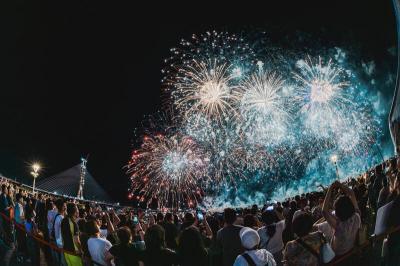
Taiwan is gearing up to celebrate the New Year at events across the country, headlined by the annual countdown and Taipei 101 fireworks display at midnight. Many of the events are to be livesteamed online. See below for lineups and links: Taipei Taipei’s New Year’s Party 2026 is to begin at 7pm and run until 1am, with the theme “Sailing to the Future.” South Korean girl group KARA is headlining the concert at Taipei City Hall Plaza, with additional performances by Amber An (安心亞), Nick Chou (周湯豪), hip-hop trio Nine One One (玖壹壹), Bii (畢書盡), girl group Genblue (幻藍小熊) and more. The festivities are to

Auckland rang in 2026 with a downtown fireworks display launched from New Zealand’s tallest structure, Sky Tower, making it the first major city to greet the new year at a celebration dampened by rain, while crowds in Taipei braved the elements to watch Taipei 101’s display. South Pacific countries are the first to bid farewell to 2025. Clocks struck midnight in Auckland, with a population of 1.7 million, 18 hours before the famous ball was to drop in New York’s Times Square. The five-minute display involved 3,500 fireworks launched from the 240m Sky Tower. Smaller community events were canceled across New Zealand’s
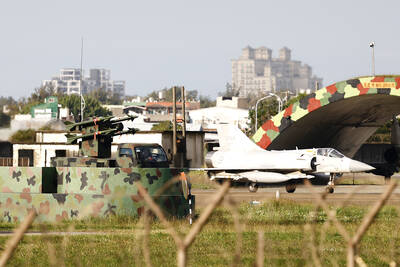
‘IRRESPONSIBLE’: Beijing’s constant disruption of the ‘status quo’ in the Taiwan Strait has damaged peace, stability and security in the Indo-Pacific region, MOFA said The Presidential Office yesterday condemned China’s launch of another military drill around Taiwan, saying such actions are a “unilateral provocation” that destabilizes regional peace and stability. China should immediately stop the irresponsible and provocative actions, Presidential Office spokeswoman Karen Kuo (郭雅慧) said, after the Chinese People’s Liberation Army (PLA) yesterday announced the start of a new round of joint exercises around Taiwan by the army, navy and air force, which it said were approaching “from different directions.” Code-named “Justice Mission 2025,” the exercises would be conducted in the Taiwan Strait and in areas north, southwest, southeast and east of Taiwan
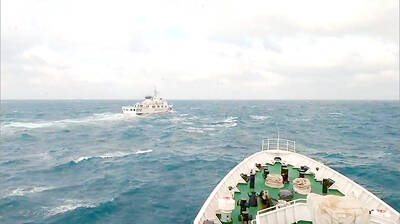
‘SLICING METHOD’: In the event of a blockade, the China Coast Guard would intercept Taiwanese ships while its navy would seek to deter foreign intervention China’s military drills around Taiwan this week signaled potential strategies to cut the nation off from energy supplies and foreign military assistance, a US think tank report said. The Chinese People’s Liberation Army (PLA) conducted what it called “Justice Mission 2025” exercises from Monday to Tuesday in five maritime zones and airspace around Taiwan, calling them a warning to “Taiwanese independence” forces. In a report released on Wednesday, the Institute for the Study of War said the exercises effectively simulated blocking shipping routes to major port cities, including Kaohsiung, Keelung and Hualien. Taiwan would be highly vulnerable under such a blockade, because it


 RSS
RSS