


The Taipei City government yesterday announced it is taking disciplinary action against a total of seven police officials and officers who were involved in efforts to solve a recent robbery at the home of a wealthy family on Yangmingshan, after which four Shihlin youths were detained without evidence.
The youths were later released after DNA evidence contradicted oral testimony provided by the suspects, and others have since been arrested.
Taipei City Deputy Mayor Ou Chin-der (
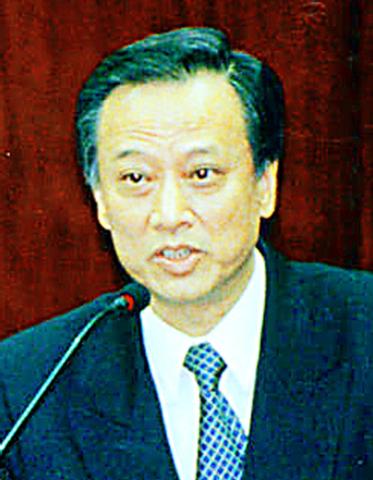
FILE PHOTO
Shihlin precinct deputy chief Tsai Wan-lai (
The Director of Taipei City Police Headquarters, Wang Jinn-wang (
Ou said he believed the disciplinary action was necessary.
"The Shihlin police precinct apparently handled the case inappropriately, affecting the rights and interests of city residents and sabotaging the image of the city's police as a whole," he said.
Ou said Taipei City Mayor Ma Ying-jeou (
Ou added that the mayor has demanded that city police precincts and stations already equipped with interrogation rooms should complete installation of surveillance cameras within three months, so procedure during police questioning can be recorded.
Stations without such facilities, Ou said, should complete equipment installation by the end of the year.
As for why superior officers received harsher punishment than those who actually handled the case, Ou said it was based on the principle of "rewards from the bottom up, discipline from the top down."
The robbery took place on March 29, in which NT$1.3 million in goods were stolen from the home of a prominent businesswoman, Wu Ju-yueh (
Four neighborhood youths who lived near Wu's house were later detained by Shihlin precinct police.
During their four days of police detention, the four gave conflicting confessions, which they later retracted.
All four were subsequently set free when police found that evidence they had collected from the scene could not be pinned on the suspects.
Several days later, after pinpointing the signal from a cellular phone stolen during the robbery, police discovered evidence linking other suspects to the crime scene, and subsequently made more arrests, this time announcing that they had cracked the case.
Officers from the precinct publicly apologized to the youth's families on April 13, but the families said a verbal apology failed to solve the problem of abuse in custody and of forced confessions.
They asked the Examination Yuan to investigate the precinct to ensure that those responsible are brought to justice.
The lawyer for the four youths has demanded national compensation and a complete overhaul of the judicial system, while city councilors have requested the removal from office of the Shihlin precinct chief.
They have also demanded that the city government offer psychological counselling to the youths who were falsely detained.
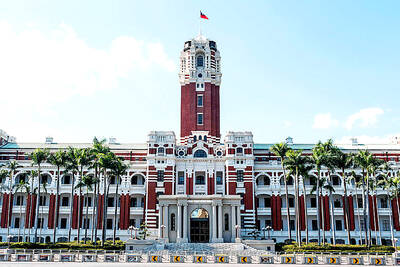
SECURITY: Taipei presses the US for arms supplies, saying the arms sales are not only a reflection of the US security commitment to Taiwan but also serve as a mutual deterrent against regional threats Taiwan is committed to preserving the cross-strait “status quo” and contributing to regional peace and stability, the Presidential Office said yesterday. “It is an undeniable fact that the Republic of China is a sovereign and independent democratic nation,” Presidential Office spokeswoman Karen Kuo (郭雅慧) reiterated, adding that Beijing has no right to claim sovereignty over Taiwan. The statements came after US President Donald Trump warned against Taiwanese independence. Trump wrapped up a state visit to Beijing on Friday, during which Chinese President Xi Jinping (習近平) had pressed him not to support Taiwan. Taiwan depends heavily on US security backing to deter China from carrying
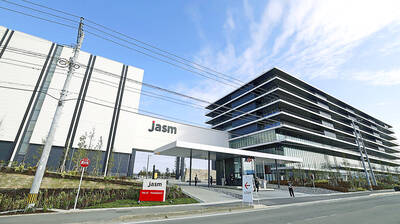
The subsidiary of Taiwan Semiconductor Manufacturing Co (TSMC, 台積電) in Kumamoto, Japan, turned a profit in the first quarter of this year, marking the first time the first fab of the unit has become profitable since mass production started at the end of 2024. According to the contract chipmaker’s financial statement released on Friday, Japan Advanced Semiconductor Manufacturing Inc (JASM), a joint venture running the fab in Kumamoto, posted NT$951 million (US$30.19 million) in profit in the January-to-March period, compared with a loss of NT$1.39 billion in the previous quarter, and a loss of NT$3.25 billion in the first quarter of
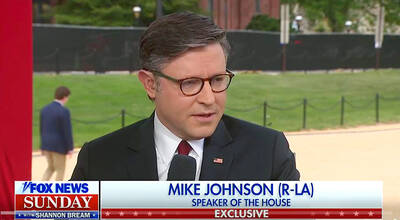
RESOLUTE BACKING: Two Republican senators are planning to introduce legislation that would impose immediate sanctions on China if it attempts to invade Taiwan US House of Representatives Speaker Mike Johnson on Sunday reaffirmed US congressional support for Taiwan, saying the US and “all freedom-loving people” have a stake in preventing China from seizing Taiwan by force. Johnson made the remarks in an interview with Fox News Sunday on US President Donald Trump’s summit with Chinese President Xi Jinping (習近平) last week. In an interview that aired on Friday on Fox News, just as Trump wrapped up a high-stakes visit to China, he said he has yet to green-light a new US$14 billion arms package to Taiwan and that it “depends on China.” “It’s a very good

DRONE CENTRAL: Taiwan aims to become Asia’s democratic hub for drones, with most exports focused on high-quality military-grade models, an official said Taiwan’s drone industry is expected to expand significantly by 2030, producing 100,000 units per month and exporting half of them, the Ministry of Economic Affairs said yesterday. Current drone production capacity is about 15,000 units per month, but the industry can quickly scale up as demand increases, Industrial Development Administration Director-General Chiou Chyou-huey (邱求慧) told a news conference in Taipei. Taiwan’s drone output grew 2.5-fold last year to NT$12.9 billion (US$408.3 million) under a government program to develop the uncrewed vehicle sector, he said. The Executive Yuan in October last year approved plans to invest NT$44.2 billion into domestic production of uncrewed aerial


 RSS
RSS