


DPP leaders called on President Lee Teng-hui (
Such a conference should include all political groups, as well as scholars, to resolve the problem not only of the term extension issue, but the entire Constitution, the DPP said.
"In the past few months, people have not bothered to monitor the assembly. Now it has caught our atte
ntion, so it is time to call such a conference," said DPP secretary-general Yu Shi-kun.
"It's time we reform the entire constitutional structure now, and all political parties should shoulder the responsibility for this mission," he said.
"The KMT controls over half the seats in the assembly, and Lee should not be duped by party delegates into destroying Tai-wan's Constitution," Yu said.
DPP Assembly leaders, meanwhile, said yesterday that the term extension amendment passed Saturday, together with the passage of a proportional representative system for the Assembly, has successfully contributed to carrying out the historical mission of parliamentary reform.
"To freeze the election of delegates will save plenty of social resources. We estimated that the elections cost around NT$25 billion each time, so by decreasing the number of assembly delegates we will also save government funds," said DPP assembly caucus leader Law I-teh (
Law stressed that people should value the hard-earned achievenments of parliamentary reform instead of focusing solely on the extended Assembly term.
"The DPP has been working on abolishing the Assembly in the last decade. Now we finally enter into the first stage. Even the President knew of our purpose and did not oppose it," Law said.
Law revealed that two major party caucus leaders negotiated in private to cooperate with passing this amendment but the KMT dropped out. Therefore they visited Shi Wen-lung (
"Shi promised to fax our proposal draft to the Presidential Office. And Shi told us that President Lee expressed neither support nor opposition to it. We understand that the President respects the Assembly's responsibilities and does not want to intervene in the constitutional amendment procedures," Law said.
The Presidential Office, in a press release yesterday evening, said it had not received a fax from Shi but the President did not made any comment about it.
DPP secretary-general Yu verified further yesterday that the DPP has many channels to communicate with the ruling party, even with the President.
"Some people who are not in the political circle are willing to help the DPP to relay our message to national leaders. But we cannot publicize their names to block those channels," Yu said.
Meanwhile, one of the party's faction leaders Chang Chun-hung (
"Only Lee Teng-hui has the power and determination to accomplish the constitutional reform disinterestedly. I think he will carry out the reform mission before ending his term next May," Chang said.
Chang also said that the DPP and KMT leaderships knew this. But DPP secretary-general Yu and chairman Lin I-hsiung (

South Korea has adjusted its electronic arrival card system to no longer list Taiwan as a part of China, a move that the Ministry of Foreign Affairs said would help facilitate exchanges between the two sides. South Korea previously listed “Taiwan” as “Taiwan (China)” in the drop-down menus of its online arrival card system, where people had to fill out where they came from and their next destination. The ministry had requested South Korea make a revision and said it would change South Korea’s name on Taiwan’s online immigration system from “Republic of Korea” to “Korea (South),” should the issue not be

Tainan, Taipei and New Taipei City recorded the highest fines nationwide for illegal accommodations in the first quarter of this year, with fines issued in the three cities each exceeding NT$7 million (US$220,639), Tourism Administration data showed. Among them, Taipei had the highest number of illegal short-term rental units, with 410. There were 3,280 legally registered hotels nationwide in the first quarter, down by 14 properties, or 0.43 percent, from a year earlier, likely indicating operators exiting the market, the agency said. However, the number of unregistered properties rose to 1,174, including 314 illegal hotels and 860 illegal short-term rental
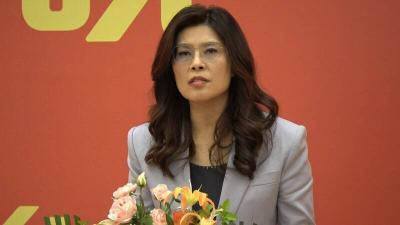
Both sides of the Taiwan Strait share a political foundation based on the “1992 consensus” and opposition to Taiwanese independence, Chinese Nationalist Party (KMT) Chairwoman Cheng Li-wun (鄭麗文) today said during her meeting with Chinese President Xi Jinping (習近平). Both sides of the Strait should plan and build institutionalized and sustainable mechanisms for dialogue and cooperation based on that foundation to make peaceful development across the Strait irreversible, she said. Peace is a shared moral value across the Strait, and both sides should move beyond political confrontation to seek institutionalized solutions to prevent war, she said. Mutually beneficial cross-strait relations are what the
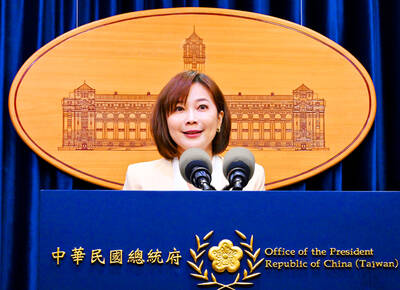
ECONOMIC COERCION: Such actions are often inconsistently applied, sometimes resumed, and sometimes just halted, the Presidential Office spokeswoman said The government backs healthy and orderly cross-strait exchanges, but such arrangements should not be made with political conditions attached and never be used as leverage for political maneuvering or partisan agendas, Presidential Office spokeswoman Karen Kuo (郭雅慧) said yesterday. Kuo made the remarks after China earlier in the day announced 10 new “incentive measures” for Taiwan, following a landmark meeting between Chinese President Xi Jinping (習近平) and Chinese Nationalist Party (KMT) Chairwoman Cheng Li-wun (鄭麗文) in Beijing on Friday. The measures, unveiled by China’s Xinhua news agency, include plans to resume individual travel by residents of Shanghai and China’s Fujian


 RSS
RSS