


China is well prepared to handle any negative effects from its trade dispute with the US, China’s Ministry of Commerce said on Thursday last week, adding that Beijing’s tariff hikes on US imports will not have a big impact overall on its domestic industries.
It would be a miscalculation by the US if its intention is to contain China’s rise, ministry spokesman Gao Feng said at a regular media briefing in Beijing.
“If the US attempts to use protectionist trade policies to contain China’s development and force China to make concessions even at the costs of companies’ interests, it has taken a miscalculated step,” Gao said.
Photo: Reuters
照片:路透
In the latest escalations in the widening trade row, the US said last week it had banned American companies from selling parts to Chinese telecom equipment maker ZTE for seven years, while China last Tuesday announced hefty anti-dumping tariffs on imports of US sorghum and measures on synthetic rubber imports from the US, EU and Singapore on Thursday.
Responding to a Reuters question, Gao said Beijing hopes Washington will not underestimate China’s resolve to fight back.
“We will relentlessly fight back,” he said, adding that China will take any necessary measures at any time in response to the US move against ZTE.
Most analysts believe the two sides will eventually reach a compromise and avoid a full-blown trade war. But so far, China and the US have held no formal trade talks, Gao said.
A full-scale trade war between the two economic superpowers would hurt both Chinese and US exports and have a negative impact on growth in the two countries, as well as probably lead to collateral damage for other countries.
The global economy will expand this year at its fastest pace since 2010, but trade protectionism could quickly slow it down, the latest Reuters polls of over 500 economists worldwide suggest.
(REUTERS)
中國商務部上週四表示,因應與美國的貿易爭端所可能造成的任何負面影響,中國已有周全準備;並補充說,北京提高美國進口貨物關稅的措施,對其國內產業整體並不會有重大影響。
中國商務部發言人高峰在北京舉行的例行媒體簡報會上表示,如果美國的目的是要遏制中國崛起,美國就打錯算盤了。
「如果美國試圖用貿易保護主義政策來遏制中國的發展、迫使中國作出讓步,甚至不惜犧牲企業的利益,那麼美國已錯估了情勢」,高峰說。
美中貿易爭端不斷擴大,使情況加劇的最新發展是美國上週宣布,已禁止美國公司在未來七年出售零件給中國電信設備製造商中興通訊;中國方面則是於上週二宣布對進口美國高粱課徵高額的反傾銷關稅,並於週四宣布對美國、歐盟和新加坡限制合成橡膠的進口。
高峰在回答路透通訊社的問題時表示,北京希望華盛頓方面不要低估中國反擊的決心。
「我們會毫不留情地反擊」,他補充說,中國將隨時採取必要手段來回應美國對中興通訊的決定。
高峰表示,多數分析師認為中美雙方最終將達成妥協、避免全面的貿易戰。但是迄今為止,中美兩國都沒有舉行過正式的貿易談判。
中國和美國這全球兩大經濟強權間的全面貿易戰,不但會傷害兩國的出口、對兩國的經濟成長造成負面的影響,還可能會波及其他國家,造成附帶損害。
全球經濟今年的成長速度會是二○一○年以來最快的,但路透對全球五百多位經濟學家的最新意見調查顯示,貿易保護主義可能會使經濟成長速度變慢。
(台北時報林俐凱譯)
Vocabulary Extension
Protectionism is an economic policy of restricting imports from foreign countries by imposing tariffs, duties, import quotas or regulations, or providing subsidies, in order to protect domestic companies from foreign competition. Critics of protectionism argue the policy ultimately pushes up prices for domestic consumers and slows economic growth.
Dumping involves a company flooding a foreign market with a product sold at a price below “fair market value” and lower than it charges consumers within its home market.
Anti-dumping tariffs, or anti-dumping duties, are a form of protectionism. Fixed fees are imposed by a government on a foreign imported product to make it more expensive — and therefore less attractive — to domestic consumers, with the aim of protecting local businesses and jobs.
Collateral damage means indirect damage or loss inflicted on an entity other than the intented target of the action. In addition to referring to economic losses during a trade war, the phrase is often used during a real war situation as a euphemism to describe the unintentional death and injury of innocent civilians or damage to civilian property, as a result of military actions directed against enemy forces.
(Edward Jones, Taipei Times)
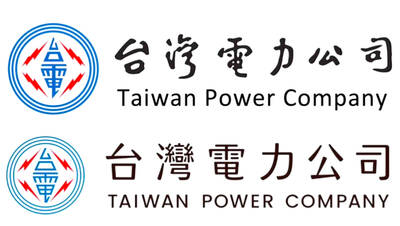
The debate surrounding Taipower’s recent corporate identity reboot has gone well beyond the design community. The controversy began after Taipower replaced the familiar “Taiwan Power Company” wording — widely regarded as the calligraphy of Yu You-ren (1879-1964), former Control Yuan president and master calligrapher — with a modern logotype by designer Aaron Nieh’s team, Aaron Nieh Workshop. Taipower said the change was not a wholesale replacement of old signage, but an “optimization of its identity system,” aimed at meeting the needs of digital media, electronic bills, apps, social media graphics and various small-format applications. Existing physical markings, such as building

Since 2005, the third Monday in January has come to be known as “Blue Monday.” In other words, that day is believed to be the most depressing day of the year. This concept seems logical at first. After all, Monday marks the start of the school or workweek after two days of rest and fun. Also, blue is a color that is often associated with sadness. Furthermore, in many parts of the world, January is a time when the weather is cold, rainy, and gloomy. But is there any scientific proof that this January day is truly sadder than any of

Continued from yesterday(延續自昨日) https://www.taipeitimes.com/News/lang For the most part, the idea of “Blue Monday” has been rejected as a myth. Some mental health experts also say there is a danger in labeling a certain day as the most depressing time of the entire year. Some argue that if people expect to feel sadder on the third Monday in January, this belief alone may increase their anxiety. One group that is worried about the negative effect of believing in Blue Monday is Samaritans. A mental health charity based in the UK, Samaritans is working to turn Blue Monday into “Brew Monday.” In this

1. 他兩天後回來。 ˇ He will return in two days. χ He will return after two days. 註︰從現在開始,說「多久以後」,應該用 in,不用 after,例如: He plans to finish the work in three months. I am sure we will hear from him in a few days. 請注意 in a few days、in three months 許多人誤以為是「幾天內」、「三個月內」,其實是「幾天後」、「三個月後」。 如指「某個時刻或日期或事件以後」,可用 after。例如: I will be back after four o’clock.(或 after 4 August,或 after lunch)。 2. 他要在那牆上開一扇門。 ˇ He wants to put a door in that wall. χ He wants to put a door on that wall. 註︰門不是掛在牆上,也不是靠在牆上,而是開在牆裡,應該用 in。 比較下列各句: There is a painting on the wall. Why is that plank of wood leaning against the wall? The thief made a hole in the wall. 3. 我在報上看到這個消息。 ˇ I


 RSS
RSS