


The Rohingya are a predominantly Muslim ethnic group that for centuries has called the area that is now majority Buddhist Myanmar home. Since a Burmese citizenship law — in which Rohingya were not recognized as one of the country’s 135 ethnic groups — was passed in 1982, the Rohingya have effectively been stateless within their own country.
Although many historians say Muslims have lived in this area since the 12th century, large numbers of Rohingya laborers migrated from today’s India and Bangladesh to what is now Myanmar during the more than 100 years of British rule (1824-1948), when such migration would have been considered internal.
After independence in 1948, the government deemed this migration to have been illegal, and this is why the Myanmar government refuses to give the Rohingya Muslims citizenship.

Photo: AFP
圖:法新社
Myanmar considers them to be Bangladeshi; Bangladesh says the Rohingya are Burmese.
Recent killings attributed by the government to armed Rohingya in Myanmar’s Rakhine State has led to an army crackdown — which the UN has said includes actions such as extrajudicial killing, rape and arson — and a mass exodus of over half a million Rohingya.
The UN has condemned the ongoing violence, with one official describing the campaign as “textbook ethnic cleansing.”

Photo: AFP
圖:法新社
Bangladesh now has a plan to build an enormous refugee camp of approximately 1,200 hectares for over 800,000 Rohingya refugees in Kutupalong near the Myanmar border.
(Paul Cooper, Taipei Times)
羅興亞人這一族群主要信奉伊斯蘭教,已在緬甸定居數世紀,並視之為家園,不過大部分的緬甸居民為佛教徒。一九八二年緬甸公民法通過,在緬甸政府所承認的該國一百三十五個族群中,羅興亞人並未列入,此後羅興亞人在自己國家中實際上成了無國籍的人。

Photo: Reuters
圖:路透社
雖然許多歷史學家說穆斯林自十二世紀以來一直住在這個地區,但在受英國統治的一百多年期間(西元一八二四年至一九四八年),大批羅興亞勞工由現今屬印度和孟加拉之地區移居緬甸,這在當時是屬於境內的遷徙。
一九四八年緬甸獨立後,緬甸政府認定該期間移居為非法,因而拒絕給予羅興亞穆斯林公民身份。
緬甸政府認為羅興亞人是孟加拉人;而孟加拉政府說羅興亞人是緬甸人。
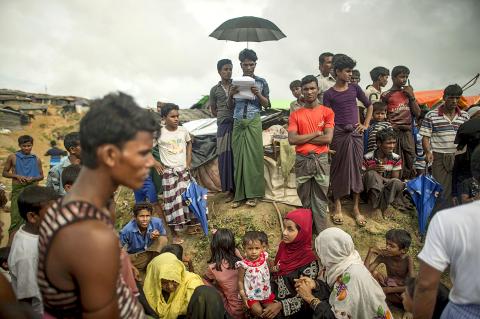
Photo: AFP
圖:法新社
若開邦的武裝羅興亞人最近被指控犯下數起殺戮,緬甸政府隨後展開軍事鎮壓。聯合國說該鎮壓行動包括非法處決、強姦和縱火等,並造成超過五十萬羅興亞人大規模流亡。
針對目前仍持續進行的暴力行為,聯合國已加以譴責。一名官員將這一波軍事鎮壓形容為「標準的種族淨化」。
孟加拉現已計劃在靠近緬甸邊境的庫圖帕朗,替為數約八十萬的羅興亞難民建造一個面積達約一千兩百公頃的大型難民營。
(台北時報編譯林俐凱譯)

When people think of archaeologists, they often picture adventurers discovering ancient tombs filled with treasure, much like Indiana Jones. However, the reality of archaeology is far from the dramatic scenes shown in movies. Archaeologists are scientists who study the past by uncovering and analyzing the physical remains left by humans. Instead of simply digging for treasure, their work combines history, science and detective skills to reveal stories hidden beneath the earth for centuries. The work of archaeologists requires diverse skills spanning multiple disciplines. They must possess knowledge of history, anthropology, geology and even chemistry. During excavations, archaeologists carefully dig

A: The classic musical “Jesus Christ Superstar,” co-produced by Andrew Lloyd Webber and Tim Rice, is making its Taiwan debut at the National Theater during the Dragon Boat Festival long weekend. B: Isn’t the rock musical, based on the “Passion” of Jesus, hailed as one of Webber’s “four major musicals?” A: Yup, the others are “Evita,” “Cats” and “The Phantom of the Opera.” B: What other shows are there during the holiday weekend? A: A symphony concert for Disney’s “Frozen” is also set for Saturday. It will feature live performance by the National Symphony Orchestra and even top-tier Disney

A: In June alone, there are multiple film concerts for not only “Frozen” but also “Attack on Titan” and “Top Gun: Maverick.” B: Wow, film concerts are so popular. But a TV music competition reality show is even more popular now. A: Are you talking about “Ride the Wind 2026” — Season 7 of the “Sisters Who Make Waves” series featuring female celebrities? B: Yup, and four “Taiwanese sisters” are competing this season, including Jessie Chiang, Jill Hsu, Pets Tseng and even “Taiwan’s No. 1 beauty” Stephanie Hsiao. Among all sisters, Pets is a favorite to win. A:

#本文由生成式 AI 協作,本刊編輯編修 Flavor isn’t just created by the seasonings used in a dish but also by the wild backstory attached to it. In some cases, a great dish isn’t the result of careful planning but of an unexpected burst of inspiration. The Ex-Boyfriend Toast In 2025, the variety show Earth Arcade turned this toast into a trending topic. Cast member Lee Young-ji reacted with playful shock at the absurd name, which got everyone talking about it. The story behind the toast dates back to 2018, when a netizen swallowed her pride to contact her ex-boyfriend for his delicious recipe. She carefully


 RSS
RSS