


Peacocks are among the most beautiful birds in the world. Their bright feathers and graceful movements have fascinated humans for centuries. These magnificent creatures belong to the pheasant family and are found in regions across Asia and Africa. Let’s explore peacocks’ unique characteristics and cultural significance.
There are three main species of peacock: the well-known Indian peafowl, native to South Asia; the endangered green peafowl from Southeast Asia; and the rare Congo peafowl, found in African rainforests. Although the term “peacock” technically refers only to males, many people use it for both sexes. Male peacocks display their colorful tail feathers, which are covered with eye-like patterns, to attract mates and frighten predators. Female peafowl, called peahens, are smaller and have duller feathers. A mature peacock can reach one meter in height and weigh up to six kilograms. Peacocks inhabit diverse environments, from forests to grasslands, and feed on insects, seeds, and small animals.
Throughout history, peacocks have held numerous cultural and symbolic meanings. In Hinduism, they are associated with the goddess Saraswati and Lord Krishna, standing for purity and considered sacred birds. In Buddhism, they represent wisdom and compassion. Across various cultures, peacocks are viewed as symbols of beauty, prosperity, and eternal life. Their striking appearance has made them a popular theme in art and literature.
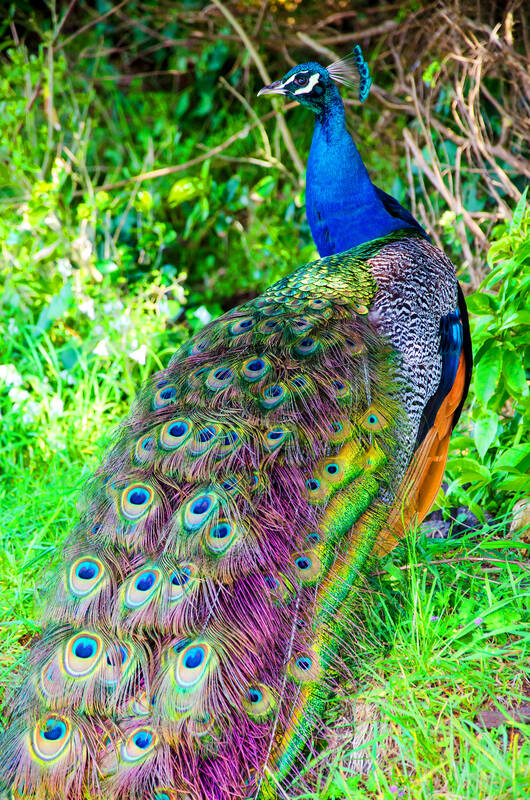
Photo: Freepik / 照片:Freepik提供
Unfortunately, peacock populations face serious threats, including habitat destruction and hunting. To protect these remarkable birds, conservation groups have implemented breeding programs and habitat preservation initiatives. In addition, some countries, such as India and Myanmar, have enforced strict laws banning peacock hunting and feather collection. These measures play a key role in raising awareness of their importance. As we admire peacocks’ amazing beauty, we must also recognize our responsibility to contribute to ongoing efforts to protect these colorful wonders for future generations.
孔雀是世界上最美麗的鳥類之一。幾個世紀以來,牠們鮮豔的羽毛和優雅的動作一直使人類著迷。這些美麗的生物屬於雉科,分布於亞洲和非洲各地。讓我們來探索孔雀的獨特特徵和文化意義。
孔雀主要有三個品種:原產於南亞,廣為人知的印度孔雀;來自東南亞的瀕危綠孔雀;以及棲息於非洲雨林的稀有剛果孔雀。儘管「peacock」一詞嚴格來說僅指雄孔雀,但許多人用它來代指所有性別的孔雀。雄孔雀會展現其色彩鮮豔的尾羽,這些尾羽上布滿了類似眼睛的圖案,用來求偶並嚇阻天敵。雌孔雀,又稱作 peahen,體型較小且羽毛顏色較為暗淡。一隻成年雄孔雀的身高可達一公尺,體重可達六公斤。孔雀生活的環境多樣,從森林到草原皆可見,牠們以昆蟲、種子與小型動物為食。
歷史上,孔雀具有眾多文化和象徵意義。在印度教中,牠們與辯才天女和黑天有關,代表純潔且被視為神聖的鳥類。在佛教中,牠們代表智慧和慈悲。在不同的文化中,孔雀被視為美麗、繁榮和永生的象徵。牠們出眾的外表使其成為藝術和文學中的熱門題材。
不幸的是,孔雀的數量面臨嚴重的威脅,包括棲息地破壞和獵捕。為了保護這些珍貴的鳥類,保育團體已實行繁殖計畫和棲息地保護措施。此外,像是印度和緬甸等國家也已實施嚴格的法律,禁止獵捕孔雀和採集孔雀羽毛。這些措施在提高人們對其重要性的認識上扮演關鍵角色。當我們讚嘆孔雀驚人的美麗時,也必須意識到我們有責任為後代做出貢獻,持續努力保護這些色彩斑斕的自然奇觀。
KEY VOCABULARY
1. peacock n. 孔雀
The peacock opened its colorful tail and walked proudly across the grass.
這隻孔雀打開牠鮮豔的尾巴,驕傲地走過草地。
2. characteristic n. 特徵;特色
The scientist explained that the ability to survive in extreme temperatures is a key characteristic of this species.
科學家解釋,能在極端溫度下生存是這個物種的一個重要特徵。
3. sacred adj. 神聖的
Visitors must remove their shoes before entering the temple, as it is considered a sacred place.
遊客必須在進入這座寺廟前脫鞋,因為它被視為神聖的地方。
4. compassion n. 慈悲;同情
True compassion includes understanding others without judging their choices.
真正的慈悲包含理解他人而不評判他們的選擇。
5. habitat n. 棲息地
The forest provides a natural habitat for many animals, including deer, birds, and small insects.
這片森林為許多動物提供了自然棲息地,包括鹿、鳥類和小型昆蟲。
6. initiative n. 新措施;倡議
The school launched a recycling initiative to encourage students to protect the environment.
學校發起了一項回收新措施,鼓勵學生保護環境。
7. enforce vt. 實施;執行
The police are working hard to enforce the new traffic laws in order to reduce accidents.
警方正努力執行新的交通法規,以減少事故發生。
8. ban vt. 禁止
Several apps were banned in the country due to privacy concerns.
有幾個應用程式因隱私問題而在該國被禁止使用。
9. contribute vi. 貢獻;奉獻
Amanda and her team contributed to the project with creative ideas and research.
阿曼達和她的團隊透過有創意的想法與研究為這個專案做出貢獻。
MORE INFORMATION
pheasant n. 雉;野雞
peafowl n. 孔雀
technically adv. 嚴格來說;事實上
peahen n. 雌孔雀
Hinduism n. 印度教
purity n. 純潔;純淨
Buddhism n. 佛教
Myanmar n. 緬甸
學習音檔: https://magazine.english4u.net/Magdata/menu/sekkk
《空中美語》雜誌APP免費下載: https://www.english4u.net/apps/index.aspx
免費收聽當月《空中美語》雜誌課文朗讀及解析 !
文章由AMC空中美語授權使用: https://www.english4u.net

Many consumers are guilty of filling drawers or closets with old laptops, cellphones, fitness trackers and other electronic devices once they are no longer needed. It’s hard to know where to recycle such items, or it seems costly and inconvenient to do so. The world generates millions of tons of electronic waste — also called e-waste — each year. According to the UN’s most recent estimate, people worldwide produced 62 million metric tons of e-waste in 2022, and only about 22 percent of it was properly recycled. The US’ Environmental Protection Agency estimates that less than a quarter of e-waste is

You’re sitting in class when a classmate asks to borrow a pencil. It seems like a small favor, so you agree without hesitation. The following week, the same classmate asks to share your notes. Later, they request help with a group project. You agree each time — after all, you helped out the first time — but before you know it, it has become automatic. This scenario demonstrates the “foot-in-the-door technique,” a psychological concept that shows how agreeing to small, acceptable demands makes it easier to accept larger ones later on. The name for this strategy comes from door-to-door

A: The four-day Tomb Sweeping Day long weekend begins Friday and will run until Monday. Are you going to sweep your ancestors’ tombs? B: I did in advance last weekend, so I can go to Kaohsiung to see the musical “The Phantom of the Opera.” A: Wow, is “Phantom” touring Taiwan again? It debuted in 1986, so this year marks the 40th anniversary of the show. B: And it’s not just touring Kaohsiung starting March 31, but also Taipei starting April 21 and Taichung starting May 26. A: “Phantom” is one of the world’s Four Major Musicals. I’ve seen all of them, except “Les

Continued from yesterday(延續自昨日) https://www.taipeitimes.com/News/lang Gig Tripping “Gig tripping” combines concerts with travel. People fly to see their favorite artists perform — usually abroad—and spend a few days sightseeing before or after the show. While die-hard fans have done this since the 1960s, the post-pandemic travel boom changed the game. Even people who aren’t superfans are now booking international concert trips because they want to make the most of travel opportunities. This trend exploded in the US, as the math makes sense. Domestic concert tickets are so costly that flying abroad for the show plus tourism expenses often matches or even beats the price


 RSS
RSS