


Singer Crowd Lu first gained popularity with his song Good Morning, Breakfast when he entered showbiz almost 10 years ago. Recently, the singer-turned-actor has also proven himself in the hit TV drama A Boy Named Flora A, the highest rated program nationwide.
In the drama, Lu plays the lead role of 28-year-old Cheng Hua-chia, or Flora A, who failed the joint college entrance exam three times and was retained for two more years in college — someone who looked just like a “loser” in others’ eyes. “Flora A and I are very much alike,” Lu said with a shy smile, as usual. “No one is really a loser to me. Perhaps it’s just that their time has not yet come.”
After the final episode was aired last week, Lu is now turning back to being a singer again. He is going to hold a concert scheduled for Aug. 19 at the Taipei International Convention Center. All the tickets were sold out within 28 seconds.(CNA, translated by Eddy Chang)

Photo: CNA
照片︰中央社
出道近十年的歌手盧廣仲,以一曲「早安,晨之美」大受歡迎。他最近轉戰演員拼出好成績,主演的熱門電視劇「花甲男孩轉大人」還稱霸全國收視冠軍!
在劇中,盧廣仲飾演二十八歲的主角鄭花甲,大學重考三年、留級兩年,在外人的眼中就是不折不扣的「魯蛇」。「花甲和我很像」,盧廣仲一如往常害羞地笑著說,「在我看來沒有任何人是魯蛇,他們只是時間沒到」。
隨著上週該劇完結篇,盧廣仲也回到歌手身份,八月十九日將在台北國際會議中心開唱,所有門票在二十八秒內秒殺完售。(中央社)

Cameras are everywhere — in our pockets, on our walls and even in space. They capture emotions, preserve history and reflect culture. Through these devices, photography is now essential to modern life, influencing how we perceive ourselves and the world. To understand the root of their power, let’s explore the camera’s remarkable journey. The story begins with the camera obscura, a dark room with a tiny hole. Light passing through the opening projected an inverted image on the opposite wall. Renaissance artists used this principle to paint accurate scenes. However, these images couldn’t be preserved as photographs. That changed

A: This year’s two most anticipated films have finally hit theaters in Taiwan. “Michael” premiered last Wednesday, while “The Devil Wears Prada 2” premiered this Wednesday ahead of its global release. B: Isn’t “Michael” the biopic about the late King of Pop Michael Jackson? A: Yup, it tells the story of Michael’s legendary life, from child star to global icon. And the role is in fact played by his nephew, Jaafar Jackson. B: Michael caused a sensation when touring Taiwan twice in 1993 and 1996. His classic hits, dance moves and music videos reshaped global pop culture at that time. A: I’m gonna
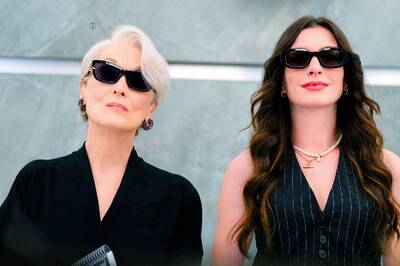
A: In addition to the biopic “Michael,” comedy “The Devil Wears Prada 2” is finally in theaters. I can’t believe it’s been 20 years since the 2006 debut of the original film. B: Does the sequel still revolve around the fashion industry? A: This time, “Miranda,” the fashion magazine editor-in-chief played by Meryl Streep, will team up with her former assistant “Andy,” played by Anne Hathaway, to fight against Emily, her other ex-assistant played by Emily Blunt. B: Isn’t the role of “Miranda” based on then US “Vogue” editor-in-chief Anna Wintour? A: Yup, it established Anna’s fashion status, influenced pop culture
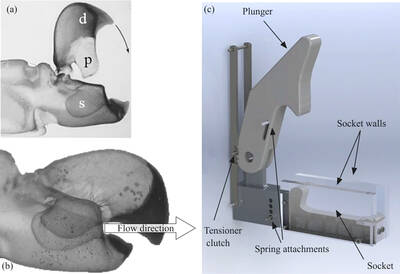
Few sea creatures of their size have as much destructive power as pistol shrimp. These small animals, usually measuring around four centimeters long, produce shock waves that can stun or even kill their prey. The attack begins when the shrimp opens its specialized claw, allowing water to fill a chamber inside. Then the claw closes rapidly. A bump on the claw strikes the chamber, forcing the trapped water out through a narrow opening at a high speed of about 25 meters per second. The rapid movement forms a bubble in the water that collapses almost instantly under the pressure of the


 RSS
RSS