


The New Taiwan dollar has risen in value by 7 percent so far this year, sparking concerns the appreciation will impact upon Taiwan’s exporters. Hiwin Technologies Corp chairman Eric Chuo has called on the central bank to eliminate the interference of inflows and outflows of hot money, saying that rises and falls in the value of a country’s currency should be governed by the degree to which it is competitive.
At the company’s investors’ conference on Wednesday last week, while discussing the NT dollar, Chuo noted that the exchange rate has an impact upon import and export companies, adding that 80 percent of Hiwin Technologies’ sales come from exports, which means that the company’s profit is affected by exchange rate fluctuations.
Chuo also said Taiwanese industries need to upgrade and improve the added-value of their products in order to cushion the effect of currency fluctuations.
Photo: Reuters
照片:路透社
Given the current situation with hot money flows affecting the exchange rate, the central bank should stabilize the exchange rate by eliminating factors which cause inflows and outflows of hot money. While Chuo said he can appreciate the government’s predicament, he noted that the situation is different in Taiwan from that of the US since hot money does not have a significant impact on the US economy.
(CNA, translated by Edward Jones)
新台幣匯價今年以來漲幅約百分之七,成為影響出口表現隱憂。上銀董事長卓永財表示,中央銀行應排除熱錢進出干擾,貨幣升貶應該與國家競爭力相關。
上銀上禮拜三舉辦法人說明會。談到新台幣匯率,卓永財重申,本國貨幣匯率影響進出口廠商,上銀有八成以出口外銷為主,也會受到匯率波動影響損益。
卓永財指出,產業要升級提高附加價值,減緩匯率波動的影響。
卓永財重申,目前熱錢進出影響匯率走勢,匯率的穩定應該要把熱錢因素排除,他建議中央銀行應排除熱錢進出干擾。卓永財表示,可以體諒政府的難處,不過美國和台灣不一樣,熱錢進出對於美國沒有太大影響。
(中央社)
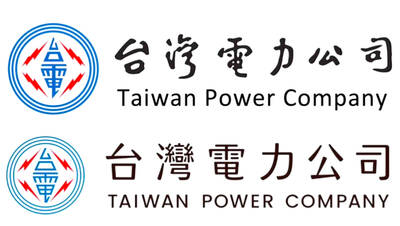
The debate surrounding Taipower’s recent corporate identity reboot has gone well beyond the design community. The controversy began after Taipower replaced the familiar “Taiwan Power Company” wording — widely regarded as the calligraphy of Yu You-ren (1879-1964), former Control Yuan president and master calligrapher — with a modern logotype by designer Aaron Nieh’s team, Aaron Nieh Workshop. Taipower said the change was not a wholesale replacement of old signage, but an “optimization of its identity system,” aimed at meeting the needs of digital media, electronic bills, apps, social media graphics and various small-format applications. Existing physical markings, such as building

Since 2005, the third Monday in January has come to be known as “Blue Monday.” In other words, that day is believed to be the most depressing day of the year. This concept seems logical at first. After all, Monday marks the start of the school or workweek after two days of rest and fun. Also, blue is a color that is often associated with sadness. Furthermore, in many parts of the world, January is a time when the weather is cold, rainy, and gloomy. But is there any scientific proof that this January day is truly sadder than any of

Continued from yesterday(延續自昨日) https://www.taipeitimes.com/News/lang For the most part, the idea of “Blue Monday” has been rejected as a myth. Some mental health experts also say there is a danger in labeling a certain day as the most depressing time of the entire year. Some argue that if people expect to feel sadder on the third Monday in January, this belief alone may increase their anxiety. One group that is worried about the negative effect of believing in Blue Monday is Samaritans. A mental health charity based in the UK, Samaritans is working to turn Blue Monday into “Brew Monday.” In this

1. 他兩天後回來。 ˇ He will return in two days. χ He will return after two days. 註︰從現在開始,說「多久以後」,應該用 in,不用 after,例如: He plans to finish the work in three months. I am sure we will hear from him in a few days. 請注意 in a few days、in three months 許多人誤以為是「幾天內」、「三個月內」,其實是「幾天後」、「三個月後」。 如指「某個時刻或日期或事件以後」,可用 after。例如: I will be back after four o’clock.(或 after 4 August,或 after lunch)。 2. 他要在那牆上開一扇門。 ˇ He wants to put a door in that wall. χ He wants to put a door on that wall. 註︰門不是掛在牆上,也不是靠在牆上,而是開在牆裡,應該用 in。 比較下列各句: There is a painting on the wall. Why is that plank of wood leaning against the wall? The thief made a hole in the wall. 3. 我在報上看到這個消息。 ˇ I


 RSS
RSS