


“I am so happy to learn that my second-grade elementary school teacher is still alive!” says Yang Tusheng, who lives in Taichung’s Wuri District. Two days ago, his classmate Yang Hantsung’s son, Yang Penjung, gave him a letter and pictures sent by their Japanese teacher, Ms Takagi, who is a centenarian. He said with great delight, “My teacher has reached 106 years old. I must personally write a letter to her, telling her what it has been like for us over the past 80 years.”
Yang Tusheng is already 90 years old, but is still in good shape and has a good memory. “Ms Takagi was our second-grade homeroom teacher in the elementary school. She was a very diligent teacher. Although her father was a police officer, many very senior students would naughtily cut her skirt apart, using scissors.”
Yang Tusheng said he has already reached 90 years old and could not believe that 106-year-old Ms Takagi is still alive; he is really happy. Looking at Ms Takagi’s pictures reminds him of his sixth-grade homeroom teacher, Naomi, as well. “I really want to thank the postman for not giving up on searching for clues to find us. Thanks to his hard work, old folks like us can have a chance to read our teacher’s letter.” He smiled and said, “I have not used Japanese for quite a while. Neither have I written letters for a long time. I am afraid that I will not be able to fully convey what I want to say, but in order to express my gratitude for my teacher’s care for us, I will find the time to write to her, telling her how I have been.”
(Liberty Times, Translated By Ethan Zhan)
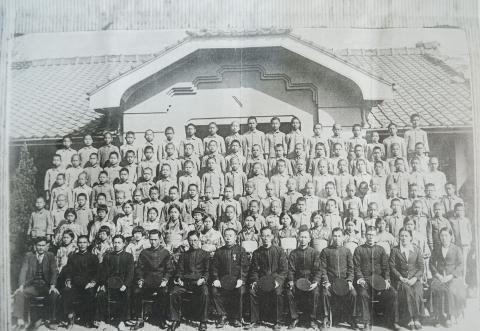
Photo: Chen Chienchih, Liberty Times
照片:自由時報記者陳建志
「真高興,小學二年級的老師還健在!」住在台中烏日區高齡九十歲的楊塗生,前兩天從同學楊漢宗的兒子楊本容手中接到日籍百歲女老師高木波惠的信件和照片,喜不自勝,嚷著說:「老師都一百零六歲了,我一定要親自寫信給老師,報告八十年來的近況。」
楊塗生高齡九十了,但是身體還很硬朗,記憶亦很清晰,「高木波惠是我小學二年級時的導師,教學認真得很。雖然高木老師的父親是警察,但有高好幾屆的學長,竟然還曾調皮地用剪刀剪破高木老師的裙子。」
楊塗生說,自己已經九十歲了,沒想到高齡一百零六歲的高木老師還健在,真的很高興。看見高木老師的照片,他還想起六年級的導師叫平林,「感謝郵差不放棄找線索,才讓我們這群老學生能看到老師的來信。」楊塗生笑著說:「我已經很久沒用日文,也已經很久沒有寫信了,真擔心辭不達意,為了感謝老師的關心,我一定會找個時間寫信告訴老師自己的近況。」
(自由時報記者陳建志)
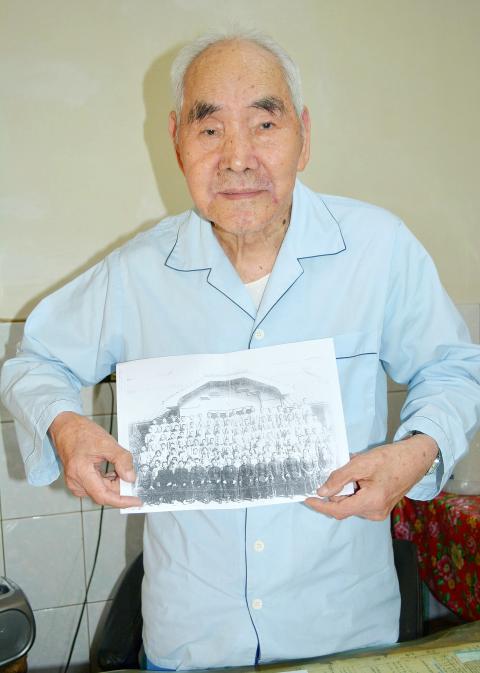
Photo: Chen Chienchih, Liberty Times
照片:自由時報記者陳建志
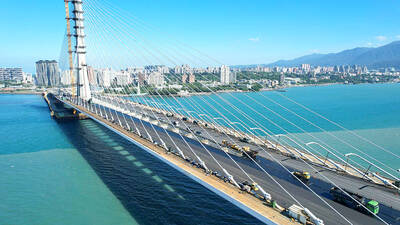
A: The Danjiang Bridge in New Taipei City is to open on May 12, and the MRT Sanying Line (Light Blue Line) will also open in June. Isn’t that great? B: Is that the bridge connecting the city’s Tamsui and Bali Districts? What’s so special about this new landmark spanning the Tamsui River? A: The Danjiang Bridge will become the world’s longest-span single-mast asymmetric cable-stayed bridge — with a total river-crossing section of 920 meters and main span of 450 meters. B: The news says there are sidewalks and bike lanes on both sides. Watching the sunset from the
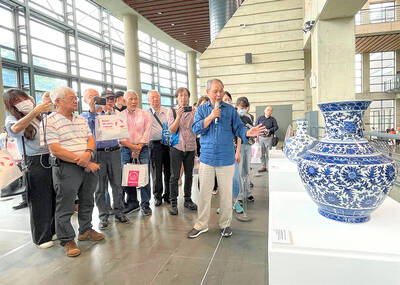
A: Apart from the Danjiang Bridge in New Taipei City, the MRT Sanying Line (Light Blue Line) will open in June. B: Is that the new line leading to Yingge District, the ceramic town? A: Yup, the line will connect the Yingge Ceramics Museum and the Old Streets in Sanxia and Yingge Districts. B: The eastward extension of the Tamsui-Xinyi Line (Red Line) that goes through Taipei’s Xinyi District will also open in June. A: Plus, Taoyuan’s Aerotropolis Line (Green Line) will partially open by the end of the year. In the future, it will connect the

In the dense forests of Tanzania, a young researcher sat quietly among the trees, her gaze fixed on a troop of chimpanzees. It was 1960, and Jane Goodall, armed with nothing but a notebook and endless curiosity, was about to change science forever. Inspired by childhood stories like the Dr. Dolittle series, she had dreamed of Africa — and now, thanks to the encouragement of anthropologist Louis Leakey, she was there, face-to-face with the wild. What Jane discovered shocked the world. Chimpanzees weren’t mere creatures of instinct; they were individuals with emotions, families, and even the capacity for tool
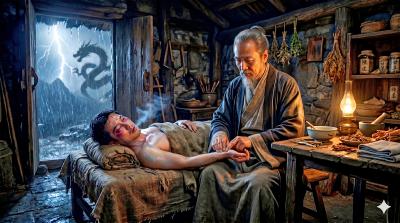
★ Bilingual Story is a fictionalized account. 雙語故事部分內容純屬虛構。 Rain hammered the roof in hard, uneven bursts. “Hold him still!” Baosheng pressed one hand against the stranger’s brow as the man twisted on the wooden bed. His left eye was swollen shut. The right one burned red like a coal. “It feels like fire,” the man gasped. “Like something is clawing inside.” Thunder rolled across the mountain. Baosheng leaned closer. The man’s skin was cold, but heat rose from his face. A strange smell hung in the air. He began the four methods of diagnosis: looking, listening/smelling,


 RSS
RSS