


Tiger poo is an effective new weapon in warding off animal pests, scientists said Wednesday, after years of experimenting with big cats’ feces collected from Australian zoos.
A team from the University of Queensland made the discovery as they researched non-lethal ways to keep herbi-vores, such as goats and kangaroos, away from certain plants, Associate Professor Peter Murray said.
While such repellents are typically based on offensive smells like rotten eggs, blood or bone, using tiger poo came from the idea that “if you can smell a predator nearby you would probably want to go somewhere else,” he said.
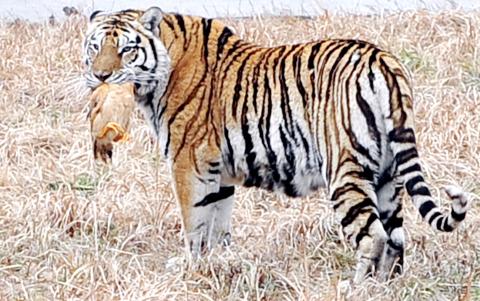
Photo: AFP 照片:法新社
Murray and his team, who have worked on the project for eight years, conducted tests on goats in a small paddock, placing the feces taken from local zoos near a feeding trough and monitoring events with a video camera.
They found big cats’ feces a more effective deterrent than those of other predators.
“The goats really didn’t like it. They wouldn’t go near the trough,” Murray told AFP. He said old goat carcasses also proved effective in warding off goats, but the smell was so bad that it made the scientists feel sick.

Photo: EPA 照片:歐新社
The researchers also found that the feces worked best as a deterrent when the tiger had been fed the animal being targeted.
“There’s not only a chemical signal in the feces that says ‘Hooley dooley, this is a dangerous animal’, it’s ‘Hooley dooley, this is a dangerous animal that’s been eating my friends’,” Murray explained.
The scientist said a number of species showed similar reactions to the feces, and he believed that with more funding, a synthetic tiger poo smell could be developed and potentially turned into a commercial product.
(AFP)
多年來針對澳洲動物園大型貓科動物糞便做實驗的科學家週三表示,老虎屎是驅避(對某些植物)有害蟲獸的一項新武器。
副教授彼得‧穆瑞說,「昆士蘭大學一個團隊的這項新發現,是用非致命的方式驅離像是山羊、袋鼠等草食性動物。」
他說,一般慣用的是臭雞蛋、血液或骨頭等具有強烈氣味的元素製成驅避劑,而使用老虎屎是從「若你聞到附近掠食性動物的氣味,你可能會想要到其他地方去」的觀點而來。
穆瑞與進行此計畫八年的團隊,在一個小牧場內對山羊進行試驗,將從當地動物園取得的糞便放置在餵養槽附近,並以攝影機全程監視。
他們發現,大型貓科動物的糞便當作遏止物比其他的掠食性動物的糞便更有效。
穆瑞告訴法新社說,「山羊真的不喜歡它。他們不願靠近餵食槽。」他說,老山羊的屍體也能驅離山羊,不過這個臭味使得科學家們難耐想吐。
科學家也發現特別是吃過要驅避動物的老虎屎,其驅避效果最佳。
穆瑞解釋說,「糞便不僅傳遞化學信號(讓驅避動物)說,『我的媽呀,這是個危險的動物』且『哇,這是隻已經吃下我朋友的危險動物。』」
科學家說有一些物種也出現類似的反應,且他相信在更多經費注入後,可能研發出合成的老虎屎氣味,並且有潛力改良成為一種商品。
(法新社/翻譯:林亞蒂)

The US-Israeli war with Iran, which began on Feb. 28, has killed thousands of people, destabilized the Middle East and rocked global energy markets by effectively closing the strait. WHAT IS THE STRAIT OF HORMUZ? Lying between Oman and Iran and linking the Gulf north of it with the Gulf of Oman to the south and the Arabian Sea beyond, the strait is 33km wide at its narrowest point, with a shipping lane just 3km wide in either direction. Perhaps the world’s most important energy shipping channel, the waterway is about 167km long. Following through on an old threat, Tehran effectively closed the strait

A: Which TV drama series have been global hits so far this year? B: The US drama “Stranger Things 5,” South Korean drama “Can This Love Be Translated?” and Chinese megahit “Pursuit of Jade” are all popular lately. A: Isn’t “Pursuit of Jade” the costume idol drama about the romance between a charming marquis and a pig-slaughterer? Actor Zhang Linghe and actress Tian Xiwei are both so attractive. B: Plus, Netflix’s Korean-Japanese gay romance drama “Soul Mate” — starring Korea’s Ok Taec-yeon and Japan’s Hayato Isomura — is set to premiere in May. A: These hit international dramas

Have you ever found yourself desperately feeding coins into a claw machine just because you’ve already spent so much trying to win that stuffed animal? Or maybe you’ve continued watching a boring movie simply because you already paid for the ticket? If so, you’ve experienced the “sunk cost fallacy.” A sunk cost refers to time, money or effort that has already been spent and cannot be recovered. This psychological trap is surprisingly common. You might keep playing a video game you no longer enjoy because you’ve invested countless hours in building your character, or maintain a toxic friendship because you’ve known
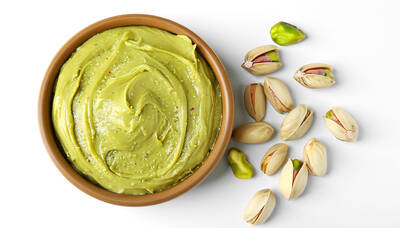
It seems like every year, new foods or drinks start trending and suddenly show up everywhere. A decade ago, avocado __1__ restaurant menus, while oat milk became the must-have addition to your coffee in cafes around five years back. The latest trend to hit this list is the pistachio. This flavorful green nut now features in everything from chocolate bars to Indian curries. While pistachios have long played a central role in certain regional cuisines, their recent global __2__ can be traced to Dubai. There, a specialty chocolate shop went __3__ on TikTok for one of its chocolate bars


 RSS
RSS