


Hong Kong leader Donald Tsang’s housekeeper has been shown the door after photos of his friends fooling around in restricted areas of Tsang’s official residence were posted on Facebook, a report said Saturday.
The group of teenagers posted 40 photos on Facebook and other Web sites showing themselves goofing around and posing as Tsang during a barbecue hosted by the housekeeper, the South China Morning Post reported.
The housekeeper had his contract terminated effective from Saturday following an investigation into how the visitors were allowed into off-limits areas of the 19th century Government House, which is closed to the public apart from on annual open days.
“The matter was handled in a solemn and fair manner, and an investigation has been conducted,” a spokeswoman for Tsang told the paper.
Tsang had been informed of the decision and no compensation was paid, she said.
The pictures showed the young visitors enjoying a barbecue and fooling around in private areas of the house. Some posed as Tsang and a recipient of an award in the ballroom where government honors are presented in an annual ceremony, the Post said.
(AFP)
上週六的報導指出,香港特首曾蔭權的管家因朋友在臉書上張貼了在官邸管制區玩鬧的照片後,已經捲舖蓋走人。
《南華早報》報導,這群接受管家邀請到官邸烤肉的青少年,在臉書和其他網站上發布了四十張在官邸內胡搞模仿曾蔭權的照片。
建於十九世紀的香港禮賓府平日謝絕參觀,僅每年的參觀日對外開放;當局已針對這些訪客是如何進入府內管制區展開調查。這名管家上週六已被解除職務。
曾蔭權辦公室女發言人對該報表示:「我們已針對這件事展開調查,我們秉持嚴肅且公平的態度處理。」
她說,曾蔭權已得知此事,而且這名管家並未得到任何資遣費。
《南華早報》報導,在這些照片中,這群年輕訪客在官邸的私人區域中烤肉、嬉鬧。有些人在每年政府頒獎的宴會廳中,模仿曾蔭權和受獎人的樣子拍照。(法新社╱翻譯:袁星塵)
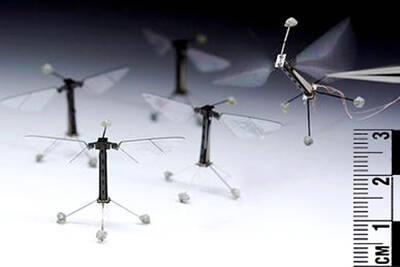
As bee populations around the world continue to decline at an alarming rate, scientists are developing an innovative solution: robotic bees. Recent advances at research institutions like Massachusetts Institute of Technology (MIT) in the US have produced tiny flying robots capable of performing pollination tasks similar to those of real bees. These tiny machines represent an impressive technological achievement. MIT’s latest models can hover in the air for over 1,000 seconds and perform complex movements, demonstrating the agility needed for successful pollination. The robots are designed to mimic the flight patterns of natural bees, offering potential support to agriculture

A: Taiwan legalized same-sex marriage on May 24, 2019, so this week marks the seventh anniversary of that milestone. By the end of 2024, a total of 32,126 LGBT couples had tied the knot. B: How many of them got married to foreign partners? A: In 2024, there were 504 cross-border same-sex marriages. By the end of that year, there were 130 cross-strait same-sex marriages between Taiwanese and Chinese — accounting for only about 0.4 percent of the total. B: I’ve heard that a seven-year marriage brings the “seven-year itch.” I bet some couples regret their decisions now. A:

A: While Taiwan is celebrating the 7th anniversary of legalizing same-sex marriage, a poll shows that the support rate for same-sex marriage rose sharply from 37.4 percent seven years ago to 69.9 percent last year. B: Actually, I’m a bit curious about the size of Taiwan’s LGBT population. A: I’m not sure. But if we take a Gallup poll in the US as an example, 9.3 percent of American adults identified as LGBT in 2024. B: Wow, is it because the Americans are relatively open? In many other countries, the figures hover around 5 percent. A: Based on this,
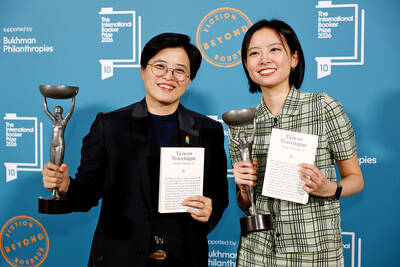
Taiwan Travelogue, the novel by Taiwanese author Yang Shuang-zi and translated into English by Lin King, won the prestigious International Booker Prize in London on May 19. It marks the first time a Taiwanese literary work has received the International Booker Prize, setting a historic milestone both for Taiwanese literature and for the award itself. Prior to this achievement, Taiwan had only once appeared on the Booker radar, when Taiwanese author Wu Ming-yi was longlisted for the Booker Prize in 2018 with The Stolen Bicycle. The International Booker Prize honors works of fiction translated into English and published in the UK or Ireland.


 RSS
RSS