


Over 1,100 years ago, an international crew of men set sail on a perilous journey. They are returning home from Tang Dynasty China with rare ceramics and gold, created by ninth-century Chinese craftsmen, desired by the rest of the world. For centuries, China has traded with the West over land, via the Silk Road. They traveled safely from the Middle East, all the way to China. But on their return voyage, they made a fateful decision. Here, off the coast of Indonesia, the reef-filled waters are so deadly that ancient sailors called the area the Treacherous Bay.
一千一百多年前,一支國際船隊展開一趟驚險奇航,他們帶著罕見的瓷器和黃金從唐朝的中國返鄉,這些器物出自公元九世紀中國工匠之手,全球人士皆垂涎不已。中國和西方數百年來一直經由絲路從事陸上貿易。他們從中東出發一路安抵中國,但回程時卻做了個致命的決定。就在印尼外海這裡,布滿暗礁的水域隨時可能要命,古代的水手稱之為背叛灣。
Tilman Walterfang was lured here in the late 1990s, in search of undersea treasure. An engineer by trade in his native Germany, Walterfang maintains a lifelong passion for ancient art. He comes to Indonesia on a quest for big discoveries. Local fishermen find a mound of ceramics on the seabed. Based on the designs, they appear to have been created between 600 and 900AD, in Tang China. Walterfang hires Mike Flecker, an Australian maritime archaeologist, to manage the excavation. The whole vessel was buried. It had 1,100 years of sediment accumulated on top of that.
一九九0年代末期,提爾曼•華特方來到這兒尋找海底寶藏,他在老家德國的職業是工程師,但華特方畢生熱愛古代藝術,他到印尼來追求偉大發現。當地漁夫發現海床上有一堆瓷器,照設計圖案看來,應該是出自公元六00到九00年間的唐代中國。華特方請來澳洲海洋考古學家麥克•佛列克負責主持開挖工作。整艘船都埋在海裡,累積了一千一百年的沉積物。
Underneath the coral covering are countless jars stacked to the brim with bowls, plates, vases and jewelry. The team recovers some 60,000 pieces, mostly ceramics, but also precious items of gold, silver and bronze. There’s nothing written, there aren’t any archaeological reports. Ancient records tell of Arab and Persian fleets that traversed Asian seas, but no such boat from the time has ever been found.
覆滿珊瑚的表面底下,是無數塞滿了碗盤、花瓶和珠寶的大甕,打撈人員起出六萬件左右的器物,其中大多數是瓷器,但也有金、銀和銅等貴重器物。沒有任何文字記載,也沒有考古報告。古代史料記載阿拉伯和波斯船隊往來於亞洲水域,但從未發現當時有這樣一艘船。
This one was covered by a layer of sand that prevented worms from attacking the wood. Every element of the wreck is potential evidence that the Maritime Silk Route existed. A bronze mirror bears a compelling clue, with the inscription: “Smelted one hundred times in the city of Yangzhou on the Yangtze river in December 758.” Without a doubt, the treasure is from Tang Dynasty China. Radiocarbon analysis dates fragments of the wooden hull to between 700 and 900 AD. During that era, only Arab and Indian craftsmen were building ocean-going ships of this type. The wooden fragments provide crucial evidence of the boat’s origins. Afzilia Africana is a hardwood once prized by the ancient Arab boat builders. The wood is found across Africa, from Senegal to Uganda. If it’s a timber coming from Africa, it’s far more likely that it was just transported the short distance up to Yemen or Oman and the vessel was built there.
這艘船有一層砂石掩蓋,阻止蟲子侵蝕木頭,沉船的每個組件都是證明海上絲路存在的可能證據,一面銅鏡出現強而有力的線索,上面刻著:「唐乾元元年十二揚州揚子江心百鍊製造」,這批寶藏無疑是出自唐代中國。船體木材碎片經過碳定年分析,證實出自公元七00到九00年。那段期間只有阿拉伯和印度工匠建造這種遠洋船隻,木材碎片提供了船隻來源的關鍵證據。緬茄木是一種硬木,曾備受古代阿拉伯造船者青睞,這種木材的產地在非洲塞內加爾到烏干達一帶,如果木材來自非洲,很可能是經由短途航程運送到葉門或阿曼,然後在當地建造船隻。

Taiwan Travelogue, the novel by Taiwanese author Yang Shuang-zi and translated into English by Lin King, won the prestigious International Booker Prize in London on May 19. It marks the first time a Taiwanese literary work has received the International Booker Prize, setting a historic milestone both for Taiwanese literature and for the award itself. Prior to this achievement, Taiwan had only once appeared on the Booker radar, when Taiwanese author Wu Ming-yi was longlisted for the Booker Prize in 2018 with The Stolen Bicycle. The International Booker Prize honors works of fiction translated into English and published in the UK or Ireland.
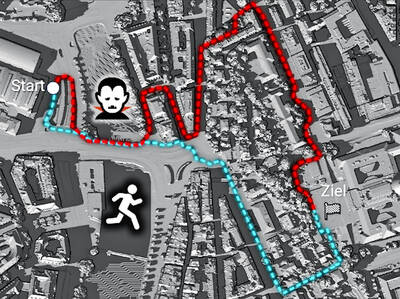
As climate change and urbanization push city temperatures higher, walking outdoors is becoming increasingly uncomfortable in many parts of the world, especially when prolonged time spent in sunlight is involved. As a result, outdoor lovers are now seeking cooler, shaded walking routes. However, most mainstream map apps still do not __1__ shaded footpaths. Enter routing.osm.ch — a Swiss web-based route planner that introduces a novel solution to this problem. Its “Vampire mode,” named after the legendary creatures’ fear of being __2__ natural light, was developed by a Swiss research team led by Professor Stefan Keller. The platform combines open data from

Cities around the world are testing “robotaxis,” hoping that autonomous vehicles will ease traffic and reduce emissions. However, recent analyses suggest these expectations may be overly optimistic. According to consulting firm Kearney, robotaxis could actually make congestion worse rather than better. Because self-driving rides are expected to be cheaper and more convenient than traditional taxis, more people may choose them over walking, biking, or using public transportation. This shift would put more cars on already crowded roads. Another concern is “deadheading,” which refers to robotaxis traveling without passengers between rides. Since autonomous fleets need to reposition themselves throughout the day, these

A: Time magazine recently released its list of “The 100 Most Influential People of 2026.” It’s categorized into six groups: Artists, Pioneers, Titans, Icons, Leaders and Innovators. B: TSMC chairman C.C. Wei made the list this year. Which category is he in? A: Wei is actually among the Pioneers, with figures including Disney CEO Josh D’Amaro and MrBeast — the first YouTuber ever to surpass 400 million subscribers. B: Led by Wei, Taiwan’s “silicon shield” TSMC is the sixth-largest company in the world. A: As Nvidia founder Jensen Huang wrote in his introduction, “C.C. Wei is truly one of the


 RSS
RSS