


London’s red buses could soon feature the slogan “There’s probably no God. Now stop worrying and enjoy your life,” in an atheist advertising campaign responding to a set of Christian ads.
Comedy writer Ariane Sherine, 28, objected to the Christian adverts on some London buses, which warned that people who rejected God would go to hell.
She sought £5 (NT$268) donations towards a “reassuring” advertisement — and received the backing of the British Humanist Association (BHA).
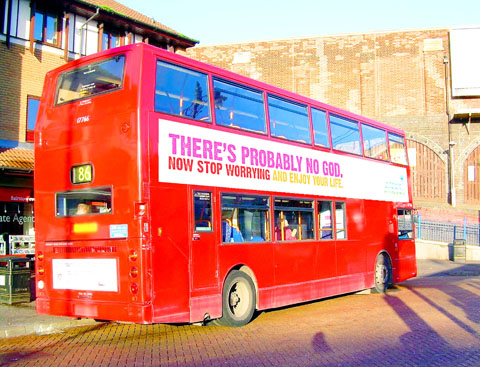
PHOTO: AFP
The campaign has already raised £5,500, and the slogan is planned to hit the side of several London buses in January.
A Church of England spokesman said: “We would defend the right of any group representing a religious or philosophical position to be able to promote that view through appropriate channels.
“However, Christian belief is not about worrying or not enjoying life.
“Quite the opposite — our faith liberates us to put this life into a proper perspective.”
A spokesman for Transport for London said no such advertisement had been received. “No advertisement of this kind has been submitted to TfL at this time. If approved, then it will appear on our network,” he said. (AFP)
「上帝或許並不存在,所以別煩惱了,盡情享受生命吧!」這句標語 ,可能很快就會成為倫敦紅色巴士的特色。這是無神論者為了回應一系列基督教廣告而發起的一項廣告活動。
二十八歲的喜劇作家愛瑞恩.雪倫不滿倫敦一些公車上的基督教廣告;那些廣告警告說,凡不信耶穌者將下地獄。
她發起每人捐五英鎊(新台幣兩百六十八元)刊登一則「安慰人心」廣告的活動,──並獲得英國人文主義協會的支持。
這個活動目前已籌募到五千五百英鎊,並計畫明年一月在倫敦許多公車車體上刊登該句標語。
英國國教發言人說:「我們願維護任何代表宗教或哲學立場團體的權利,能透過適當的管道,宣傳看法。」
「然而,基督教信仰並非教人擔憂,或不去享受生命。」
「事實恰巧相反──我們的信仰讓我們用一種獨特的角度去看待生命。」
倫敦大眾運輸局發言人說,他們尚未接到這類廣告。他說:「目前倫敦大眾運輸局尚未接到這類廣告委託。但若經核可,該廣告將在我們的網絡中出現。(法新社�翻譯:袁星塵)
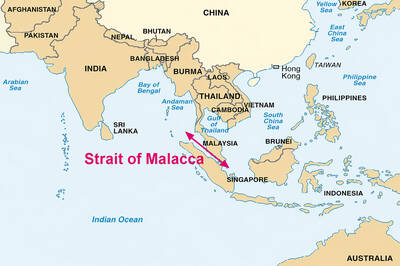
The closure of the Strait of Hormuz has forced policymakers in Asia to face questions over the security of other maritime chokepoints, including the Strait of Malacca, which is the world’s busiest waterway for international trade. WHAT IS THE MALACCA STRAIT? The 900km long Malacca Strait, bounded by Indonesia, Thailand, Malaysia and Singapore, provides the shortest sea route from East Asia to the Middle East and Europe. It carries nearly 22 percent of the world’s maritime trade, according to the Center for Strategic and International Studies (CSIS). This includes oil and gas shipments from the Middle East to the energy-hungry economies of China,
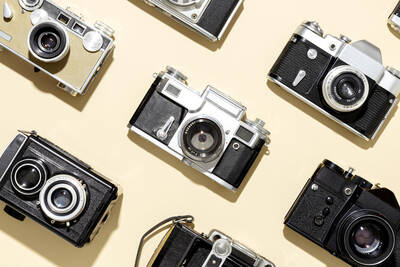
Cameras are everywhere — in our pockets, on our walls and even in space. They capture emotions, preserve history and reflect culture. Through these devices, photography is now essential to modern life, influencing how we perceive ourselves and the world. To understand the root of their power, let’s explore the camera’s remarkable journey. The story begins with the camera obscura, a dark room with a tiny hole. Light passing through the opening projected an inverted image on the opposite wall. Renaissance artists used this principle to paint accurate scenes. However, these images couldn’t be preserved as photographs. That changed
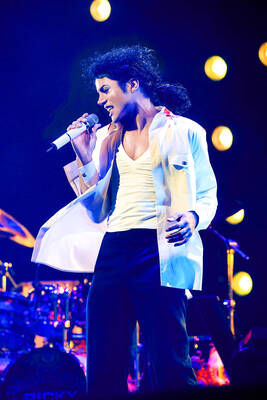
A: This year’s two most anticipated films have finally hit theaters in Taiwan. “Michael” premiered last Wednesday, while “The Devil Wears Prada 2” premiered this Wednesday ahead of its global release. B: Isn’t “Michael” the biopic about the late King of Pop Michael Jackson? A: Yup, it tells the story of Michael’s legendary life, from child star to global icon. And the role is in fact played by his nephew, Jaafar Jackson. B: Michael caused a sensation when touring Taiwan twice in 1993 and 1996. His classic hits, dance moves and music videos reshaped global pop culture at that time. A: I’m gonna
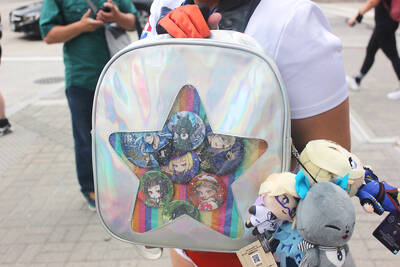
對話 Dialogue 華華:欸,你最近有沒有發現,路上很多人背的包包上還有一個透明的小包包? Huáhua: Èi, nǐ zuìjìn yǒu méiyǒu fāxiàn, lùshàng hěn duō rén bēi de bāobāo shàng hái yǒu yí ge tòumíng de xiǎo bāobāo? 清清:我上次去逛街,也注意到了。我看到好多人把吊飾、照片或娃娃什麼的放進小包裡,掛在包包上。那叫什麼啊? Qīngqīng: Wǒ shàngcì qù guàngjiē, yě zhùyì dào le. Wǒ kàndào hǎo duō rén bǎ diàoshì, zhàopiàn huò wáwa shénme de fàng jìn xiǎo bāo lǐ, guà zài bāobāo shàng. Nà jiào shénme a? 華華:聽說有兩種,一種叫「痛包」,一種叫「娃包」或「曬娃包」。 Huáhua: Tīngshuō yǒu liǎng zhǒng, yì zhǒng jiào “tòngbāo”, yì zhǒng jiào “wábāo” huò “shàiwábāo”. 清清:「痛包」這個說法我聽過,就是在包包上大量展示自己喜歡的東西。但「曬娃包」還是第一次聽到。為什麼叫「曬娃包」? Qīngqīng: “Tòngbāo” zhège shuōfǎ wǒ tīng guò, jiù shì zài bāobāo shàng dàliàng zhǎnshì zìjǐ xǐhuān de dōngxi. Dàn “shàiwábāo” háishì dì yí cì tīng dào. Wèishéme jiào “shàiwábāo”? 華華:因為很多人會把自己喜歡的娃娃放進透明包裡,帶出去拍照,曬給大家看。 Huáhua: Yīnwèi hěn


 RSS
RSS