


A giant crocodile believed to have eaten an Australian holidaymaker will spend the rest of its life on a farm, breeding more crocodiles.
Human remains, thought to be those of Arthur Booker, have been discovered in the stomach of a 4.5m crocodile captured in north Queensland. Booker, 62, disappeared last month while holidaying with his wife in the area.
Because of the reptile’s size it is a protected animal that cannot be killed.

PHOTO: AFP
It can also not be released and under Queensland state law it cannot be displayed in a zoo, so a breeding program was the only alternative.
“Any crocodile over 4m is protected under conservation laws, so it needs to go into a facility where it can be used in a way that benefits crocodile conservation,” said a spokesman for the Environmental Protection Agency.
Booker disappeared on Sept. 30 after he went to check crab pots in a river in the so-called “Cape Crocodile” region of far north Queensland.
(AFP)
一隻可能吃掉一位澳洲渡假遊客的巨鱷將被送到一處農場,並在那裡繁殖更多鱷魚度過餘生。
在昆士蘭北部捕獲的一隻四點五公尺長的鱷魚胃裡留有人體殘骸,那可能是六十二歲的亞瑟.布克爾;他上個月和太太一起到該區渡假。
因為這條鱷魚的尺寸符合保育類動物標準,因此不能將牠處死。
牠也不能被野放,且根據昆士蘭州州法,牠不能放在動物園展示,因此安排牠參與繁育計畫是唯一可行的辦法。
環境保育局發言人說:「舉凡超過四公尺長的鱷魚都受保育法保護,因此牠必須被送到一個能替鱷魚保育工作貢獻一己之力之處。」
布克爾九月三十日到昆士蘭北部的「鱷魚角」區檢查河中的捕蟹籠後,便宣告失蹤。
(法新社�翻譯:袁星塵)

A: Which TV drama series have been global hits so far this year? B: The US drama “Stranger Things 5,” South Korean drama “Can This Love Be Translated?” and Chinese megahit “Pursuit of Jade” are all popular lately. A: Isn’t “Pursuit of Jade” the costume idol drama about the romance between a charming marquis and a pig-slaughterer? Actor Zhang Linghe and actress Tian Xiwei are both so attractive. B: Plus, Netflix’s Korean-Japanese gay romance drama “Soul Mate” — starring Korea’s Ok Taec-yeon and Japan’s Hayato Isomura — is set to premiere in May. A: These hit international dramas
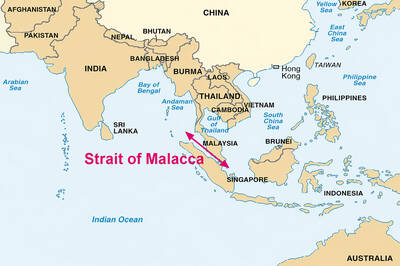
The closure of the Strait of Hormuz has forced policymakers in Asia to face questions over the security of other maritime chokepoints, including the Strait of Malacca, which is the world’s busiest waterway for international trade. WHAT IS THE MALACCA STRAIT? The 900km long Malacca Strait, bounded by Indonesia, Thailand, Malaysia and Singapore, provides the shortest sea route from East Asia to the Middle East and Europe. It carries nearly 22 percent of the world’s maritime trade, according to the Center for Strategic and International Studies (CSIS). This includes oil and gas shipments from the Middle East to the energy-hungry economies of China,

It seems like every year, new foods or drinks start trending and suddenly show up everywhere. A decade ago, avocado __1__ restaurant menus, while oat milk became the must-have addition to your coffee in cafes around five years back. The latest trend to hit this list is the pistachio. This flavorful green nut now features in everything from chocolate bars to Indian curries. While pistachios have long played a central role in certain regional cuisines, their recent global __2__ can be traced to Dubai. There, a specialty chocolate shop went __3__ on TikTok for one of its chocolate bars

One reason pistachios have taken the food world by storm compared to other nuts is their soft, green color. When ground down into a cream or butter, the green hue __6__ nicely with golden pastries or dark-brown chocolate, making it perfect for Instagram photos and TikTok videos. Their labor-intensive cultivation and __7__ also contribute to their image as a premium ingredient. Thus, buying a pistachio-based product often feels like a __8__ treat. Pistachios also stand out for their distinct flavor and health __9__. They have a subtle, sweet, earthy flavor that goes well with both sweet desserts and


 RSS
RSS