


Ken Watanabe is Japan's best-known actor abroad. He has starred in Hollywood films on samurai and geisha, but now he says he wants to show films less stereotypical of his country in the US.
Watanabe produced his latest Japanese-language movie, Memories of Tomorrow, and he plays the lead role of a successful businessman hit by Alzheimer's disease while still young.
"I have respect for past filmmakers who were courageous enough not to fear misunderstandings or failures" over culture, he said. "That is why as a producer I'd like to bring to the United States movies that do not feature ninjas and samurais."

PHOTO: EPA
Watanabe, 46, was nominated for an Oscar as best supporting actor for his role as the warrior Katsumoto in 2003's The Last Samurai, starring Tom Cruise.
He was also in last year's Batman Begins and Memoirs of a Geisha, in which he portrayed a rich businessman falling in love with a poor girl who becomes one of Japan's famous traditional hostesses.
Watanabe, who speaks fluent English, is one of the few Japanese stars in Hollywood. He said that before filming The Last Samurai, he feared that a US film on Japan would be rife with stereotypes.
"But during shooting we had rather fierce discussions, and as a result the movie itself became a channel through which Japanese and non-Japanese could understand one another," he said.
Watanabe said he now wants to work on films on issues of social concern, as seen in his latest work.
Watanabe is now filming one of the twin movies by Clint Eastwood which aim to depict the bloody World War II battle of Iwo Jima from both the US and Japanese perspectives. (AFP)
渡邊謙是日本最享譽海外的演員,曾參與好萊塢有關日本武士與藝妓的電影演出。不過現在他說,他想在美國呈現較無日本刻板印象的電影。
渡邊謙是他新片日文電影《明日的記憶》的製片,他也擔任主角,飾演盛年就罹患阿茲海默症的成功商人。
「我尊重過去有足夠勇氣不怕(文化)被誤解或失敗的製片,」他說:「這就是為何身為製片的我想將非關忍者和武士的電影引進美國。」
四十六歲的渡邊謙二○○三年在湯姆克魯斯主演的《末代武士》中飾演武士勝元,被提名為奧斯卡最佳男配角。
他也參與去年的《蝙蝠俠:開戰時刻》與《藝妓回憶錄》,在後者他飾演一位愛上貧窮女孩的富商,那名女子後來成為日本最知名的傳統藝妓之一。
說得一口流利英語的渡邊謙是日本少數的好萊塢明星之一。他說在演出《末代武士》前,曾擔心以日本為題材的美國電影會充斥刻板印象。
「不過拍片期間我們相當激烈地討論,結果這部電影成為日本人與非日本人間瞭解彼此的橋樑。」他說。
渡邊謙指出,他現在希望能致力於探討社會議題的電影,如他的新作一樣。
渡邊謙目前正在拍攝克林.伊斯威特的雙版本電影之一,故事同時採用美國與日本的觀點,描述二次大戰血腥的硫磺島戰役。
(法新社/翻譯:賴美君)
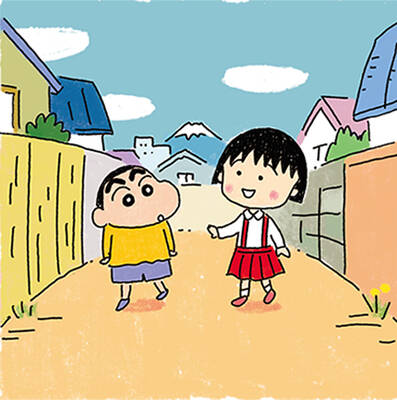
A: Popular humorous Japanese manga series “Chibi Maruko-chan” and “Crayon Shin-chan” will collaborate for their respective 40th and 35th anniversaries, publishing three crossover stories in April. B: Both were made into TV animation series, becoming huge hits in Asia. What are the crossover stories about? A: The first story features Shin-chan and his family visiting Maruko-chan’s hometown, Shizuoka City, where they run into each other. B: Wow, that sounds interesting. And then? A: The follow-ups feature Maruko-chan and her family visiting Shin-chan’s hometown, Kasukabe City. I bet the interactions between the two families will be funny. A: 熱門日本漫畫《櫻桃小丸子》、《蠟筆小新》4月將合作,為紀念小丸子40週年與小新35週年,推出三篇跨界聯動漫畫! B:
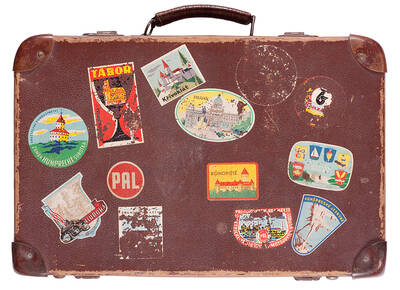
Travel fever is back, and it’s contagious. After years of being kept home during the COVID-19 pandemic, people are once again eager to explore the world. Rather than just book any trip, travelers are getting smarter about how they scratch that travel itch. Microcation Defined as four days or fewer and over 160km away from home, the microcation perfectly matches the post-pandemic mindset. After long periods of remaining indoors, people are making up for lost time by taking short, frequent getaways throughout the year. These brief trips avoid the work-life imbalance that comes with long absences. With only a few days away, one’s

Many consumers are guilty of filling drawers or closets with old laptops, cellphones, fitness trackers and other electronic devices once they are no longer needed. It’s hard to know where to recycle such items, or it seems costly and inconvenient to do so. The world generates millions of tons of electronic waste — also called e-waste — each year. According to the UN’s most recent estimate, people worldwide produced 62 million metric tons of e-waste in 2022, and only about 22 percent of it was properly recycled. The US’ Environmental Protection Agency estimates that less than a quarter of e-waste is

Dos & Don’ts — 想想看,這句話英語該怎麼說? 1. 我們很早到達電影院。 ˇ We arrived at the theater very early. χ We arrived the theater very early. 註︰arrive 為不及物動詞,後面如果有受詞要用 at 或 in。例如:They arrived in Taipei yesterday.。一般大地方,如國家、省、大城市等前面用 in,凡小地方城鎮、學校等則用 at。 2. 開車半小時以後,我們到達了海灘。 ˇ After half an hour’s drive, we got to the beach. χ After half an hour’s drive, we got the beach. 註︰come, go, get(來、去、到達)某地時,在表示地點的名詞前面應該用 to,如 go to school, go to Taipei, come to Shanghai 等。如果這些動詞後面所跟的是 here, there, home 等副詞,則不用 to。 3. 明天我會回辦公室。 ˇ I will be back in the office tomorrow. χ I will be back to office tomorrow. 註︰to be back 一語裡的 back 是副詞,不是介詞,所以後面要用 at (the market) 或 in (the office)。 假如假期結束,要回學校上課了則可說: ? Kids will be back


 RSS
RSS