


A group of single-legged young men, all victims of Sierra Leone's brutal civil war in which thousands lost arms, legs and other body parts, has come together for encouragement and hope. They are Sierra Leone's national amputees soccer team.
They play with just one foot each while balancing only on the crutches. But their skills are breathtaking all the same.
"We started playing (soccer) as a social game after we became envious of other boys with two legs," said Victor Musa, of the Sierra Leone Single Leg Amputees Sports Club.

PHOTO: AFP
"Now we don't feel that disabled anymore; we can play football too," said Musa.
Today they are a professional team, and last year they came in third at the World Cup single-leg soccer tournament in Brazil.
The sport has helped to spread a message of hope.
"We are happy that we can get together and encourage each other," said Mohamed Lappia, who stepped on a mine that shattered his leg.
Saidu Mansaray, 22, is the team's goalie. He has both his legs, but he catches the ball with one hand because the four non-thumb fingers of the other hand were chopped off with an axe.
The team struggles to find money for transportation to attend practice sessions, let alone pay for soccer shoes. Most play with threadbare sneakers, but that does not dampen their spirits.
As for Liberia's ex-president Charles Taylor, accused of sponsoring the war and facing a war crimes trial at a UN-backed court in Sierra Leone, team captain Fornah said, "If he is found guilty, he should spend the rest of his life in jail." (AFP)
這一群「獨腳」青年是獅子山共和國殘酷內戰下的受害者,這場內戰導致許多人失去手腳及身體其他部分,他們如今為彼此激勵和希望齊聚一堂。他們是「獅子山截肢者足球隊」。
他們只用一條腿踢球,以柺杖平衡身體,卻仍然技藝精湛。
獅子山單腿截肢者運動俱樂部的成員維克多*穆沙表示:「我們因為羨慕其他有兩條腿的男孩才開始踢足球。」
他說:「我們現在不覺得自己行動不便了,我們也能踢足球。」
他們如今是專業隊伍,去年在巴西舉行的世界盃單腳足球錦標賽名列第三。
這項運動有助於傳遞希望。
踩到地雷,腿被炸碎的莫翰*賴比亞說:「我們很高興可以在一起為彼此打氣。」
今年二十二歲的賽杜*曼沙瑞是隊上的守門員,他雙腿完好,卻用單手接球,因為另一隻手除了大拇指之外的指頭全被斧頭砍掉了。
這支隊伍連籌措參加練習的交通費都有困難,更別說買足球鞋,多數人穿著破舊的球鞋,士氣卻不受打擊。
至於被指控煽動戰爭,目前於獅子山聯合國戰犯法庭受審的賴比瑞亞前總統泰勒,隊長佛納表示:「如果他被判有罪,應該在監獄裡渡過餘生。」 (法新社/翻譯:鄭湘儀)


A: Isn’t the 2026 Coachella Valley Music and Arts Festival — a massive music event held every April — about to open in California? B: Yeah the festival is set to take place over two weekends, from April 10 to 12 and 17 to 19, US time. A: I heard this year’s main stage headliners include Sabrina Carpenter, Justin Bieber, Karol G and EDM DJ Anyma. B: The K-pop army is also making an appearance, with legendary group BigBang, SHINee member Taemin and girl group Katseye debuting for the first time. A: Isn’t Coachella also live-streamed on its YouTube
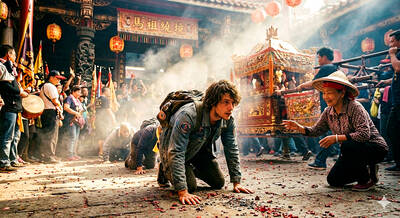
★ Bilingual Story is a fictionalized account. 雙語故事部分內容純屬虛構。 Lucas was already on the ground before he fully understood what was happening. “Hurry! Kneel down!” someone shouted. The asphalt was warm against his knees. Around him, dozens of people lay flat in the narrow street outside Jenn Lann Temple in Dajia. Some pressed their hands together in prayer. Others closed their eyes. Lucas had only come to look at the temple. An hour earlier he had stepped into the noisy courtyard out of curiosity. Inside the main hall, people held incense sticks, bowed three times,

You might think knitting is only for grandmas, but surprisingly, many young people are embracing so-called “grandma hobbies.” On social media platforms, activities such as home cooking, embroidery and gardening are becoming popular among teenagers and young adults who are drawn to their relaxing and creative nature. “Grandma hobbies” typically refer to activities that are slow-paced, handmade and nostalgic. Common examples include knitting scarves, baking cookies, sewing clothes and growing plants. These hobbies were once part of everyday life for many women in previous generations, but today they provide an escape from the fast-paced digital world. The appeal
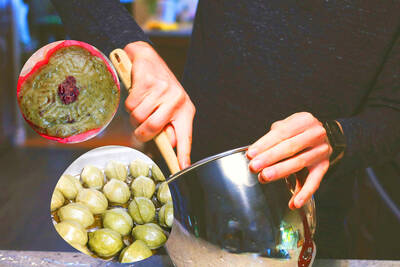
對話 Dialogue 清清:我連假回老家掃墓,帶了一些草仔粿回來,你要不要吃吃看? Qīngqīng: Wǒ liánjià huí lǎojiā sǎomù, dài le yìxiē “tsháu-á-kué” huílái, nǐ yào bú yào chī chī kàn? 華華:哇!看起來就很好吃。這是你們家自己做的嗎? Huáhua: Wa! Kàn qǐlái jiù hěn hǎochī. Zhè shì nǐmen jiā zìjǐ zuò de ma? 清清:對啊,是我阿姨親手做的。每年清明節她都會做。 Qīngqīng: Duì a, shì wǒ āyí qīnshǒu zuò de. Měinián Qīngmíng jié tā dōu huì zuò. 華華:你阿姨手藝真好!看起來好像外面賣的。 Huáhua: Nǐ āyí shǒuyì zhēn hǎo! Kàn qǐlái hǎoxiàng wàimiàn mài de. 清清:口味有鹹的,也有甜的。 Qīngqīng: Kǒuwèi yǒu xián de, yě yǒu tián de. 華華:聞起來好香!裡面包什麼? Huáhua: Wén qǐlái hǎo xiāng! Lǐmiàn bāo shénme? 清清:鹹的是蘿蔔絲的,甜的有紅豆口味和綠豆口味的。你想要哪種? Qīngqīng: Xián de shì luóbo sī de, tián de yǒu hóngdòu kǒuwèi hàn lǜdòu kǒuwèi de. Nǐ xiǎng yào nǎ zhǒng? 華華:我不挑食,哪種都可以,你幫我選吧。謝謝你跟我分享! Huáhua: Wǒ bù tiāoshí, nǎ


 RSS
RSS