


The US, eager for stability in northern Iraq to marshal a possible second front against Baghdad, apparently failed on Tuesday to talk Turkey out of sending troops into the Kurdish-controlled area.
"We will continue our discussions in the coming days," US envoy Zalmay Khalilzad said after a second day of talks with Turkish officials. "This is a difficult and complicated issue."
The US and the EU have told Turkey not to send forces into the area, fearing clashes between them and local Kurdish militia helping small numbers of US troops secure the area as Iraqis watch from the mountains.
Despite Turkey's failure to let US ground forces use its territory as a launchpad for a thrust into northern Iraq, White House documents showed on Tuesday the Bush administration plans to give Ankara up to US$8.5 billion in direct loans or guarantees.
Turkey told the European Commission its own forces massed at the border were there only for humanitarian purposes and it had no intention of taking military action in northern Iraq, a spokesman for the EU executive said.
Foreign Minister Abdullah Gul said only Turkey could decide whether to send troops into Iraq "for humanitarian reasons or to prevent giving a chance to terrorism" -- a reference to Kurdish separatists operating there.
"But in a time of war, so as not to allow misunderstandings, nothing could be more natural than to coordinate with an allied country," he told TRT state television.
Diplomats said the dominant mood at the US-Turkish talks was one of mutual incomprehension.
Officials have said the deployment could amount to tens of thousands of troops.
Washington had planned to use Turkish soil to launch an attack with 62,000 troops through north Iraq, forcing President Saddam Hussein's troops to fight on two fronts. But the NATO partner surprised US military planners by refusing permission.
The US only won overflight rights into the area, which broke with Baghdad after the 1991 Gulf War.
In Brussels, NATO Secretary-General George Robertson told reporters that Turkey had briefed its Western allies on Monday on plans to create a buffer zone up to 20km wide to contain refugees in northern Iraq if there were an exodus.
The US and the EU argue this is the job of international organizations.
"Since there is no flood of refugees into the northern area of Iraq, the issue does not arise as to whether NATO agrees or not. It hasn't happened, therefore the intention has simply been noted," Robertson said.
EU foreign policy chief Javier Solana said he had received fresh assurances in telephone conversations with Turkish leaders on Tuesday that they would not send additional troops into Iraq.
"We are going to put pressure on them if we see they don't behave according to what they promised us to do," he added.
A British defense source acknowledged on Tuesday that the lack of a northern front meant US troops to the south of the Iraqi capital now faced tougher resistance.
The US has lifted a small number of special forces and equipment into northern Iraq, but any future bid to assemble a northern front, albeit limited, could be undermined if there were confrontation between Turkish forces and Kurds.
Ankara's biggest fear is a move by Iraqi Kurds to seize a stake in northern oil fields as the financial foundation for a Kurdish state. Turkey says this would rekindle armed Kurdish rebellion in Turkish southeastern territories.
Washington insists a Kurdish state would not emerge.
Ankara has kept troops in northern Iraq for many years, guarding the border and pursuing Turkish Kurdish rebels who have withdrawn to the mountains there. Estimates put the strength anywhere between 3,000 and 17,000.
Kurdish groups tacitly accept a limited presence but vow to resist any bigger deployments.
Villagers from a zone near the Iraqi border closed to journalists said they had seen more than 100 trucks, jeeps and armored cars assembled near the frontier. Armor was also visible from the Iraqi side of the border.
The head of Turkey's armed forces, General Hilmi Ozkok, was expected to visit the Turkish border yesterday if heavy snow abated.
EU sources said on Tuesday the European Commission would propose doubling aid to Turkey, which wants to join the EU, to one billion euros (US$1.07 billion) over the next three years.

DEFENDING DEMOCRACY: Taiwan shares the same values as those that fought in WWII, and nations must unite to halt the expansion of a new authoritarian bloc, Lai said The government yesterday held a commemoration ceremony for Victory in Europe (V-E) Day, joining the rest of the world for the first time to mark the anniversary of the end of World War II in Europe. Taiwan honoring V-E Day signifies “our growing connections with the international community,” President William Lai (賴清德) said at a reception in Taipei on the 80th anniversary of V-E Day. One of the major lessons of World War II is that “authoritarianism and aggression lead only to slaughter, tragedy and greater inequality,” Lai said. Even more importantly, the war also taught people that “those who cherish peace cannot
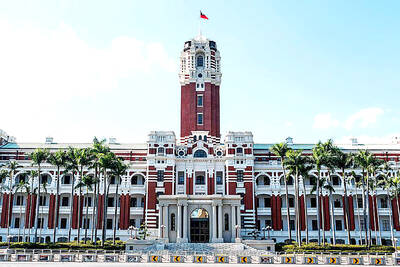
STEADFAST FRIEND: The bills encourage increased Taiwan-US engagement and address China’s distortion of UN Resolution 2758 to isolate Taiwan internationally The Presidential Office yesterday thanked the US House of Representatives for unanimously passing two Taiwan-related bills highlighting its solid support for Taiwan’s democracy and global participation, and for deepening bilateral relations. One of the bills, the Taiwan Assurance Implementation Act, requires the US Department of State to periodically review its guidelines for engagement with Taiwan, and report to the US Congress on the guidelines and plans to lift self-imposed limitations on US-Taiwan engagement. The other bill is the Taiwan International Solidarity Act, which clarifies that UN Resolution 2758 does not address the issue of the representation of Taiwan or its people in
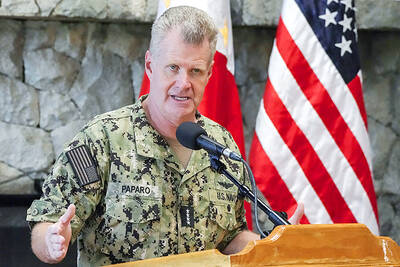
US Indo-Pacific Commander Admiral Samuel Paparo on Friday expressed concern over the rate at which China is diversifying its military exercises, the Financial Times (FT) reported on Saturday. “The rates of change on the depth and breadth of their exercises is the one non-linear effect that I’ve seen in the last year that wakes me up at night or keeps me up at night,” Paparo was quoted by FT as saying while attending the annual Sedona Forum at the McCain Institute in Arizona. Paparo also expressed concern over the speed with which China was expanding its military. While the US
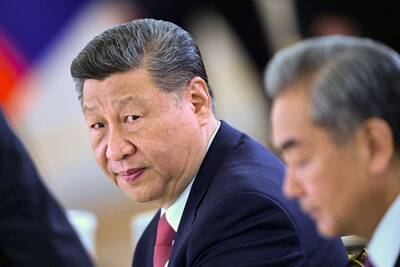
‘FALLACY’: Xi’s assertions that Taiwan was given to the PRC after WWII confused right and wrong, and were contrary to the facts, the Ministry of Foreign Affairs said The Ministry of Foreign Affairs yesterday called Chinese President Xi Jinping’s (習近平) claim that China historically has sovereignty over Taiwan “deceptive” and “contrary to the facts.” In an article published on Wednesday in the Russian state-run Rossiyskaya Gazeta, Xi said that this year not only marks 80 years since the end of World War II and the founding of the UN, but also “Taiwan’s restoration to China.” “A series of instruments with legal effect under international law, including the Cairo Declaration and the Potsdam Declaration have affirmed China’s sovereignty over Taiwan,” Xi wrote. “The historical and legal fact” of these documents, as well


 RSS
RSS