


Due to added production lines, the nation is poised to become second in the world in terms of mask production at the end of this month or early next month, Premier Su Tseng-chang (蘇貞昌) said yesterday.
Su made the remarks while inspecting mask manufacturing facilities at Nonwoven Converting Machinery Co (權和機械) in New Taipei City.
Thanks to the efforts of the Ministry of Economic Affairs, the nation is set to finish adding 60 mask production lines to its current production capacity at the end of this month or early next month, Su said.
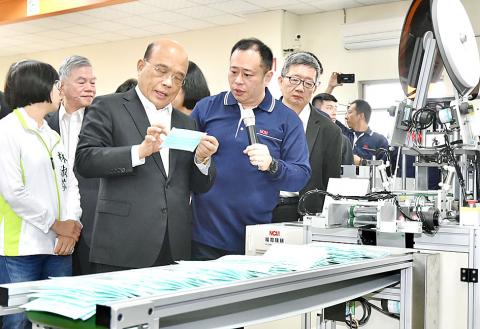
Photo: Tu Chien-jung, Taipei Times
By then, the nation would be able to produce about 10 million masks per day, he said.
Nine of the production lines would launch today, he added.
Disease prevention is a joint effort, Su said, thanking the company and the Taiwan Machine Tool and Accessory Builders’ Association for helping to boost mask production amid an outbreak of COVID-19 in China.
He also thanked pharmacists for cooperating with the government’s mask rationing policy and for maintaining order when people line up to buy masks, as well as postal workers for delivering masks to every corner of the nation.
All of these efforts have enabled prices to be capped at an affordable NT$5 per mask and kept the number of confirmed cases low, compared with neighboring countries, Su said, adding that the nation’s tenacity has shone through under such harsh conditions.
Asked whether a planned budget for an Executive Yuan program to give people shopping coupons would be sufficient to boost sales after the outbreak is brought under control, Su said that he would ask Executive Yuan Secretary-General Li Meng-yen (李孟諺) and Minister Without Portfolio Kung Ming-hsin (龔明鑫) to determine whether to increase the budget for the coupons or expand their scope.
For example, aside from markets and stores, the coupons could be made redeemable at concert and exhibition venues, whose business has also suffered from the outbreak, he said.
The Ministry of Economic Affairs has proposed a tentative budget of NT$2 billion (US$66.6 million) for the coupons, which would translate to each citizen receiving between NT$100 and NT$200 in discounts.

The National Chungshan Institute of Science and Technology yesterday showcased its locally developed variants of the Vision 60 robotic patrol dog, which it plans to deploy on the nation’s outlying territories in the South China Sea. The variants were produced under the Joint Lab project — created by the institute and domestic companies — and assembled with domestically produced motors, lenses and artificial intelligence (AI) systems alongside licensed tech from the US, Missile and Rocket Systems Research Division deputy director Jen Kuo-kang (任國光) told the media event at a military base in Taipei’s Dazhi (大直) area. Taiwan has built up its strengths

RIGHT DIRECTION: Taiwan’s efforts to prevent forced labor include a proposal to ‘fully prohibit’ employers from withholding workers’ documents, an official said Taiwan is to establish a mechanism to restrict imports of goods linked to forced labor, the Executive Yuan said yesterday, after the US proposed imposing additional tariffs on Taiwanese goods over labor concerns. “The Ministry of Labor and the Ministry of Economic Affairs are to establish an interministerial review procedure,” Executive Yuan spokesperson Michelle Lee (李慧芝) said at a news briefing in Taipei. “The government is to use the Foreign Trade Act [貿易法] as the legal basis to restrict imports of goods produced with forced labor” and bring its supply chain governance more in line with international standards on human rights, resilience
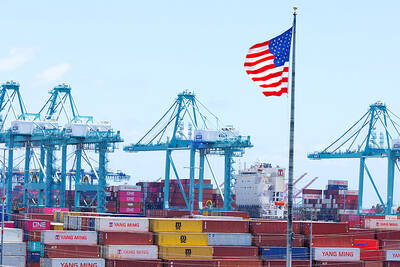
NOT IMMEDIATE: Taiwan has a chance to appeal the proposed 10 percent tariff before it starts, while other countries face a 12.5 percent tariff from the trade office Taiwan is among 60 economies determined by the US to have failed to impose or enforce a ban on the importation of goods produced with forced labor, according to a notice released on Tuesday by the Office of the US Trade Representative (USTR), which proposed imposing an additional 10 percent or more tariff on them. The USTR in a statement said that following an investigation, it had determined under Section 301 of the Trade Act of 1974 that the failure of the 60 economies to impose and effectively enforce a prohibition on the importation of goods produced with forced labor is
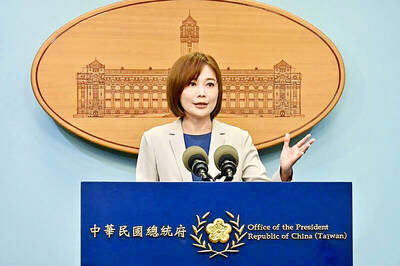
TIT-FOR-TAT: The US allegedly revoked the visa of a Chinese national working at Xinhua News Agency in the US in response to Beijing’s expulsion of Vivian Wang The Presidential Office yesterday condemned China for expelling a New York Times correspondent from Beijing following the newspaper’s interview with President William Lai (賴清德), saying the move highlighted Beijing’s suppression of press freedom and its threat to international news media. Taiwan has noted a series of recent incidents in which Beijing used similar tactics to “threaten and pressure international media outlets and journalists,” Presidential Office spokeswoman Karen Kuo (郭雅慧) said in a statement. “This concerns not only press freedom and freedom of expression, but also the safety of journalists, and Taiwan and relevant partners are paying close attention to the situation,” she


 RSS
RSS