


Due to the 2019 novel coronavirus (2019-nCoV) outbreak in China, the Central Epidemic Command Center (CECC) yesterday announced that foreign nationals who have visited China within the previous two weeks would be denied entry into Taiwan starting on Friday, adding that it has also listed China’s Zhejiang Province as a secondary epidemic area.
Starting on Friday, foreign nationals who have visited or resided in China — excluding Hong Kong and Macau — within the previous 14 days would be prohibited from entering Taiwan, MOFA Bureau of Consular Affairs director-general Phoebe Yeh (葉非比) told a CECC news conference.
The restriction includes those who are eligible for visa-free treatment, landing visas and e-visas, as well as those who have valid visas, she said.
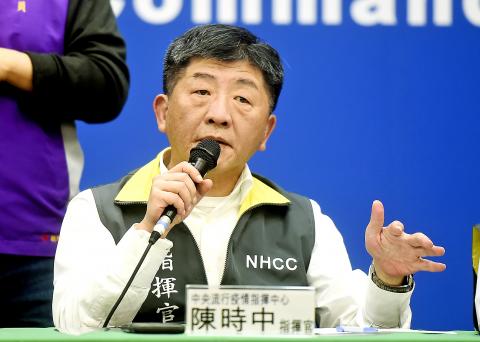
Photo: Lin Cheng-kung, Taipei Times
“However, foreign nationals seeking to enter Taiwan for special reasons may apply for an entry visa if they have not visited or resided in areas with severe outbreaks of 2019-nCoV,” Yeh said, adding that they must provide certain documents to apply for such a visa.
The required documents are a complete travel history for the previous 14 days, which may not include areas severely affected by 2019-nCoV, and a health checkup certificate issued in the previous four days proving that the applicant does not have a fever of 38°C or higher, and is not suffering from respiratory tract or lung infections.
Also required is a signed affidavit saying that the applicant would immediately notify Taiwanese health authorities if they experience suspected symptoms, as well as other documents required for an entry visa to Taiwan based on the purpose of the visit, she said.
Special reasons for applying for an entry visa include emergency aid, humanitarian causes or an emergency meeting, Yeh said, adding that foreign nationals who board transit flights in China and do not enter the country are not included in the restriction.
“Foreign nationals who hold a valid Alien Resident Certificate and have visited or resided in China in the previous 14 days are to be quarantined at home for 14 days and have their health carefully monitored,” Yeh said, adding that the measures might be adjusted or updated as the situation develops.
Minister of Health and Welfare Chen Shih-chung (陳時中), the head of the center, said that the 2019-nCoV outbreak in China remains serious and a lockdown was imposed on Zhejiang’s Wenzhou on Sunday, followed by another lockdown of Zhejiang’s Hangzhou yesterday.
A total of 829 2019-nCoV infections were confirmed in Zhejiang as of Monday, he said, adding that numbers have been growing in the past few days, and the province has the most cases in China after Hubei Province.
“The center decided today to designate China’s Zhejiang a secondary epidemic area,” Chen said, adding that the decision was due to the travel restrictions imposed on the province’s cities, implying local community outbreaks.
From today, people who have traveled to Zhejiang in the previous 14 days would be put under home quarantine for 14 days upon returning to Taiwan, and residents of Zhejiang would not be allowed to enter Taiwan, he said.
If people returning from Zhejiang are found to have a fever or acute respiratory symptoms upon arrival, they would be tested for 2019-nCoV at a hospital before being allowed to return home for quarantine, Chen said, adding that if the test result is positive, they would be hospitalized in an isolated ward.
He said that cases of 2019-nCoV have been increasing rapidly in the Chinese provinces of Henan, Hunan, Anhui and Jiangxi, and cluster outbreaks have been reported in Beijing and Shanghai.
The CECC urges people to avoid visiting China, Chen added.

KEY INDUSTRY: The vice premier discussed a plan to create a non-red drone supply chain by next year, which has been allocated a budget of more than NT$7.2 billion The government has budgeted NT$44.2 billion (US$1.38 billion) to cultivate Taiwan’s uncrewed aerial vehicle (UAV) industry over the next five years, which would make the nation a major player in the industry’s democratic supply chain in the Asia-Pacific region, Premier Cho Jung-tai (卓榮泰) said yesterday. Cho made the remarks during a visit to the facilities of Cub Elecparts Inc (為升電裝). Democratic Progressive Party (DPP) Legislator Chen Su-yueh (陳素月) and Chinese Nationalist Party (KMT) Legislator Hsieh Yi-fong (謝依鳳) also participated in the trip. Cub Elecparts has transitioned from the automotive industry to the defense industry, which is the top priority among the nation’s
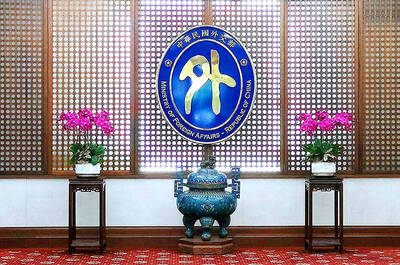
SOUTH KOREA DISPUTE: If Seoul continues to ignore its request, Taiwan would change South Korea’s designation on its arrival cards, the foreign ministry said If South Korea does not reply appropriately to a request to correct Taiwan’s name on its e-Arrival card system before March 31, the government would take corresponding measures to change how South Korea is labeled on the online Taiwan Arrival Card system, the Ministry of Foreign Affairs said yesterday. South Korea’s e-Arrival card system lists Taiwan as “China (Taiwan)” in the “point of departure” and “next destination” fields. Taipei has asked Seoul to change the wording. Since March 1, South Koreans who hold government-issued Alien Resident Certificates (ARC) have been identified as from “South Korea” rather than the “Republic of Korea,” the
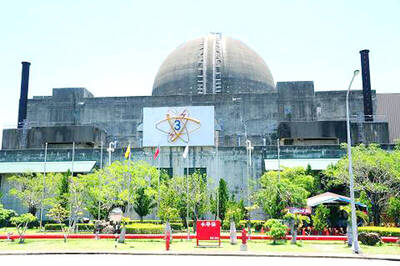
SUFFICIENT: The president said Taiwan has enough oil for next month, with reserves covering more than 100 days and natural gas enough for 12 to 14 days A restart plan for the Guosheng Nuclear Power Plant in New Taipei City’s Wanli District (萬里) and the Ma-anshan Nuclear Power Plant in Pingtung County’s Hengchun Township (恆春) would be submitted to the Nuclear Safety Commission by the end of the month, President William Lai (賴清德) said yesterday, reversing the government’s policy to abolish nuclear energy. On May 17 last year, Taiwan shut down its last nuclear reactor and became the first non-nuclear nation in East Asia, fulfilling the Democratic Progressive Party (DPP) government’s pledge of a “nuclear-free homeland.” Even without nuclear power, Taiwan can maintain a stable electricity supply until 2032,
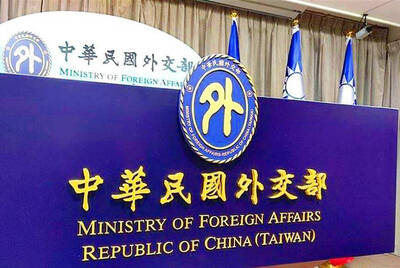
DEROGATORY: WTO host Cameroon’s designation of Taiwan as a ‘province of China’ seriously undermines the nation’s status and rights as a WTO member, MOFA said The Ministry of Foreign Affairs (MOFA) yesterday condemned Cameroon for listing Taiwan as “Taiwan, Province of China” in visa documents for an upcoming WTO ministerial conference, a move that led to Taiwan’s withdrawal from the event. The designation “seriously undermined” Taiwan’s status and rights as a WTO member, the ministry said in a statement. It is the first time since 2001 that Taiwan has declined to attend a WTO Ministerial Conference. The conference is scheduled to take place from Thursday to Sunday next week in Yaounde, the capital of Cameroon. Taiwan had planned to send a delegation led by Minister Without Portfolio


 RSS
RSS