


The Taiwan Institute of Economic Research (TIER, 台灣經濟研究院) yesterday raised its forecast for the nation’s economic growth to 2.67 percent this year, 0.21 percentage points higher than its estimate three months earlier, as progress in a US-China trade dispute allows global trade and manufacturing to regain momentum, it said.
Exports, which typically drive growth, but contracted last year, might stage a 3 percent increase this year, as firms feel more comfortable building up inventory after the US and China signed a “phase one” trade deal, the Taipei-based think tank said.
Improving corporate confidence and sustained monetary easing by global central banks should offset risks linked to a slowdown in major industries, it said.
The pickup in sentiment might shore up demand for oil and raw materials, but improvement is likely to be limited, due to a persistent supply glut, the institute said.
Private investment, which underpinned GDP growth last year, is expected to expand 4.15 percent from a year earlier, as investments in 5G and firms relocating production bases home would continue to act as a catalyst, TIER president Chang Chien-yi (張建一) said.
The government has received investment pledges of more than NT$800 billion (US$26.66 billion), which is expected to support GDP growth over the coming three years and help boost per capita income from US$28,000 to US$35,000 a year, Chang said.
The per capita figures leave Taiwan lagging behind Hong Kong, Singapore and South Korea, despite its stronger economic performance last year, the economist said.
The situation might change, as private investment, which accounted for 20 percent of GDP in 2016, gained 23.7 percent last year and might climb to 24 percent this year, Chang said.
Taiwanese firms in China would continue relocation plans no matter how the US-China trade dispute pans out, as China’s manufacturing terms have grown increasingly unfavorable, he said.
TIER predicted that consumer price rises would remain benign at 0.86 percent this year, while the wholesale price index might grow one percent, emerging from a 2.24 percent decline last year.
The local currency might trade at a stable average of NT$30.28 against the US dollar, it added.

CROSS-STRAIT COLLABORATION: The new KMT chairwoman expressed interest in meeting the Chinese president from the start, but she’ll have to pay to get in Beijing allegedly agreed to let Chinese Nationalist Party (KMT) Chairwoman Cheng Li-wun (鄭麗文) meet with Chinese President Xi Jinping (習近平) around the Lunar New Year holiday next year on three conditions, including that the KMT block Taiwan’s arms purchases, a source said yesterday. Cheng has expressed interest in meeting Xi since she won the KMT’s chairmanship election in October. A source, speaking on condition of anonymity, said a consensus on a meeting was allegedly reached after two KMT vice chairmen visited China’s Taiwan Affairs Office Director Song Tao (宋濤) in China last month. Beijing allegedly gave the KMT three conditions it had to
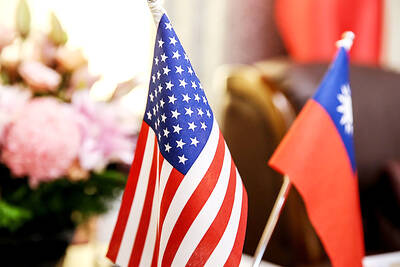
STAYING ALERT: China this week deployed its largest maritime show of force to date in the region, prompting concern in Taipei and Tokyo, which Beijing has brushed off Deterring conflict over Taiwan is a priority, the White House said in its National Security Strategy published yesterday, which also called on Japan and South Korea to increase their defense spending to help protect the first island chain. Taiwan is strategically positioned between Northeast and Southeast Asia, and provides direct access to the second island chain, with one-third of global shipping passing through the South China Sea, the report said. Given the implications for the US economy, along with Taiwan’s dominance in semiconductors, “deterring a conflict over Taiwan, ideally by preserving military overmatch, is a priority,” it said. However, the strategy also reiterated
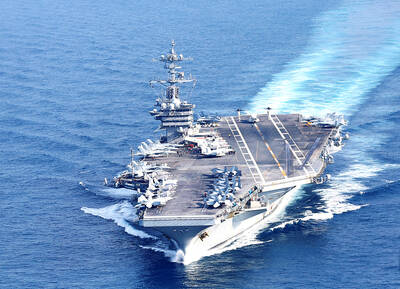
‘BALANCE OF POWER’: Hegseth said that the US did not want to ‘strangle’ China, but to ensure that none of Washington’s allies would be vulnerable to military aggression Washington has no intention of changing the “status quo” in the Taiwan Strait, US Secretary of Defense Pete Hegseth said on Saturday, adding that one of the US military’s main priorities is to deter China “through strength, not through confrontation.” Speaking at the annual Reagan National Defense Forum in Simi Valley, California, Hegseth outlined the US Department of Defense’s priorities under US President Donald Trump. “First, defending the US homeland and our hemisphere. Second, deterring China through strength, not confrontation. Third, increased burden sharing for us, allies and partners. And fourth, supercharging the US defense industrial base,” he said. US-China relations under
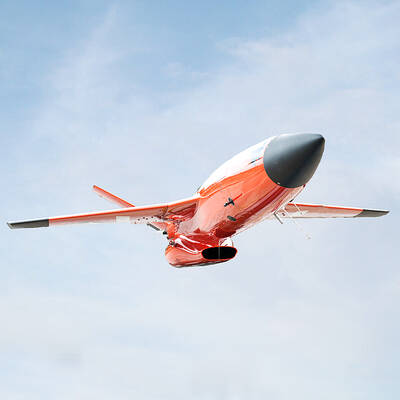
The Chien Feng IV (勁蜂, Mighty Hornet) loitering munition is on track to enter flight tests next month in connection with potential adoption by Taiwanese and US armed forces, a government source said yesterday. The kamikaze drone, which boasts a range of 1,000km, debuted at the Taipei Aerospace and Defense Technology Exhibition in September, the official said on condition of anonymity. The Chungshan Institute of Science and Technology and US-based Kratos Defense jointly developed the platform by leveraging the engine and airframe of the latter’s MQM-178 Firejet target drone, they said. The uncrewed aerial vehicle is designed to utilize an artificial intelligence computer


 RSS
RSS