


The three presidential candidates for the elections on Jan. 11 yesterday faced off in the only televised presidential debate, which was hosted by the Public Television Service.
Kaohsiung Mayor Han Kuo-yu (韓國瑜), the Chinese Nationalist Party’s (KMT) candidate, was the first to make a statement according to a draw, followed by People First Party Chairman James Soong (宋楚瑜) and President Tsai Ing-wen (蔡英文) of the Democratic Progressive Party (DPP).
Han said that he would not forget his roots and pledged to spend three days of the week in Kaohsiung if elected president.
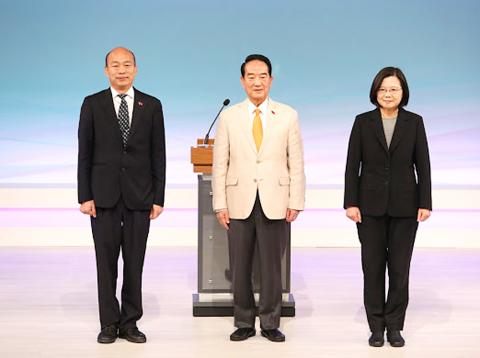
Photo courtesy of the Taipei Photojournalists Association
He would develop northern and southern Taiwan to bolster the nation’s economy, Han said.
He called the DPP the “biggest Taiwan-selling corporation,” accusing Tsai of deceiving supporters of Taiwanese independence, the Chinese Communist Party, Hong Kongers and Taiwanese.
Many DPP legislators have socialized with Beijing officials in China, but criticized them upon their return to Taiwan, Han said.
“Even the president of the Hong Kong University Students’ Union has protested against Tsai,” he said.
Han said that Tsai has pledged to protect Taiwan’s sovereignty and that she would not trade it for economic benefits from China.
Yet, Sunny Bank (陽信銀行), owned by the family of DPP Legislator Ho Chih-wei (何志偉), opened in Shanghai, while a DPP legislative candidate surnamed Chang (張) registered a company in China under the name “China, Taiwan,” he said.
Han said that he would “definitely defend the Republic of China’s [ROC] sovereignty.”
Soong called on voters to elect a candidate with competence to govern the nation, saying that a national leader must be capable of three things: upholding Taiwanese values of freedom and democracy while regaining people’s trust in the government and confidence in democratic politics; upgrading industries and boosting the economy to improve people’s welfare; and providing concrete solutions when dealing with crises.
Soong, who also ran in the 2016 presidential election, said that at the time he reminded Tsai not to let the DPP become “KMT-ized,” and yet over the past years she has allowed the party’s factions to guide the nation’s important policies.
Noting Tsai at the time pledged to “terminate political strife” on the grounds that “the responsibility of a president is to unite the nation and not to exploit conflicts for the sake of holding on to power,” Soong said that Tsai is now doing exactly that, adding: “It seems my speech today was written by you four years ago.”
Soong criticized the KMT as well, saying that the “industry chain of its monopolistic comprador group in cross-strait affairs is terrifying and abominable.”
The KMT’s assets probed by the government are only the tip of the iceberg, Soong said, adding that it is infuriating that many of its assets have became private property.
“We are small, but we are great,” Soong said in English.
Taiwan, although small in size, can achieve big things, he said, and called on the voters “to break free from the struggle between the pan-blue and pan-green camps by electing [me] to lead Taiwan toward a better future.”
Tsai said that the KMT at every election says that the ROC would be destroyed if the DPP comes to power, but the DPP has been in government twice now, and the ROC has not been destroyed.
As the ROC prepares for its 15th presidential term, it needs to focus on self-reliance in national defense, economic transformation, and safeguarding democracy and freedoms, she said, adding that Taiwan resolutely rejects China’s “one country, two systems” formula.
Referring to a satirical gesture Han made during a talk show in which he alluded to Tsai bringing Taiwan to its knees, Tsai said the public is not worried about Taiwan being brought to its knees.
Instead, it is concerned about having a president who can stand up to China, she said.
Tsai lambasted Han for not being able to say “China” when asked which country has caused Taiwan the most harm, and said that the nation must remain united in standing up to Beijing.
Tsai read aloud a letter from a Hong Konger, who wrote that the democracy movement in the territory should serve as a reminder for Taiwanese of the importance of protecting the nation’s democracy.
The elections are about protecting Taiwan’s sovereignty, she said.
Tsai was the first to make closing remarks, followed by Soong and Han.
She said that what Taiwan needs the most is a president like her, who can ensure that the nation does not become “another Hong Kong.”
Saying that people dislike leaders who make empty promises, Tsai said she is not the kind who builds castles in the sky, but one who is practical and reliable, adding that she and her party are making strides to improve and that they would not let Taiwanese down.
Soong said that a politician must stand tall, adding that he has never asked for funds from China, nor have his children operating businesses there.
His words on cross-strait affairs are based on reason and not personal gain or party interests, he said.
Taiwanese hope that the nation will retain its freedom and democracy, Soong said, adding: “Not only will I help Taiwan become better and stand tall, but I will also let the ‘Taiwan experience’ shine and light up the world.”
Han said the past three presidents have been graduates of National Taiwan University’s College of Law who were “not very good at being president.”
The greatest weaknesses of former presidents Chen Shui-bian (陳水扁) and Ma Ying-jeou (馬英九), as well as Tsai, is that they are “corrupt,” “soft” and “empty” respectively, Han said.
Some say he does not look like a president, Han said, adding: “However, what should a president look like?”
He promised to stand with everyday people if elected.
“Please give me a chance,” he said, adding: “If I do not do well, kick me out four years later.”
Additional reporting by Chiu Yen-ling

CROSS-STRAIT COLLABORATION: The new KMT chairwoman expressed interest in meeting the Chinese president from the start, but she’ll have to pay to get in Beijing allegedly agreed to let Chinese Nationalist Party (KMT) Chairwoman Cheng Li-wun (鄭麗文) meet with Chinese President Xi Jinping (習近平) around the Lunar New Year holiday next year on three conditions, including that the KMT block Taiwan’s arms purchases, a source said yesterday. Cheng has expressed interest in meeting Xi since she won the KMT’s chairmanship election in October. A source, speaking on condition of anonymity, said a consensus on a meeting was allegedly reached after two KMT vice chairmen visited China’s Taiwan Affairs Office Director Song Tao (宋濤) in China last month. Beijing allegedly gave the KMT three conditions it had to
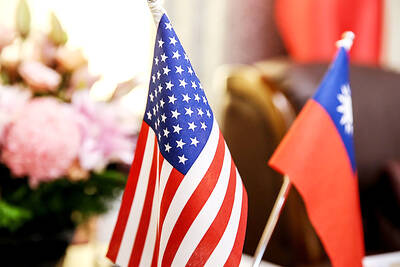
STAYING ALERT: China this week deployed its largest maritime show of force to date in the region, prompting concern in Taipei and Tokyo, which Beijing has brushed off Deterring conflict over Taiwan is a priority, the White House said in its National Security Strategy published yesterday, which also called on Japan and South Korea to increase their defense spending to help protect the first island chain. Taiwan is strategically positioned between Northeast and Southeast Asia, and provides direct access to the second island chain, with one-third of global shipping passing through the South China Sea, the report said. Given the implications for the US economy, along with Taiwan’s dominance in semiconductors, “deterring a conflict over Taiwan, ideally by preserving military overmatch, is a priority,” it said. However, the strategy also reiterated
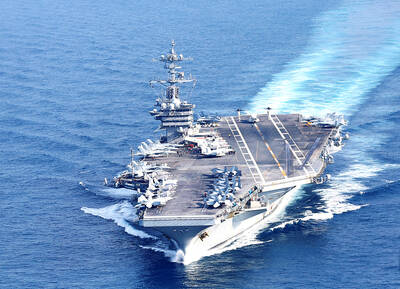
‘BALANCE OF POWER’: Hegseth said that the US did not want to ‘strangle’ China, but to ensure that none of Washington’s allies would be vulnerable to military aggression Washington has no intention of changing the “status quo” in the Taiwan Strait, US Secretary of Defense Pete Hegseth said on Saturday, adding that one of the US military’s main priorities is to deter China “through strength, not through confrontation.” Speaking at the annual Reagan National Defense Forum in Simi Valley, California, Hegseth outlined the US Department of Defense’s priorities under US President Donald Trump. “First, defending the US homeland and our hemisphere. Second, deterring China through strength, not confrontation. Third, increased burden sharing for us, allies and partners. And fourth, supercharging the US defense industrial base,” he said. US-China relations under
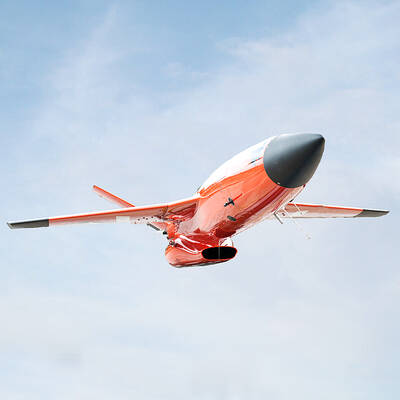
The Chien Feng IV (勁蜂, Mighty Hornet) loitering munition is on track to enter flight tests next month in connection with potential adoption by Taiwanese and US armed forces, a government source said yesterday. The kamikaze drone, which boasts a range of 1,000km, debuted at the Taipei Aerospace and Defense Technology Exhibition in September, the official said on condition of anonymity. The Chungshan Institute of Science and Technology and US-based Kratos Defense jointly developed the platform by leveraging the engine and airframe of the latter’s MQM-178 Firejet target drone, they said. The uncrewed aerial vehicle is designed to utilize an artificial intelligence computer


 RSS
RSS