


The Ministry of Foreign Affairs yesterday confirmed reports that eight Taiwanese women who last year traveled to Australia on working holiday visas were forced to perform sexual favors for their employer.
In a report published in October titled Slavery and Slavery-like Practices in South Australia: A Report, Flinders University associate professor Marinella Marmo cited an anonymous representative of Australia’s National Union of Workers as saying that eight Taiwanese women on working holiday visas in South Australia’s Riverland region were “expected to, if they wanted to get to work, so they could afford to pay for all these other things, perform sexual favors to get more hours.”
They were “in that environment for quite some time before they were able to speak up, for six months,” the report said.
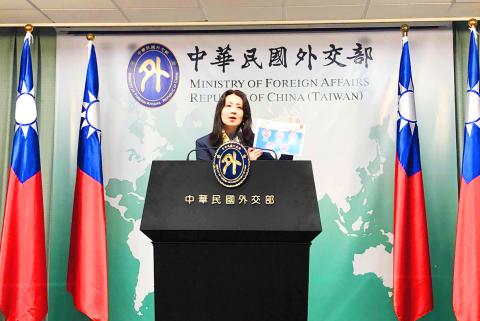
Photo: CNA
The women, who have all since left Australia, did not request assistance from the Taipei Economic and Cultural Office in Australia at the time, the ministry said in a statement.
The ministry and the office would continue to seek details about the case from the Australian authorities, it said.
The ministry reminded Taiwanese on working holidays to take self-protection measures and remain alert, saying that when Taiwanese encounter emergencies or mistreatment and require assistance, they should contact the ministry or its overseas offices immediately.
In Australia, Taiwanese can also report situations to the Fair Work Ombudsman or the Fair Work Commission, the ministry said.
Taiwanese on working holidays abroad should follow “seven don’ts and five dos,” the ministry said.
Do not work illegally, overstay, engage in dangerous activities, speed, drive under the influence, drive while tired, or accept packages or mail from unknown senders, it said.
Do remember to log the trip, maintain contact with family members, purchase medical insurance, pay attention to workplace safety, and follow local laws and traffic regulations, it added.
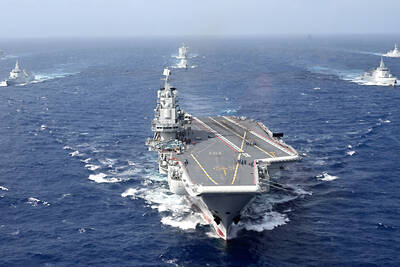
PROVOCATIVE: Chinese Deputy Ambassador to the UN Sun Lei accused Japan of sending military vessels to deliberately provoke tensions in the Taiwan Strait China denounced remarks by Japan and the EU about the South China Sea at a UN Security Council meeting on Monday, and accused Tokyo of provocative behavior in the Taiwan Strait and planning military expansion. Ayano Kunimitsu, a Japanese vice foreign minister, told the Council meeting on maritime security that Tokyo was seriously concerned about the situation in the East China and South China seas, and reiterated Japan’s opposition to any attempt to change the “status quo” by force, and obstruction of freedom of navigation and overflight. Stavros Lambrinidis, head of the EU delegation to the UN, also highlighted South China Sea
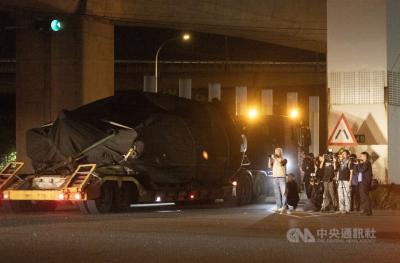
The final batch of 28 M1A2T Abrams tanks purchased from the US arrived at Taipei Port last night and were transported to the Armor Training Command in Hsinchu County’s Hukou Township (湖口), completing the military’s multi-year procurement of 108 of the tanks. Starting at 12:10am today, reporters observed more than a dozen civilian flatbed trailers departing from Taipei Port, each carrying an M1A2T tank covered with black waterproof tarps. Escorted by military vehicles, the convoy traveled via the West Coast Expressway to the Armor Training Command, with police implementing traffic control. The army operates about 1,000 tanks, including CM-11 Brave Tiger
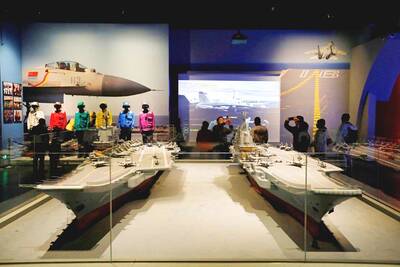
China on Wednesday teased in a video an aircraft carrier that could be its fourth, and the first using nuclear power, while making an allusion to Taiwan and vowing to further build up its islands, as it looks to boost maritime power, secure resources and bolster territorial claims. The video, issued on the eve of the 77th founding anniversary of the Chinese People’s Liberation Army Navy, featured fictional officers with names that are homophones of three commissioned aircraft carriers, the Liaoning (遼寧), Shandong (山東) and Fujian (福建). Titled Into the Deep, it showed a 19-year-old named “Hejian” (何劍) joining the group, sparking
BIG YEAR: The company said it would also release its A12 chip the same year to keep a ‘reliable stream of new silicon technologies’ flowing to its customers Taiwan Semiconductor Manufacturing Co (TSMC, 台積電) yesterday said its newest A13 chip is to enter volume production in 2029 as the chipmaker seeks to hold onto its tech leadership and demand for next-generation chips used in artificial intelligence (AI), high-performance-computing (HPC) and mobile applications. TSMC, the world’s biggest contract chipmaker, also unveiled its A12 chip at its annual technology symposium in Santa Clara, California. The A12 chip, which features TSMC’s super-power-rail technology to provide backside power delivery for AI and HPC applications, is also to enter volume production in 2029, a year after the scheduled release of the A14 chip. The technology moves


 RSS
RSS