


A group in Changhua County is suspected of having defrauded the national treasury of nearly NT$16 million (US$524,023) by printing fake receipts to claim prize money from the Ministry of Finance’s Uniform Invoice Lottery.
Changhua District Prosecutors’ Office Head Prosecutor Wu Yu-hsuan (吳宇軒) on Tuesday led a team of more than 100 people to search and seize hundreds of boxes of blank receipts, printers, allegedly fake receipts and other evidence.
Prosecutors Shih Chiao-wen (施教文) and Lai Cheng-an (賴政安) have been assigned to form a special committee to investigate the case.
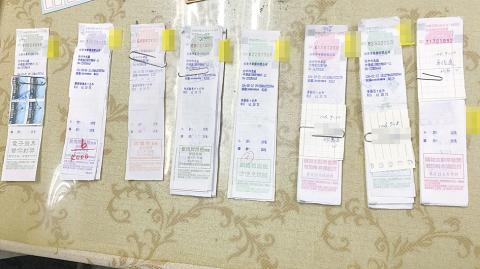
Photo courtesy of the Changhua District Prosecutors’ Office
The office has summoned 12 people, including a man surnamed Lu (盧), 33, who is believed to be a main suspect and has been taken into custody.
Another main suspect, surnamed Tseng (曾), 34, was released on bail of NT$100,000.
The group allegedly set up a fake firm to buy large amounts of blank uniform receipts, the office said.
After the lottery’s winning numbers are announced, the group would take the blank receipts with the winning numbers on them and print fake details of a transaction that had not occurred, it said.
They would then distribute the fake receipts to group members to take to different convenience stores to claim the prizes, the office said.
Since November 2016, the group has redeemed 59,203 receipts for prizes varying from NT$200 to NT$200,000, totaling NT$15,965,800, it said.
From July to August, the group purchased 1.7 million blank receipts from the National Taxation Bureau, spending about NT$244,800, office Deputy Chief Prosecutor Yeh Chien-cheng (葉建成) said.
Including the roughly NT$70,000 for the 5 percent business tax for the seven water filling stations it was using as shell companies, the group spent about NT$310,000 each lottery session for NT$2.2 million in prize money, Yeh said.
From last month to this month, it purchased another 2 million blank receipts, he said, adding that those were seized.
Yeh said he believed that this is the “first case” of people taking advantage of blank receipts to engage in lottery fraud in Taiwan.
Group members are suspected of contravening the Organized Crime Prevention Act (組織犯罪防制條例), the Business Entity Accounting Act (商業會計法) and the Criminal Code, among other laws, he said.
There were concerns that Tseng and Lu could destroy or alter evidence or collude, so the office applied for permission from the court to detain them, he said.
Three other suspects, surnamed Yang (楊), Wu (吳) and Wei (魏), were also released on NT$100,000 bail, he said.
Another seven were released on bail of NT$20,000, he added.
The investigation was spurred by the National Taxation Bureau of the Central Area’s suspicion about the high winning rate of receipts issued by the company.
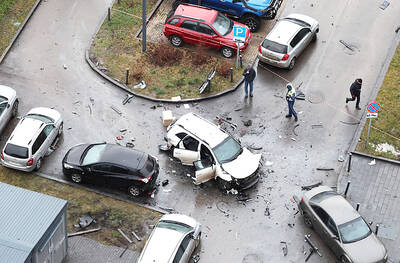
A car bomb killed a senior Russian general in southern Moscow yesterday morning, the latest high-profile army figure to be blown up in a blast that came just hours after Russian and Ukrainian delegates held separate talks in Miami on a plan to end the war. Kyiv has not commented on the incident, but Russian investigators said they were probing whether the blast was “linked” to “Ukrainian special forces.” The attack was similar to other assassinations of generals and pro-war figures that have either been claimed, or are widely believed to have been orchestrated, by Ukraine. Russian Lieutenant General Fanil Sarvarov, 56, head
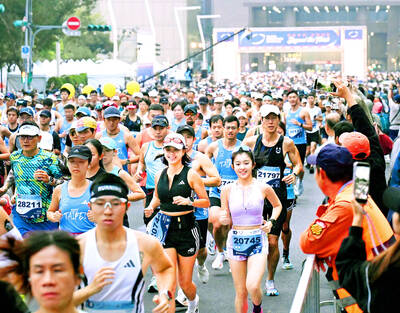
SAFETY FIRST: Double the number of police were deployed at the Taipei Marathon, while other cities released plans to bolster public event safety Authorities across Taiwan have stepped up security measures ahead of Christmas and New Year events, following a knife and smoke bomb attack in Taipei on Friday that left four people dead and 11 injured. In a bid to prevent potential copycat incidents, police deployments have been expanded for large gatherings, transport hubs, and other crowded public spaces, according to official statements from police and city authorities. Taipei Mayor Chiang Wan-an (蔣萬安) said the city has “comprehensively raised security readiness” in crowded areas, increased police deployments with armed officers, and intensified patrols during weekends and nighttime hours. For large-scale events, security checkpoints and explosives
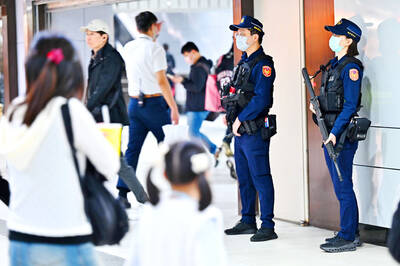
PUBLIC SAFETY: The premier said that security would be tightened in transport hubs, while President Lai commended the public for their bravery The government is to deploy more police, including rapid response units, in crowded public areas to ensure a swift response to any threats, President William Lai (賴清德) said yesterday after a knife attack killed three people and injured 11 in Taipei the previous day. Lai made the remarks following a briefing by the National Police Agency on the progress of the investigation, saying that the attack underscored the importance of cooperation in public security between the central and local governments. The attack unfolded in the early evening on Friday around Taipei Main Station’s M7 exit and later near the Taipei MRT’s Zhongshan
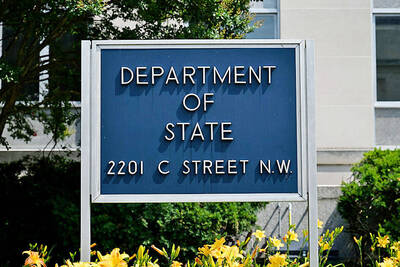
REBUFFED: In response to Chinese criticism over recent arms sales, Washington urged Beijing to engage in meaningful dialogue instead of threats and intimidation Washington’s long-term commitment to Taiwan would not change, the US Department of State said yesterday, urging Beijing to stop pressuring Taiwan and engage in meaningful bilateral dialogues. The remarks came in response to a backlash from Beijing about Washington’s latest approval of arms sales to Taiwan. The US Defense Security Cooperation Agency said in a statement on Wednesday that the Taipei Economic and Cultural Representative Office in the US has asked to purchase an arms package, including Tactical Mission Network Software; AH-1W helicopter spare and repair parts; M109A7 self-propelled howitzers; HIMARS long range precision strike systems; tube-launched, optically tracked, wire-guided missiles; Javelin


 RSS
RSS