


The Ministry of Foreign Affairs yesterday congratulated the Marshall Islands, one of Taiwan’s Pacific allies, on its selection as a new member state of the UN Human Rights Council (UNHRC), while Venezuela also won a contested election for a seat, despite a campaign by more than 50 organizations and many nations opposed to the government of Venezuelan President Nicolas Maduro.
Taiwan and the Marshall Islands are democracies that defend human rights and the rule of law, the ministry said, adding that it hoped both countries continue to deepen collaboration and help Taiwan join UN events.
The Marshall Islands became one of the UNHRC’s 14 new members a day earlier.
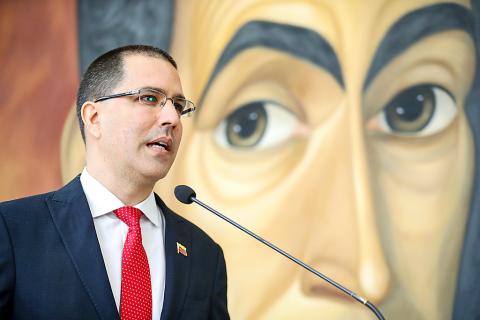
Photo: EPA
“We welcome the Marshall Islands being elected as a UNHRC member and look forward to deepening and enhancing bilateral cooperation under the framework of the world body by helping Taiwan achieve meaningful participation at UN agencies and affiliated meetings,” the ministry said.
There was scattered applause in the General Assembly chamber when the UN president announced the results of the voting for two Latin American seats.
Brazil topped the ballot with 153 votes, followed by Venezuela with 105 votes and late entry Costa Rica with 96.
Venezuelan Minister of Foreign Affairs Jorge Arreaza called the vote “a victory” that followed “a fierce and brutal campaign by the United States.”
The administration of US President Donald Trump has recognized Venezuelan opposition leader Juan Guaido as interim president and US Ambassador to the UN Kelly Craft called the placing of Maduro’s government on the council “an embarrassment to the United Nations and a tragedy for the people of Venezuela.”
“That one of the world’s worst human-rights abusers would be granted a seat on a body that is supposed to defend human rights is utterly appalling,” Craft said in a statement after the vote.
Human Rights Watch deputy director for global advocacy Philippe Bolopion called Venezuela’s election undeserved and “a slap in the face to the country’s countless victims who’ve been tortured and murdered by government forces, as well as the millions who have fled largely because of a humanitarian emergency the government unleashed.”
The Brazilian Ministry of Foreign Affairs said its re-election to the council marked an “important victory,” but criticized the selection of Venezuela.
Caracas’ election “shows that there is still a lot to do to create awareness in the international community about the catastrophic state of human rights in that country,” the Brazilian ministry said in a statement.
The 193-member world body elected 14 members to the 47-member council for three-year terms starting on Jan. 1. Under its rules, seats are allocated to regions to ensure geographical representation.
In other contested races, Iraq lost out in the Asian group contest for four seats to the Marshall Islands, Japan, South Korea and Indonesia, while Moldova lost in the Eastern Europe group race for two seats to Armenia and Poland.
The Africa region had four countries on the ballot — Benin, Libya, Mauritania and Sudan — for four seats, but a last-minute switch put Namibia on the ballot instead of Benin.
There was no competition for the two Western group seats, with Germany and the Netherlands elected.
The Geneva-based council can spotlight abuses and has special monitors watching certain countries and issues. It also periodically reviews human rights in every UN member country.
Additional reporting by Lin Chia-nan and CNA
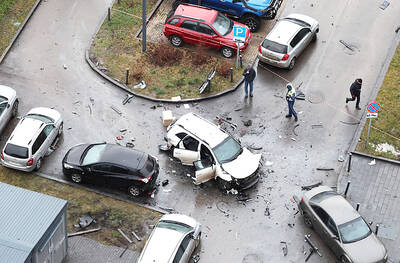
A car bomb killed a senior Russian general in southern Moscow yesterday morning, the latest high-profile army figure to be blown up in a blast that came just hours after Russian and Ukrainian delegates held separate talks in Miami on a plan to end the war. Kyiv has not commented on the incident, but Russian investigators said they were probing whether the blast was “linked” to “Ukrainian special forces.” The attack was similar to other assassinations of generals and pro-war figures that have either been claimed, or are widely believed to have been orchestrated, by Ukraine. Russian Lieutenant General Fanil Sarvarov, 56, head

SAFETY FIRST: Double the number of police were deployed at the Taipei Marathon, while other cities released plans to bolster public event safety Authorities across Taiwan have stepped up security measures ahead of Christmas and New Year events, following a knife and smoke bomb attack in Taipei on Friday that left four people dead and 11 injured. In a bid to prevent potential copycat incidents, police deployments have been expanded for large gatherings, transport hubs, and other crowded public spaces, according to official statements from police and city authorities. Taipei Mayor Chiang Wan-an (蔣萬安) said the city has “comprehensively raised security readiness” in crowded areas, increased police deployments with armed officers, and intensified patrols during weekends and nighttime hours. For large-scale events, security checkpoints and explosives
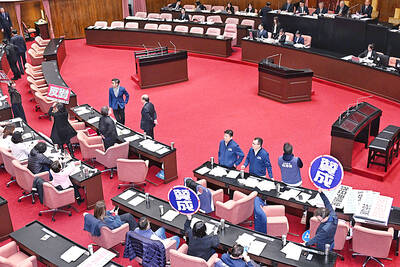
‘POLITICAL GAME’: DPP lawmakers said the motion would not meet the legislative threshold needed, and accused the KMT and the TPP of trivializing the Constitution The Legislative Yuan yesterday approved a motion to initiate impeachment proceedings against President William Lai (賴清德), saying he had undermined Taiwan’s constitutional order and democracy. The motion was approved 61-50 by lawmakers from the main opposition Chinese Nationalist Party (KMT) and the smaller Taiwan People’s Party (TPP), who together hold a legislative majority. Under the motion, a roll call vote for impeachment would be held on May 19 next year, after various hearings are held and Lai is given the chance to defend himself. The move came after Lai on Monday last week did not promulgate an amendment passed by the legislature that
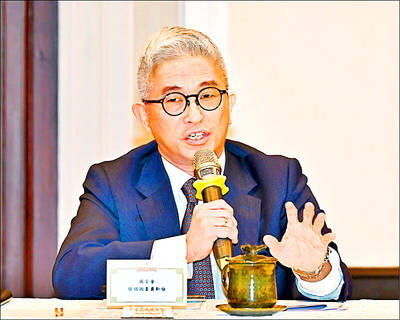
PENTAGON ASSESSMENT: A US report said that even as China and Russia deepen their partnership, cooperation is hindered by a ‘mutual distrust’ of each other The Chinese People’s Liberation Army (PLA) as of October had doubled the number of ships and airplanes deployed around Taiwan compared with the previous two years, Vice Minister of National Defense Hsu Szu-chien (徐斯儉) said yesterday, a day after the opposition-controlled legislature voted against reviewing the government’s general budget for next year, including a NT$1.25 trillion (US$39.71 billion) special defense spending bill. The legislature’s vote against the Ministry of National Defense’s spending plans was regrettable, as the budget was designed to respond to the developing Chinese military threat, Hsu said on the sidelines of a legislative meeting on the general budget. Defense


 RSS
RSS