


The American Institute in Taiwan (AIT) yesterday expressed the US’ disappointment over the Solomon Islands’ decision to switch diplomatic recognition from Taipei to Beijing and promised to continue supporting Taiwan.
Taiwan on Monday announced that it was severing relations with the South Pacific nation after Honiara decided to switch its political allegiance to Beijing.
The government also condemned attempts by Beijing to suppress Taiwan’s sovereignty and international presence.
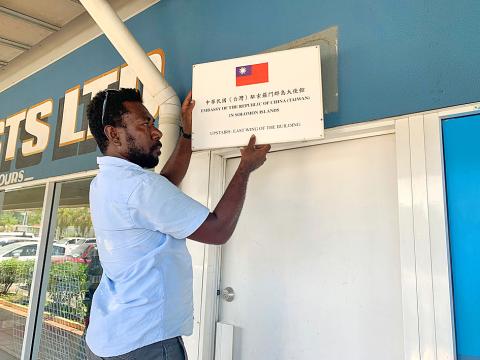
Photo: CNA
Solomon Islanders in Malaita Province yesterday staged a peaceful protest against cutting ties with Taiwan, with demonstrators holding banners that read “Malaita for Democracy, Forget the $ Think, Leadership,” images posted on the “I am from Honiara, Solomon Islands” Facebook page showed.
While Solomon Islanders in other provinces were warned and dispersed by police, people in Malaita — the nation’s most populous province — are not welcoming China and even demanded independence, the page’s manager told the Taipei Times via text message.
Asked about the diplomatic break, the AIT said in a statement that Washington is deeply disappointed with the Solomon Islands’ move, but added that the US continues to support Taiwan, which is a democratic success story.
Countries that establish closer ties with China in hopes that it that it would help stimulate economic growth and infrastructure development often find themselves worse off in the long run, it said.
The US supports the “status quo” in cross-strait relations, including Taiwan’s diplomatic ties and international space, to maintain peace and stability in the region, it said.
The US is working closely with Taiwanese authorities in deepening cybercooperation by bringing Taiwan into the US Department of Homeland Security’s Automated Indicator Sharing system, AIT Director Brent Christensen said.
China’s Taiwan Affairs Office spokesman Ma Xiaoguang (馬曉光) yesterday reaffirmed the so-called “one China” principle, saying Taiwan’s Democratic Progressive Party (DPP) administration was to blame for sabotaging the cross-strait “status quo.”
The DPP’s claim that Beijing lured Honiara through money diplomacy and political suppression is a lie deluding itself and others, he said in a statement.
Only when Taiwan endorses the “1992 consensus” can cross-strait relations develop peacefully, he said.
The so-called “1992 consensus” — a term former Mainland Affairs Council chairman Su Chi (蘇起) in 2006 admitted making up in 2000 — refers to a tacit understanding between the Chinese Nationalist Party (KMT) and Beijing that both sides acknowledge there is “one China,” with each side having its own interpretation of what “China” means.
The Australian Office Taipei said that the Australian government respects the Solomon Islands’ decision and that it would not affect relations between Canberra and Honiara.
In Tokyo, the prime minister’s office told a news conference that Japan’s consistent position is that issues related to Taiwan should be solved through peaceful means.
Deputy Minister of Foreign Affairs Hsu Szu-chien (徐斯儉) — who on Monday visited Honiara — and Ambassador to the Solomon Islands Oliver Liao (廖文哲) are to return soon, Ministry of Foreign Affairs spokeswoman Joanne Ou (歐江安) said, adding that it would take a few more months to close the embassy in Honiara.
There are 125 Solomon Islands students in Taiwan, 64 of whom have scholarships from the ministry, 20 on scholarships from the International Cooperation and Development Fund, while the others received scholarships from other institutions or are studying at their own expense, Ou said.
The ministry’s scholarship offer is effective until the end of this semester, she said.
Additional reporting by CNA

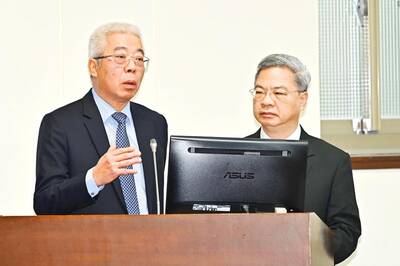
Taiwan has arranged for about 8 million barrels of crude oil, or about one-third of its monthly needs, to be shipped from the Red Sea this month to bypass the Strait of Hormuz and ease domestic supply pressures, CPC Corp, Taiwan (CPC, 台灣中油) said yesterday. The state-run oil company has worked with Middle Eastern suppliers to secure routes other than the Strait of Hormuz, through which about 20 percent of the world’s oil and liquefied natural gas typically passes, CPC chairman Fang Jeng-zen (方振仁) said at a meeting of the legislature’s Economics Committee in Taipei. Suppliers in Saudi Arabia have indicated they
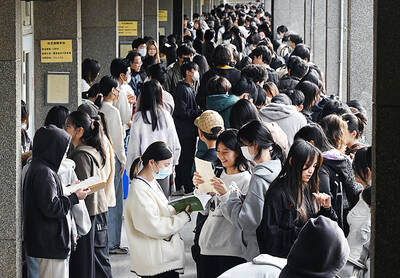
A global survey showed that 60 percent of Taiwanese had attained higher education, second only to Canada, the Ministry of the Interior said. Taiwan easily surpassed the global average of 43 percent and ranked ahead of major economies, including Japan, South Korea and the US, data from the Organisation for Economic Co-operation and Development (OECD) for 2024 showed. Taiwan has a high literacy rate, data released by the ministry showed. As of the end of last year, Taiwan had 20.617 million people aged 15 or older, accounting for 88.5 percent of the total population, with a literacy rate of 99.4 percent, the data
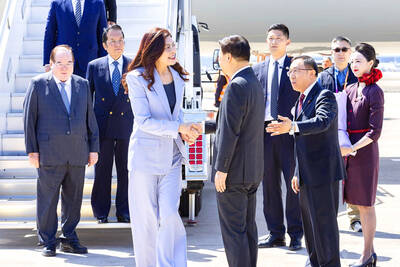
CCP ‘PAWN’? Beijing could use the KMT chairwoman’s visit to signal to the world that many people in Taiwan support the ‘one China’ principle, an academic said Chinese Nationalist Party (KMT) Chairwoman Cheng Li-wun (鄭麗文) yesterday arrived in China for a “peace” mission and potential meeting with Chinese President Xi Jinping (習近平), while a Taiwanese minister detailed the number of Chinese warships currently deployed around the nation. Cheng is visiting at a time of increased Chinese military pressure on Taiwan, as the opposition-dominated Legislative Yuan stalls a government plan for US$40 billion in extra defense spending. Speaking to reporters before going to the airport, Cheng said she was going on a “historic journey for peace,” but added that some people felt uneasy about her trip. “If you truly love Taiwan,

NEW LOW: The council in 2024 based predictions on a pessimistic estimate for the nation’s total fertility rate of 0.84, but last year that rate was 0.69, 17 percent lower An expected National Development Council (NDC) report expects the nation’s population to drop below 12 million by 2065, with the old-age dependency ratio to top 100 percent sooner than 2070, sources said yesterday. The council is slated to release its latest population projections in August, using an ultra-low fertility model, the sources said. The previous report projected that Taiwan’s population would fall to 14.37 million by 2070, but based on a new estimate of the total fertility rate (TFR) — the average number of children born to a woman over her lifetime — the population is expected to reach 12 million by


 RSS
RSS