


Europeans yesterday headed to the polls in their tens of millions as 21 countries chose their champions in a battle between the nationalist right and pro-EU forces to chart a course for the union.
Turnout by midday was higher than it had been in 2014 in some countries, notably France and Romania, and roughly stable in others, as reports began to trickle in from around the continent.
Seven EU member states had already voted, but no official results could be published until the rest had taken part.
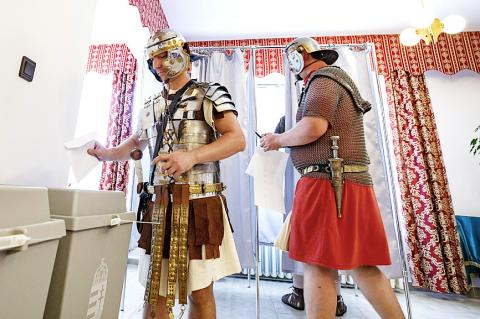
Photo: AP
Euroskeptic parties opposed to the project of ever-closer union hoped to capture as many as one- third of the seats in the 751-member assembly in Strasbourg, France, disrupting the pro-integration consensus.
The far-right parties of Italian Deputy Prime Minister Matteo Salvini and France’s Marine Le Pen would lead this charge, and anti-EU ranks would be swelled by the Brexit Party of British populist Nigel Farage.
French President Emmanuel Macron had taken it upon himself to act as figurehead for the centrist and liberal parties, hoping to shut the nationalists out of key EU jobs and decisionmaking.
“Once again Macron is daring us to challenge him. Well let’s take him at his word: On May 26, we’ll challenge him in the voting booth,” Le Pen told a rally on Friday.
It was not clear at midday which side was carrying the day, but the battle seemed to have motivated French voters, with 19.26 percent turning out, 3.5 percentage points up from the same point in 2014.
Meanwhile, the mainstream parties were vying between themselves for influence over the choice of a new generation of top EU officials, including the powerful president of the European Commission.
Turnout is likely to be closely scrutinized in case another drop in participation undermines the credibility of the EU parliament as it seeks to establish its authority.
The UK and the Netherlands were the first to vote on Thursday, followed by Ireland and the Czech Republic on Friday, and Slovakia, Malta and Latvia on Saturday, leaving the bulk of the 400 million eligible voters to join in yesterday.
At the last EU election in 2014, Slovakia had the lowest turnout of any country, at less than 14 percent, and centrist Slovakian President Andrej Kiska has said he is worried that “extremists are mobilizing.”
Poland’s right-wing government, led by Law and Justice party, has been accused of breaking European law by undermining the independence of the judiciary, but Polish voters still said they support EU membership.
“I would like there to be no nationalists in the parliament, or at least that they do not have a majority,” retiree Ryszard Dabrowski told reporters at a Warsaw polling station.
The right and the far-right have not had everything their own way so far.
In the Netherlands, the center-left party of European Commission Vice President Frans Timmermans won the most votes and added two seats for the Socialists and Democrats (S&D) in parliament, exit polls showed.
The S&D’s center-right rival, the European People’s Party, was buoyed by exit polls suggesting that Irish Prime Minister Leo Varadkar’s pro-EU Fine Gael party was in the lead.
Even if the UK leaves the EU on Oct. 31, the latest deadline for Brexit, its lawmakers could still play a role in this summer’s scramble to hand out top jobs.
Thursday’s votes from the UK were not to be counted until after the polls closed in Italy, but the Brexit Party appeared on course to send a large delegation to a parliament it wants to abolish.
Macron was pinning his hopes on his Renaissance movement joining with the liberal Alliance of Liberals and Democrats for Europe voting bloc, and other centrist groups to give impetus to his plans for deeper EU integration.
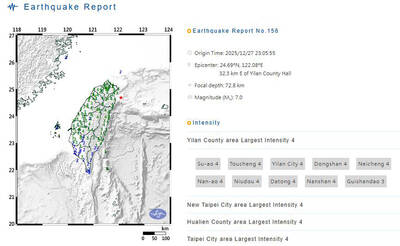
A magnitude 7.0 earthquake struck off Yilan at 11:05pm yesterday, the Central Weather Administration (CWA) said. The epicenter was located at sea, about 32.3km east of Yilan County Hall, at a depth of 72.8km, CWA data showed There were no immediate reports of damage. The intensity of the quake, which gauges the actual effect of a seismic event, measured 4 in Yilan County area on Taiwan’s seven-tier intensity scale, the data showed. It measured 4 in other parts of eastern, northern and central Taiwan as well as Tainan, and 3 in Kaohsiung and Pingtung County, and 2 in Lienchiang and Penghu counties and 1
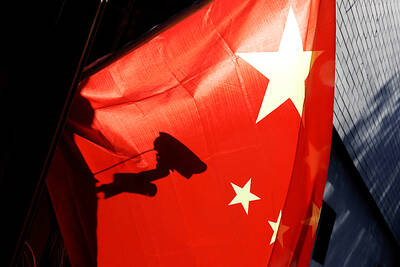
FOREIGN INTERFERENCE: Beijing would likely intensify public opinion warfare in next year’s local elections to prevent Lai from getting re-elected, the ‘Yomiuri Shimbun’ said Internal documents from a Chinese artificial intelligence (AI) company indicated that China has been using the technology to intervene in foreign elections, including propaganda targeting Taiwan’s local elections next year and presidential elections in 2028, a Japanese newspaper reported yesterday. The Institute of National Security of Vanderbilt University obtained nearly 400 pages of documents from GoLaxy, a company with ties to the Chinese government, and found evidence that it had apparently deployed sophisticated, AI-driven propaganda campaigns in Hong Kong and Taiwan to shape public opinion, the Yomiuri Shimbun reported. GoLaxy provides insights, situation analysis and public opinion-shaping technology by conducting network surveillance

Taiwan is gearing up to celebrate the New Year at events across the country, headlined by the annual countdown and Taipei 101 fireworks display at midnight. Many of the events are to be livesteamed online. See below for lineups and links: Taipei Taipei’s New Year’s Party 2026 is to begin at 7pm and run until 1am, with the theme “Sailing to the Future.” South Korean girl group KARA is headlining the concert at Taipei City Hall Plaza, with additional performances by Amber An (安心亞), Nick Chou (周湯豪), hip-hop trio Nine One One (玖壹壹), Bii (畢書盡), girl group Genblue (幻藍小熊) and more. The festivities are to
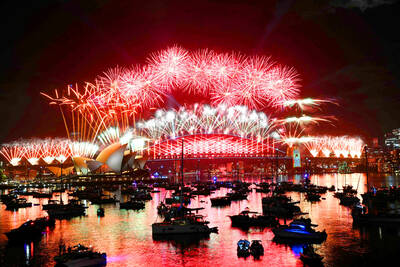
Auckland rang in 2026 with a downtown fireworks display launched from New Zealand’s tallest structure, Sky Tower, making it the first major city to greet the new year at a celebration dampened by rain, while crowds in Taipei braved the elements to watch Taipei 101’s display. South Pacific countries are the first to bid farewell to 2025. Clocks struck midnight in Auckland, with a population of 1.7 million, 18 hours before the famous ball was to drop in New York’s Times Square. The five-minute display involved 3,500 fireworks launched from the 240m Sky Tower. Smaller community events were canceled across New Zealand’s


 RSS
RSS