


Thousands of people in Taipei and Kaohsiung yesterday marched against nuclear power, urging the government to put more effort into phasing out nuclear power plants by 2025 and promoting renewable energy sources.
The marches were organized by the National Nuclear Abolition Action Platform with the theme “Farewell to Nuclear Power for a Beautiful Future.”
Demonstrators in Taipei started their march on Ketagalan Boulevard in front of the Presidential Office Building, while those in Kaohsiung started from Aozihdi Forest Park (凹仔底森林公園).
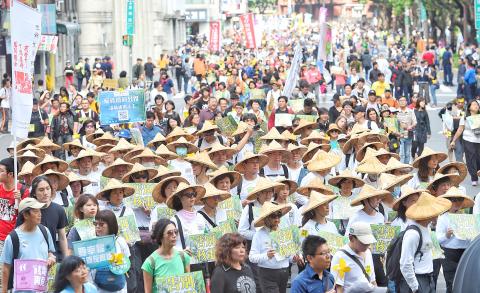
Photo: Liu Hsin-de, Taipei Times
Proponents of nuclear power have been gaining support after a referendum last year seeking to abolish the government’s “nuclear-power free homeland by 2025” policy garnered more than 5.8 million votes in favor to 4 million against.
When proponents of nuclear power launch signature drives for new referendum proposals, people nationwide should join hands to prevent their attempts to keep nuclear power plants, platform spokeswoman Tsuei Su-hsin (崔愫欣) said in Taipei.
The platform estimated that the Taipei march drew 10,000 participants, while the Taipei Police Department said that it would not provide an estimate to avoid accusations that it purposefully underestimated the number.
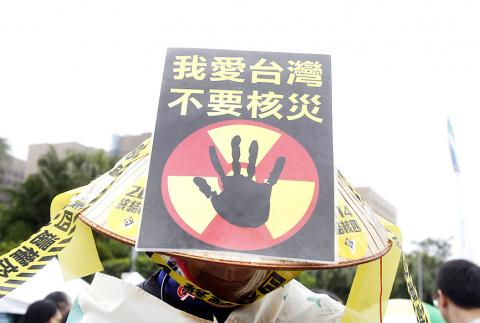
Photo: Chiang Ying-ying / AP
More than 18,000 bundles of high-level radioactive waste and 210,000 barrels of low-level radioactive waste have been produced by the nation’s three operational nuclear power plants, the platform said, adding that the waste includes more than 100,000 barrels of low-level waste stored on Orchid Island (Lanyu, 蘭嶼) without residents’ consent.
If the nation cannot tackle nuclear waste, it should not use nuclear power, it said.
President Tsai Ing-wen (蔡英文) joined the Taipei march for the first time since taking office in May 2016 and walked in a group led by environmental organizations, instead of expressing her support on Facebook as she did in previous years.

Photo: Liu Hsin-de, Taipei Times
Delivering a short speech in front of the Taipei Guest House before the march, Tsai expressed her gratitude to the advocates who have been campaigning to phase out nuclear power for decades.
It has been rumored that the nation would face power shortages without nuclear energy and that it does not have the necessary conditions to develop renewable energy, but these rumors have been debunked, Tsai said.
She said that as long as she is in office, the government would press on with its plans to abolish nuclear power, reduce the burning of coal and build a renewable power industry.

Photo: Liu Hsin-de, Taipei Times
Former premier William Lai (賴清德) also joined the Taipei march alongside Democratic Progressive Party Chairman Cho Jung-tai (卓榮泰) and Taoyuan Mayor Cheng Wen-tsan (鄭文燦).
Members of the New Power Party, Social Democratic Party, Taiwan Radical Wings and Green Party also participated in the marches.
Despite an invitation from the platform last week, Taipei Mayor Ko Wen-je (柯文哲) and New Taipei City Mayor Hou You-yi (侯友宜) did not attend the marches.

Photo: Sam Yeh / AFP
Taiwanese should face the nuclear power issue pragmatically, instead of simplifying it as a matter of support or objection, Ko said on Friday when asked if he supported the marches.
The nation’s nuclear power plants are too close to densely populated urban areas, but the government cannot even create an evacuation plan for people living within 30km of them, he said.

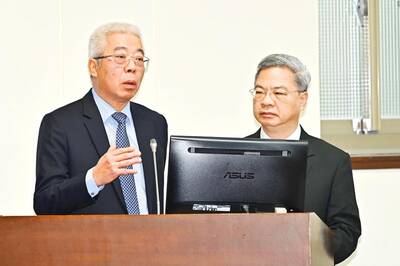
Taiwan has arranged for about 8 million barrels of crude oil, or about one-third of its monthly needs, to be shipped from the Red Sea this month to bypass the Strait of Hormuz and ease domestic supply pressures, CPC Corp, Taiwan (CPC, 台灣中油) said yesterday. The state-run oil company has worked with Middle Eastern suppliers to secure routes other than the Strait of Hormuz, through which about 20 percent of the world’s oil and liquefied natural gas typically passes, CPC chairman Fang Jeng-zen (方振仁) said at a meeting of the legislature’s Economics Committee in Taipei. Suppliers in Saudi Arabia have indicated they
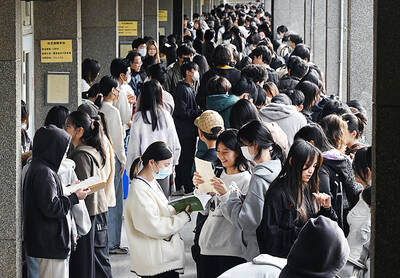
A global survey showed that 60 percent of Taiwanese had attained higher education, second only to Canada, the Ministry of the Interior said. Taiwan easily surpassed the global average of 43 percent and ranked ahead of major economies, including Japan, South Korea and the US, data from the Organisation for Economic Co-operation and Development (OECD) for 2024 showed. Taiwan has a high literacy rate, data released by the ministry showed. As of the end of last year, Taiwan had 20.617 million people aged 15 or older, accounting for 88.5 percent of the total population, with a literacy rate of 99.4 percent, the data

CCP ‘PAWN’? Beijing could use the KMT chairwoman’s visit to signal to the world that many people in Taiwan support the ‘one China’ principle, an academic said Chinese Nationalist Party (KMT) Chairwoman Cheng Li-wun (鄭麗文) yesterday arrived in China for a “peace” mission and potential meeting with Chinese President Xi Jinping (習近平), while a Taiwanese minister detailed the number of Chinese warships currently deployed around the nation. Cheng is visiting at a time of increased Chinese military pressure on Taiwan, as the opposition-dominated Legislative Yuan stalls a government plan for US$40 billion in extra defense spending. Speaking to reporters before going to the airport, Cheng said she was going on a “historic journey for peace,” but added that some people felt uneasy about her trip. “If you truly love Taiwan,

NEW LOW: The council in 2024 based predictions on a pessimistic estimate for the nation’s total fertility rate of 0.84, but last year that rate was 0.69, 17 percent lower An expected National Development Council (NDC) report expects the nation’s population to drop below 12 million by 2065, with the old-age dependency ratio to top 100 percent sooner than 2070, sources said yesterday. The council is slated to release its latest population projections in August, using an ultra-low fertility model, the sources said. The previous report projected that Taiwan’s population would fall to 14.37 million by 2070, but based on a new estimate of the total fertility rate (TFR) — the average number of children born to a woman over her lifetime — the population is expected to reach 12 million by


 RSS
RSS