


Taiwan has objected to Britain’s proposed rules for managing its trade in services if it leaves the EU and has requested negotiations at the WTO, according to a document seen by reporters on Wednesday.
Britain in 2016 voted in a referendum to leave the EU, which has spoken for Britain on trade matters ever since the WTO was founded in 1995.
As part of the Brexit divorce, Britain needs its own WTO membership texts, known as schedules, to set out how it will treat its trading partners in goods and services.
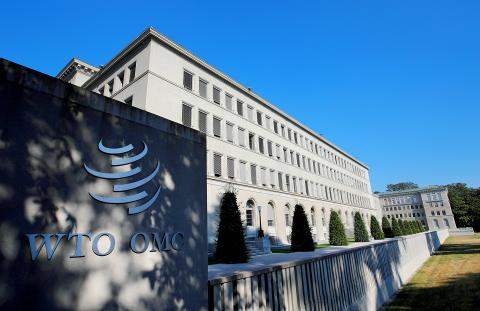
Photo: Reuters
Last month, Britain formally submitted its proposed new services schedule to the WTO.
The process would replicate existing arrangements as far as possible and was “only a technical exercise,” British Secretary of State for International Trade Liam Fox said.
In a document circulated to other WTO members on Wednesday, Taiwan raised objections, saying that the new text made more than purely technical changes.
Taipei looked forward to “entering into consultations expeditiously with the United Kingdom in order to reach a satisfactory resolution to this matter,” the document read.
It cited eight sections where it had objections, mainly clauses that were no longer relevant or necessary.
However, in financial services and aircraft leasing and rental, Taiwan said that the new schedule would leave it with less market access than it had previously.
“Current European Union commitments require European Union member states to allow airlines to lease aircraft registered anywhere in the European Union. However, the United Kingdom has changed this obligation to require United Kingdom airlines to lease aircraft registered in the United Kingdom,” the document read.
“This appears to reduce market access, as the scope of where aircraft may be registered has been reduced. The United Kingdom should delete this limitation,” it added.
Similarly, in financial services, there were several areas where the EU schedule included a requirement for establishment in the EU, the document read.
“The United Kingdom changed ‘EU’ to ‘UK’ for these entries in its draft schedule. This would appear to reduce market access, as it reduces the geographical scope of establishment,” it read.
If Taiwan and potentially other WTO members press Britain for improvements to the text, Fox might need to offer them compensation by opening up trade in other areas, although any such liberalization would apply across the WTO.
Britain is facing similar objections to its goods schedule, with widespread dissatisfaction among agricultural suppliers.
Failing to reach a rapid agreement might be a bureaucratic headache and add to criticism of the Brexit process, but it would not affect the Brexit timetable. Many WTO members trade without finalized schedules, on the understanding that they are trying in good faith to reach an agreement in the meantime.
Minister Without Portfolio John Deng (鄧振中), head of the Office of Trade Negotiations, yesterday told the Central News Agency that given the uncertainty over Brexit, the proposed schedules would not necessarily be adopted.
However, in the event that the proposed rules are adopted, Taiwan’s rights would therefore be affected and it would then request negotiations, Deng said, adding that most WTO members with trade relations with the UK have also expressed a similar intent.
Additional reporting by CNA

South Korea has adjusted its electronic arrival card system to no longer list Taiwan as a part of China, a move that the Ministry of Foreign Affairs said would help facilitate exchanges between the two sides. South Korea previously listed “Taiwan” as “Taiwan (China)” in the drop-down menus of its online arrival card system, where people had to fill out where they came from and their next destination. The ministry had requested South Korea make a revision and said it would change South Korea’s name on Taiwan’s online immigration system from “Republic of Korea” to “Korea (South),” should the issue not be

Tainan, Taipei and New Taipei City recorded the highest fines nationwide for illegal accommodations in the first quarter of this year, with fines issued in the three cities each exceeding NT$7 million (US$220,639), Tourism Administration data showed. Among them, Taipei had the highest number of illegal short-term rental units, with 410. There were 3,280 legally registered hotels nationwide in the first quarter, down by 14 properties, or 0.43 percent, from a year earlier, likely indicating operators exiting the market, the agency said. However, the number of unregistered properties rose to 1,174, including 314 illegal hotels and 860 illegal short-term rental
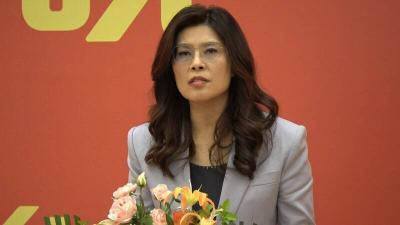
Both sides of the Taiwan Strait share a political foundation based on the “1992 consensus” and opposition to Taiwanese independence, Chinese Nationalist Party (KMT) Chairwoman Cheng Li-wun (鄭麗文) today said during her meeting with Chinese President Xi Jinping (習近平). Both sides of the Strait should plan and build institutionalized and sustainable mechanisms for dialogue and cooperation based on that foundation to make peaceful development across the Strait irreversible, she said. Peace is a shared moral value across the Strait, and both sides should move beyond political confrontation to seek institutionalized solutions to prevent war, she said. Mutually beneficial cross-strait relations are what the
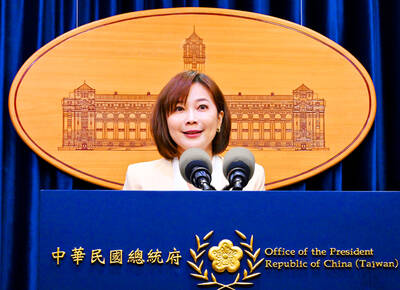
ECONOMIC COERCION: Such actions are often inconsistently applied, sometimes resumed, and sometimes just halted, the Presidential Office spokeswoman said The government backs healthy and orderly cross-strait exchanges, but such arrangements should not be made with political conditions attached and never be used as leverage for political maneuvering or partisan agendas, Presidential Office spokeswoman Karen Kuo (郭雅慧) said yesterday. Kuo made the remarks after China earlier in the day announced 10 new “incentive measures” for Taiwan, following a landmark meeting between Chinese President Xi Jinping (習近平) and Chinese Nationalist Party (KMT) Chairwoman Cheng Li-wun (鄭麗文) in Beijing on Friday. The measures, unveiled by China’s Xinhua news agency, include plans to resume individual travel by residents of Shanghai and China’s Fujian


 RSS
RSS